

Dental Implants in Tunisia: Costs, Procedure & Recovery
Dental Implants in Tunisia: An Overview
Dental implants in Tunisia offer a fixed, long-term solution for replacing one or more missing teeth. A dental implant is an artificial tooth root, usually made of titanium, placed into the jawbone to support a crown, bridge or full-arch restoration.
At ServiHealth, international patients can arrange dental implant treatment in Tunis, with personalised dental assessments, treatment planning and assistance throughout their medical stay.
Whether you need to replace a single tooth or explore a full-mouth dental restoration, the first step is a detailed assessment of your oral health, jawbone and treatment goals.
Our dental team evaluates the most appropriate solution for your individual situation, including the number of implants, the type of restoration and the expected healing period.
Explore our dental treatments in Tunisia and discover the services coordinated by ServiHealth.
What Is a Dental Implant?
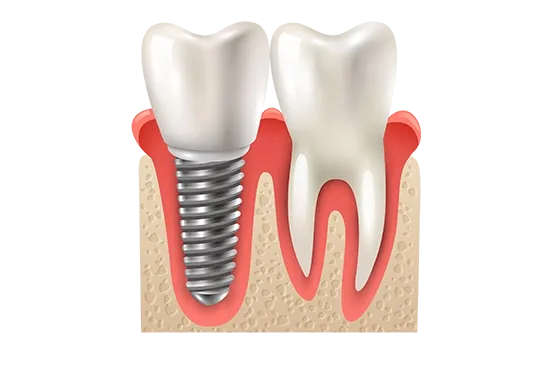
A dental implant is a small biocompatible fixture surgically inserted into the jawbone to replace the root of a missing tooth. Once the implant has integrated with the surrounding bone, it can support a prosthetic tooth or dental restoration.
A conventional implant-supported tooth consists of three main components:
- Implant fixture: The artificial root positioned inside the jawbone.
- Abutment: The connecting component between the implant and the restoration.
- Dental crown: The visible artificial tooth designed to restore appearance and chewing function.
Dental implants can also support bridges or full-arch prostheses when several teeth are missing.
Unlike a traditional tooth-supported bridge, a single dental implant can replace a missing tooth without routinely requiring the preparation of healthy adjacent teeth.
Benefits of Dental Implants
Dental implant treatment can provide functional and aesthetic benefits for patients with missing teeth.
- Natural-looking results: Implant-supported crowns can be designed to match the shape and colour of surrounding teeth.
- Improved chewing function: A stable restoration may help patients eat a wider variety of foods comfortably.
- Fixed tooth replacement: Implant-supported restorations can reduce reliance on removable dentures.
- Jawbone support: Implants transmit functional forces to the surrounding bone, although they do not eliminate all bone loss.
- Preservation of adjacent teeth: Single implants generally avoid the need to prepare neighbouring teeth for a conventional bridge.
- Long-term treatment option: With appropriate care and maintenance, dental implants can remain functional for many years.
Results depend on bone quality, gum health, general health, oral hygiene and regular professional maintenance.
Dental Implant Cost in Tunisia
The cost of a dental implant in Tunisia at ServiHealth is €1,500 per implant. This published rate is the reference price for implant treatment, while the total cost of your dental restoration depends on your individual treatment plan.
Additional factors may include the number of implants required, the type of crown or bridge, available jawbone, diagnostic examinations and any preparatory procedures such as bone grafting or sinus lifting.
Before treatment, ServiHealth coordinates a dental assessment and provides a personalised quotation explaining the recommended procedures and their costs.
Dental implant treatment may require more than one visit to Tunisia, particularly when a healing period is needed before the final prosthetic restoration is fitted.
| Procedure | Price | Stay |
|---|---|---|
| Dental Implant | €1,500 | Stay not included |
Types of Dental Implant Treatments
Different dental implant solutions are available depending on the number of missing teeth, bone volume and the type of restoration required.
Single Tooth Implant
A single dental implant can replace one missing tooth. After healing, it supports an individual crown designed to blend with the surrounding teeth.
Multiple Dental Implants
When several teeth are missing, individual implants or implant-supported bridges may be recommended. The number and positioning of implants are determined by the dental surgeon.
Full Mouth Dental Implants
Patients who have lost most or all teeth may be candidates for a fixed or removable full-arch implant-supported restoration.
All-on-4 Dental Implants
The All-on-4 concept uses four strategically positioned implants to support a full-arch prosthesis in selected patients. Suitability depends on bone anatomy and treatment planning.
All-on-6 Dental Implants
All-on-6 treatment uses six implants to support a full-arch restoration when clinically appropriate. It may be considered based on the available bone and prosthetic requirements.
The dentist will recommend the most appropriate approach following a clinical examination and radiographic assessment.
Who Is a Good Candidate for Dental Implants?
Dental implant surgery may be suitable for adults who have lost one or more teeth and have adequate oral and general health for treatment.
Important assessment criteria include:
- Sufficient jawbone volume and quality to support an implant.
- Healthy gums or properly treated periodontal disease.
- Good oral hygiene and willingness to attend follow-up appointments.
- Medical conditions and medications that may affect healing.
- Smoking habits and other factors associated with implant complications.
- Realistic expectations about the treatment stages and final restoration.
Patients with diabetes, a history of periodontal disease or reduced bone volume are not automatically excluded, but they may require additional assessment and risk management.
Where bone volume is insufficient, preparatory procedures may be considered before implant placement.
Dental Implant Procedure: Step by Step
The dental implant procedure in Tunisia involves several stages designed to achieve a stable and functional restoration.
Step 1: Dental Consultation and Imaging
The dentist reviews your medical history, examines your teeth and gums, and assesses the jawbone using appropriate imaging. A three-dimensional CBCT scan may be recommended.
Step 2: Personalised Treatment Plan
The dental team determines the number of implants required, their proposed positions and the type of final restoration.
Step 3: Implant Placement Surgery
Under appropriate anaesthesia, the surgeon prepares the implant site and places the implant into the jawbone. Sutures may be used depending on the surgical approach.
Step 4: Osseointegration and Healing
During osseointegration, the surrounding bone gradually forms a stable connection with the implant surface. This process commonly requires several months.
Step 5: Abutment and Final Restoration
Once the implant is sufficiently stable, the dentist fits the appropriate connecting components and places the planned crown, bridge or implant-supported prosthesis.
Some patients may be eligible for immediate provisional teeth, but immediate loading is not suitable for every case.
Bone Grafting and Additional Treatments
Successful dental implant placement requires adequate bone support. After tooth loss, the jawbone may gradually lose volume, particularly when a tooth has been missing for a long period.
If the available bone is insufficient, the dental surgeon may recommend an additional procedure.
Dental Bone Grafting
A bone graft may be used to increase bone volume or reconstruct a deficient area before or during implant placement.
Sinus Lift Surgery
In selected upper-jaw cases, a sinus lift may help create sufficient bone height for implant placement near the maxillary sinus.
Tooth Extraction and Gum Treatment
Damaged teeth may need to be removed, and active gum disease or infection must be assessed and treated before implant placement.
Additional procedures can affect treatment costs, healing time and the number of visits required.
Dental Implant Recovery and Healing
Dental implant recovery varies depending on the number of implants placed, the surgical technique and whether additional procedures were required.
Mild swelling, discomfort, bruising and minor bleeding may occur during the first few days after implant placement.
First 24–72 Hours
- Follow the dentist's instructions regarding medication and oral hygiene.
- Avoid strenuous physical activity during the initial recovery period.
- Choose soft foods and avoid chewing directly on the treated area.
- Avoid smoking and nicotine exposure, which can increase the risk of complications.
- Use cold compresses externally if recommended by your dentist.
First Weeks
Continue gentle oral hygiene and attend any scheduled reviews. Follow the dentist's advice about food texture, brushing near the surgical site and use of prescribed mouth rinses.
Osseointegration Period
Bone integration commonly takes approximately three to six months, although the duration varies. Some treatment protocols allow earlier restoration when clinical conditions are favourable.
Contact a dentist promptly if you develop increasing pain, persistent bleeding, fever, pus, worsening swelling or implant mobility.
Risks and Possible Complications
Although dental implants are an established tooth replacement treatment, surgery carries risks and cannot guarantee success in every patient.
Possible complications include:
- Postoperative infection or delayed healing.
- Bleeding, swelling or discomfort.
- Implant failure or failure of osseointegration.
- Inflammation of the tissues surrounding an implant, including peri-implantitis.
- Damage to adjacent teeth or anatomical structures.
- Nerve injury causing altered sensation in selected cases.
- Sinus-related complications in upper-jaw procedures.
- Mechanical complications affecting the implant, abutment or prosthetic restoration.
Smoking, uncontrolled periodontal disease, poor oral hygiene and certain medical conditions can increase the risk of complications.
A detailed examination and personalised treatment plan help identify and manage these risks.
How Long Do Dental Implants Last?
Dental implants can last for many years when properly placed, maintained and monitored. However, their lifespan varies between patients, and no implant can be guaranteed to last a lifetime.
Long-term success depends on several factors:
- Daily brushing and interdental cleaning.
- Regular professional dental examinations.
- Management of gum inflammation and periodontal disease.
- Smoking avoidance.
- Control of relevant medical conditions.
- Appropriate care of the implant-supported crown, bridge or denture.
The implant fixture and the prosthetic restoration have different maintenance needs. A crown or other prosthetic component may eventually require repair or replacement even when the implant remains stable.
Regular dental follow-up is essential for detecting complications early.
Planning Your Dental Trip to Tunisia
Dental tourism in Tunisia allows international patients to organise dental treatment while receiving support with appointments and travel arrangements.
ServiHealth assists with the coordination of your dental care in Tunis, from the initial enquiry to postoperative follow-up.
- Initial enquiry: Contact ServiHealth and explain your dental needs.
- Dental assessment: Share relevant dental records and imaging where available.
- Treatment planning: Receive a proposed treatment plan and individual quotation.
- Travel organisation: Coordinate appointments and practical arrangements.
- Implant surgery: Undergo treatment following the required clinical assessment.
- Healing period: Allow sufficient time for osseointegration where required.
- Final restoration: Return for crown, bridge or prosthesis placement if a second visit is necessary.
- Follow-up: Continue dental maintenance and recommended reviews.
The duration and number of visits depend on your clinical situation. Some implant treatments require multiple appointments separated by several months.
Why Choose ServiHealth for Dental Implants in Tunisia?
ServiHealth helps international patients organise dental implant treatment in Tunisia through personalised coordination and communication with dental professionals.
Our approach focuses on clear information, individual treatment planning and continuity of care.
- Initial assessment and guidance before travelling.
- Coordination of dental consultations and treatment appointments.
- Individual quotations based on the recommended treatment.
- Assistance with practical travel arrangements.
- Post-treatment guidance and follow-up coordination.
Dental implant treatment is performed by the treating dental professionals, who remain responsible for clinical decisions, surgical suitability and postoperative instructions.
Patients considering other restorative solutions can also explore dental prostheses in Tunisia and our other dental procedures.
Request Your Dental Implant Quote
Are you considering dental implants in Tunisia to replace one or more missing teeth?
Contact ServiHealth to request information about treatment options, dental implant costs and the steps involved in planning your dental care in Tunis.
For an initial assessment, you may be asked to provide recent dental imaging, relevant medical information and details about the teeth you wish to replace.
Our team will help coordinate a personalised treatment plan and quotation following dental evaluation.
WhatsApp: +216 99 623 631
Website: ServiHealth Tunisia
Take the first step towards restoring your smile with a personalised dental consultation.









Breast Augmentation
I had my surgery with ServiHealth, and I highly recommend their services. The team was very professional, and I'm extremely satisfied with my experience. ServiHealth offers various breast surgery procedures, including breast augmentation and breast reduction, to meet different needs.

Cam Naf
FranceFrequently asked questions about Dental Implants in Tunisia
At ServiHealth, the published dental implant price is €1,500 per implant. The final cost depends on the treatment plan, restoration type and any additional procedures required.
A dental implant is an artificial tooth root, usually made of titanium, surgically placed into the jawbone to support a crown, bridge or implant-supported denture.
Tunisia is an option for international patients seeking dental treatment abroad. ServiHealth coordinates dental assessments, appointments and travel-related arrangements in Tunis.
The published price is €1,500 per implant. Whether the abutment, crown, imaging or other services are included must be confirmed in the individual quotation.
Implant placement is one stage of treatment. Osseointegration often requires several months, and the final restoration may be fitted during a later appointment.
Dental implant surgery is generally performed under local anaesthesia. Temporary discomfort, swelling or tenderness may occur after the procedure.
Initial postoperative discomfort often improves within days, while bone integration typically takes several months. Your dentist will provide an individual recovery plan.
Immediate implant placement may be possible in selected cases when bone support, infection status and other clinical conditions are favourable.
All-on-4 is a full-arch treatment concept using four strategically positioned implants to support a prosthetic dental arch in suitable patients.
All-on-4 uses four implants per treated arch, while All-on-6 uses six. The appropriate approach depends on bone anatomy, functional requirements and dental assessment.
Yes. Multiple implants may support fixed bridges or full-arch restorations. The number required depends on the patient's anatomy and prosthetic treatment plan.
A bone graft may be recommended when the jawbone lacks sufficient volume to support an implant. The need is assessed through examination and imaging.
Dental implants are an established treatment, but surgery carries risks including infection, implant failure, nerve injury and inflammation around the implant.
Dental implants may function for many years with appropriate maintenance. Longevity depends on oral hygiene, bone and gum health, lifestyle and regular dental follow-up.
Smoking increases the risk of implant complications and failure. A dentist will assess suitability and may recommend stopping smoking before and after treatment.
Diabetes does not automatically exclude implant treatment. Good glycaemic control and individual assessment are important because poorly controlled diabetes can affect healing.
Some treatments require two or more visits, particularly when implant placement and final restoration are separated by a healing period. The schedule depends on the treatment plan.
Soft foods are generally recommended during early healing. Avoid chewing directly on the surgical area and follow the dentist's individual dietary instructions.
Contact ServiHealth with details of your dental needs and available imaging. A dental professional can review your case and help establish a personalised treatment plan and quotation.