

Labiaplasty in Tunisia: Techniques, Price, Recovery and Confidentiality

Labiaplasty in Tunisia: the essentials
Labiaplasty reduces the labia minora — the inner labia. It is one of the shorter procedures in cosmetic surgery: 45 minutes to an hour and a half, under deep local or light general anaesthesia, with a 3-day stay in Tunisia and a price of €1,600 at ServiHealth.
Before anything else, one thing worth hearing from a clinic rather than from an image feed: the normal range is far wider than most women have ever been shown. Length, shape, thickness, colour, symmetry — all of it varies enormously, and asymmetry between the two sides is the rule rather than the exception. There is no model to match. A surgeon who examines you may well conclude that there is nothing to operate on, and that is a legitimate outcome of a consultation rather than a wasted trip.
Two reasons bring women to this procedure, and both are taken seriously here. Physical discomfort — rubbing, irritation, trouble during sport, in certain clothing or during intercourse. And personal unease about the appearance of the area, with no physical symptom. Neither is treated as more valid than the other, and neither removes the need for an examination that confirms there is something to correct.
The risk to understand before you consent is over-resection: removing too much. It is the one complication that is genuinely hard to reverse, and it is the reason a careful surgeon takes less rather than more. If you are hesitating about how much to remove, ask for less. Too little can be refined later.
The procedure is not performed before the age of 18 except for a specific medical indication, because development must be complete.
And because it matters as much as the surgery: this page includes a full section on how confidentiality works in practice — what appears on your invoice, how you are met at the airport, who sees your photographs.
The thing to know first: normal varies enormously
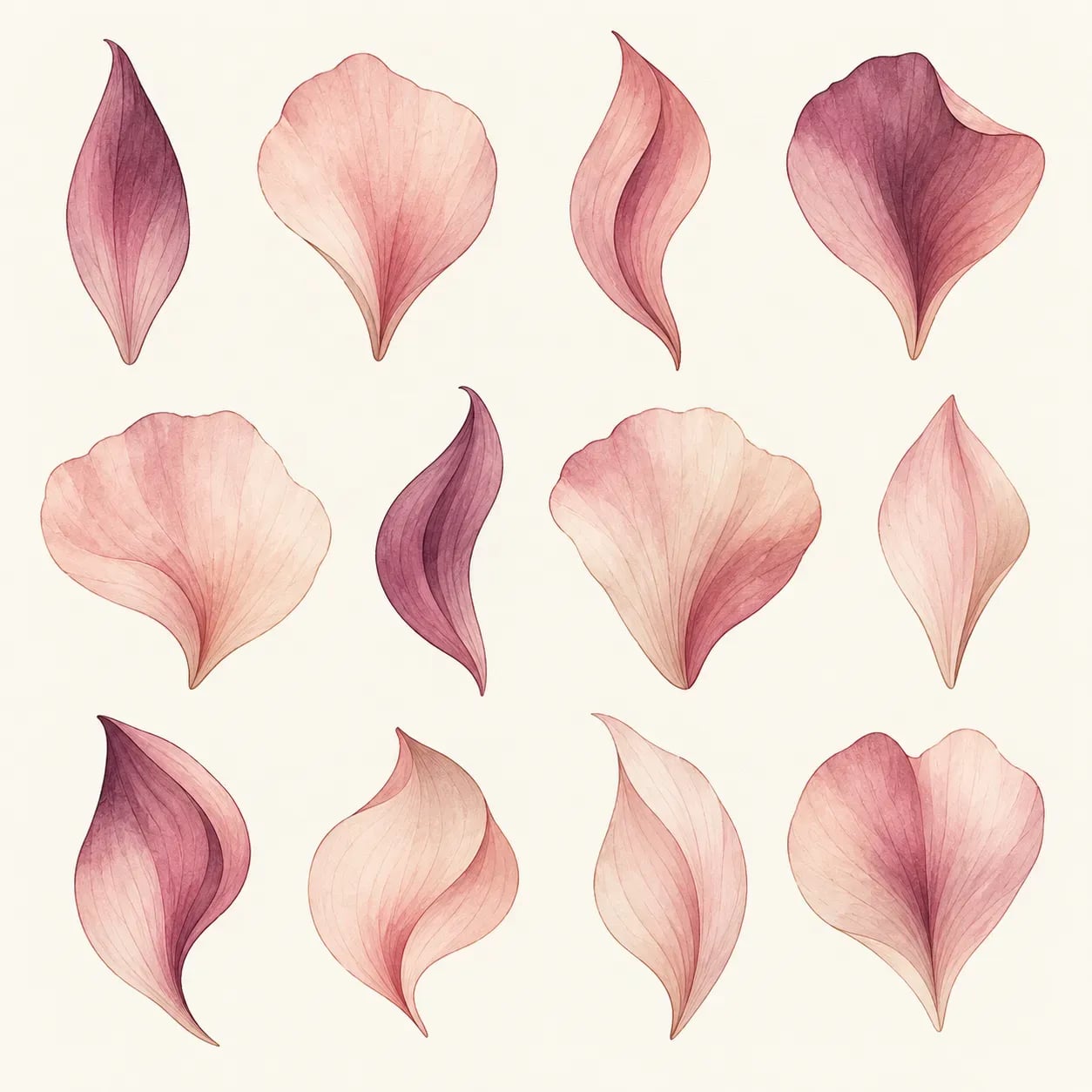
There is no standard shape, no standard length, and no correct appearance. Labia minora vary between women in every dimension: how far they project, how thick they are, how they are coloured, how the two sides compare. Asymmetry is normal. Visible labia minora are normal. One side longer than the other is normal.
Most women have seen very few examples other than their own. The images that are available are overwhelmingly edited, selected or surgically altered, and they are not a sample of anything — they are a style. Comparing yourself against them is comparing yourself against a composite that does not exist.
This is not said to talk you out of surgery. It is said because the single most common reason a woman is disappointed by a labiaplasty is that there was nothing wrong to begin with, and the operation could not deliver a change she could feel, only one she had been told to want.
So the useful question is not "is mine normal" — almost certainly it is — but:
- Does it cause me trouble? Rubbing, irritation, pain during sport or intercourse, discomfort in certain clothing.
- Or does it bother me when I look at it?
Both are legitimate reasons to consult, and the second is not a lesser one. But they are different conversations, they call for different expectations, and a good surgeon will want to know which you are having.
An examination is what settles whether there is anything to operate on. It can conclude that there is not. If that is the answer you get, you have been told something true by someone who could have sold you an operation instead.
Why women consult
Two groups of reasons, and in practice many women have some of both.
Physical discomfort
- Rubbing and irritation in daily life
- Discomfort during sport, particularly cycling, running and riding
- Trouble in fitted clothing, swimwear or underwear
- Discomfort during intercourse
- Difficulty with hygiene, or recurrent irritation
Where symptoms like these are present and an examination confirms the anatomy is causing them, the indication is straightforward and the result is usually judged on whether the symptom has gone.
Personal unease about the appearance
Some women have no physical symptom at all and are simply uncomfortable with how the area looks — when changing, with a partner, in certain clothing. This is a legitimate reason to consult and it is not treated here as a lesser one.
It does call for a frank conversation about what the surgery can change. Labiaplasty alters anatomy; it does not reliably alter how someone feels about their body when the feeling is intense, long-standing and resistant to reassurance. If your distress about this has that quality — if it occupies a great deal of your thinking, if it has persisted for years, if people close to you have told you repeatedly that they cannot see what you see — it is worth talking to a professional about that before booking surgery, not instead of being taken seriously, but because surgery is unlikely to be the thing that helps.
That is said once, plainly, and not repeated across the page. Most women considering this are not in that position, and the ones who are deserve to be told rather than operated on.
How much does labiaplasty cost in Tunisia?
€1,600 at ServiHealth, with a recommended stay of 3 days.
What the price covers: the consultation with the surgeon, the procedure, the anaesthesia, the transfers, and the post-operative follow-up after you return home.
What changes the quote: adding a clitoral hood reduction, where that is assessed as appropriate. It is quoted separately because it is not always indicated — see the section below.
Ask for the inclusions in writing for your own case before you commit, and read them against what you will actually need: flights, the nights you are staying, and the pre-operative tests you have done at home. A price is only comparable to another price once you know what each one contains.
One honest note on comparison shopping for this particular procedure. Price is the wrong variable to optimise here. The complication that matters — removing too much tissue — is not reversible, and it depends entirely on the judgement of the person holding the instruments. The difference between a good labiaplasty and a bad one is measured in a few millimetres of tissue, and no saving compensates for getting that wrong.
| Procedure | Price | Stay |
|---|---|---|
| Labiaplasty (labia minora reduction) | 1600 € | 3 days |
The two main techniques
Two approaches are used, and the choice between them is made at the consultation according to your anatomy and what is to be corrected.
| Technique | How it works | Where the scar sits |
| Trim (edge resection) | Excess tissue is removed directly along the free edge of the labium. | Along that edge, following its line. |
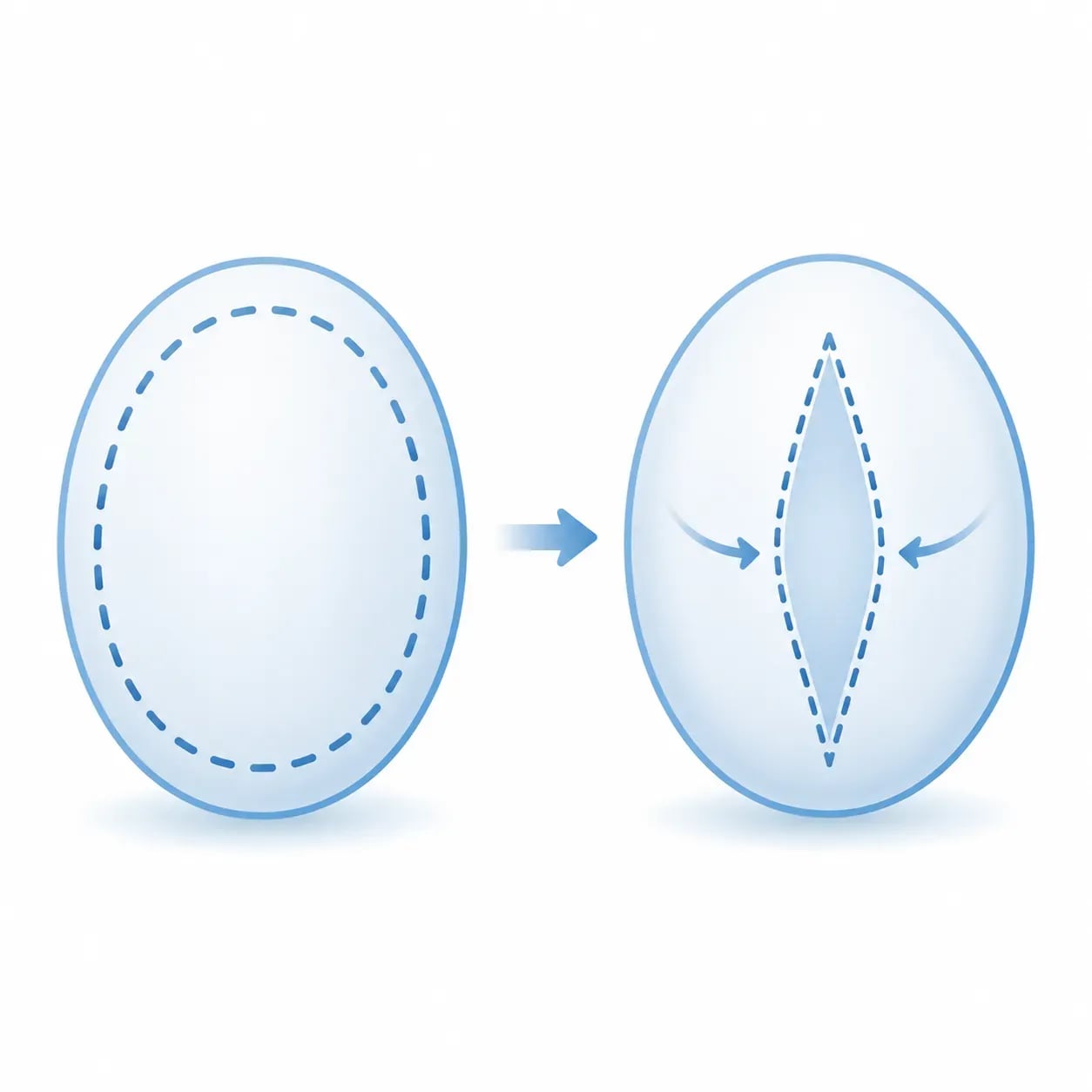
| Wedge resection | A V-shaped section is removed from the middle of the labium and the edges are brought together, so the original border is preserved. | Within the labium, at the site of the wedge. |
The wedge preserves the natural border, including its colour and texture, which many patients and surgeons consider gives a more natural result. It is technically more demanding. The trim is more direct and is often preferred where the edge itself is what the patient wants changed.
ServiHealth's French-language page states that the two have comparable complication rates. That is the usual account of these techniques rather than a figure we can source for you, so treat it as context rather than as data, and ask your surgeon what their own experience has been.
What matters more than the technique is how much is removed. Either approach done conservatively gives a good result; either done aggressively gives the one complication that cannot be undone. If you take one question into your consultation, make it: how much are you planning to leave?
Can a clitoral hood reduction be added?
Yes, in the same operation, after assessment — and the quote is adjusted accordingly.
It is raised because reducing the labia minora alone can sometimes leave the hood looking comparatively prominent, in which case treating only one of the two produces a result that looks unbalanced. Whether that applies to you is a judgement made at the examination, not something to decide in advance from a photograph.
It is also an area where restraint matters even more than it does on the labia. The hood protects a structure that is densely supplied with nerves, and the aim of any work there is a modest adjustment for proportion — nothing more. A surgeon proposing significant reduction in this area, or treating it as a routine add-on to every labiaplasty, is doing something you should question.
If your surgeon says it is not indicated for you, that is the answer. There is no version of this procedure where more is safer.
Are you a candidate?
The procedure suits a woman in good health, aged 18 or over, whose examination confirms labia minora that are genuinely causing physical discomfort or that she is persistently uncomfortable with.
Age: 18 and over. Development has to be complete, and this is not negotiable for appearance-related surgery. A clinic willing to operate on a minor for this reason is a clinic to leave.
If you are travelling from the United Kingdom, there is something worth knowing: labiaplasty falls within the scope of the Female Genital Mutilation Act 2003, which makes this surgery an offence except where it is necessary for the patient's physical or mental health. In practice that is why any reputable surgeon — in the UK or here — documents an indication rather than simply taking an order, and why none will operate on someone under 18 for cosmetic reasons. If you are unsure how it applies to your situation, take advice in your own country; this page is not legal advice.
The procedure is postponed or ruled out in these situations, each assessed individually by the surgeon and the anaesthetist:
- An active genital infection
- Pregnancy, or a recent delivery
- Active smoking that has not been stopped beforehand
- A clotting disorder, or treatment with anticoagulants
- Any condition that contraindicates anaesthesia
And one that is not a medical contraindication but is a real one: if an examination finds anatomy within the normal range and no symptoms, the honest answer is that there is nothing to operate on. You may hear that. It is not a refusal to help you.
If what concerns you is a different intimate procedure, see our page on hymenoplasty in Tunisia.
Confidentiality: what it means in practice
"Discretion guaranteed" means nothing on its own. Here is what it actually consists of, point by point, so you can check it rather than trust it.
| What | How it works |
| How we contact you | You choose the channel, and you can ask that no sensitive wording appears in any message we send. |
| Your photographs | Sent to the surgeon only. Never published. Deleted on request. |
| At the airport | You are met without a sign bearing your name. We agree how you will be identified before you travel. |
| Your invoice | Issued under a general heading rather than naming the procedure. |
| Your documents | Handed to you in person rather than posted or left anywhere. |
| Clinic staff | Bound by medical confidentiality. |
| Anyone travelling with you | Told only what you authorise us to tell them, and nothing else. |
That last line is worth reading twice. A companion is told what you decide they are told. If you are travelling with someone who knows only that you are having a procedure, say so at the outset and that is how it stays.
If any of this needs adjusting for your situation — a different contact method, a particular wording, something that must not appear on a document — tell us at the first exchange rather than on arrival. It is far easier to set up in advance than to correct afterwards.

Your pathway, step by step
ServiHealth organises and coordinates the stay. The medical decisions belong to the surgeon and the anaesthetist; everything around them is our work.
| Stage | What happens |
| First contact | You tell us what is troubling you and whether it is physical, aesthetic or both, and you choose how we contact you. Photographs, if you send them, go to the surgeon alone. |
| First opinion | A remote review, which tells you whether the procedure appears appropriate before you spend anything. It is an opinion from photographs, not a diagnosis. |
| Quote | In writing, under a general heading, setting out what is planned and what the price covers. |
| Preparation | Pre-operative tests in your own country. Tell us your period dates so the stay can be scheduled around them. |
| Arrival | You are met at Tunis-Carthage without a name sign, by arrangement agreed in advance. |
| Consultation | Examination by the surgeon. The technique is chosen, how much tissue to remove is discussed, and whether a hood reduction is indicated. This is where you ask how much will be left. |
| Procedure | 45 minutes to an hour and a half at the Clinique Internationale Myron, under deep local or light general anaesthesia. |
| Afterwards | Back to your room the same day, or after one night of monitoring. |
| Before you fly | A post-operative check, your care instructions, and documents handed to you in person. Three days in total. |
| After you return | Remote follow-up with a contact you can reach. The result is assessed at six to eight weeks. |
The consultation can change the plan, including to the conclusion that nothing should be done. That is the consultation working rather than failing.

Is labiaplasty safe? Risks and precautions
It is a short, well-established operation, and it carries real risks. They belong here, before you book.
Normal after-effects: swelling, tenderness and small bruises. Swelling peaks between day two and day four — that is expected and is not a sign that something has gone wrong.
Complications:
- Haematoma or bleeding
- Infection — uncommon, treatable
- Partial separation of the suture line, most often from resuming activity too early
- Residual asymmetry, bearing in mind that most women are asymmetric to begin with
- A tender or thickened scar
- Temporary reduction in sensation. Lasting change is uncommon and is associated with poorly executed surgery rather than with the operation itself.
Over-resection: the one that matters most
Removing too much tissue is the most feared complication of this procedure, and it is difficult to reverse. It can cause dryness, a persistent sensation of tension, discomfort during intercourse, and an appearance the patient finds unnatural — and tissue that has been removed is not easily restored.
This is why every careful surgeon in this field errs towards leaving more than the patient asked for, and why the right instinct when you are unsure is to ask for less. Too little can be refined in a second, minor procedure. Too much frequently cannot be corrected at all.
Contraindications: an active genital infection, pregnancy or recent delivery, active smoking, a clotting disorder or anticoagulant treatment, and any condition that contraindicates anaesthesia.
Contact your surgeon promptly if you have increasing pain, a fever, a foul-smelling discharge, bleeding that does not stop, or any opening of the wound. None of these should wait for the next scheduled contact.
Results vary from one patient to another, and your surgeon will tell you at the consultation what is realistic in your case.
Recovery and aftercare
Healing in this area is quicker than most people expect, and the tissue is fragile for longer than most people expect. Both things are true.
| When | What to expect |
| Days 1 to 4 | Swelling, peaking around days two to four. Cold applied through a cloth, in short periods. Rest, and avoid sitting for long stretches. |
| Around 1 week | Back to work, provided it involves no physical effort and no prolonged sitting. |
| 2 to 3 weeks | Light activity resumes. |
| 4 to 6 weeks | Intense sport and cycling, with your surgeon's agreement. Sexual activity and tampons, on the same timing and the same condition. |
| 6 to 8 weeks | The result can be assessed. The scar continues to refine for several months afterwards. |
Hygiene
- Wash gently with warm water. Pat dry rather than rubbing.
- Use only the products your surgeon has prescribed — nothing perfumed, nothing antiseptic that was not prescribed.
- Showers are fine. Baths, swimming pools and hammams are not, until healing is complete.
- Cotton underwear and loose clothing for several weeks.
The sutures dissolve. There is nothing to be removed, which is one reason a 3-day stay is enough for an operation performed several thousand kilometres from home.
The instruction patients find hardest is the one about prolonged sitting in the first days. Plan for it: if you have a desk job, the week at home is not optional padding.

The journey home
You fly home on day three, which for most women is around the point at which swelling is at its worst. Nothing about that is dangerous, and a little planning makes it considerably more comfortable.
- Loose clothing and cotton underwear for the journey. Nothing fitted, nothing with a seam that presses.
- An aisle seat if you can get one, so you can stand up without climbing over anyone.
- Get up and walk at intervals during the flight. Prolonged sitting is uncomfortable here and standing up is also good circulatory practice after any operation.
- Your prescribed painkillers in your hand luggage, not in the hold.
- Your care instructions and documents with you, handed to you in person before you leave.
Plan the arrival as well as the flight. Allow roughly a week at home without work obligations, and arrange the first days so that you are not required to sit for long periods or to carry anything.
And keep the contact details of your ServiHealth coordinator somewhere you will find them quickly. The things that need reporting — increasing pain, fever, a foul-smelling discharge, bleeding that does not stop, any opening of the wound — are the things you report the same day rather than at the next scheduled check.

When will I see the final result?
The result can be assessed at six to eight weeks, and the scar keeps refining for several months after that.
- Days 2 to 4. Swelling at its peak. This is the stage at which the area looks least like the outcome, and it is also the stage at which most women are most anxious about it.
- Weeks 2 to 4. Swelling settles steadily. The shape begins to be recognisable.
- Weeks 6 to 8. The result. This is the point at which it is fair to judge it.
- Several months on. The scar continues to soften, flatten and fade.
Do not judge this at two weeks. The area swells more than its size suggests and resolves on its own schedule, and conclusions drawn early are almost always wrong in the same direction.
About durability: the tissue removed does not grow back. The area still changes over the years with pregnancies, weight variation and age, as every other part of the body does — but the reduction itself holds.
And on function, since it is the question most often left unasked: fertility is not affected and vaginal delivery remains possible. The procedure concerns the labia minora, not the vaginal canal or the perineum.
Your surgeons
Labiaplasty at ServiHealth is performed by the intimate surgery team at the Clinique Internationale Myron in Tunis.
- Dr Sami Mahjoub
- Dr Mehdi Lajmi
The surgeon assigned to your case is named in your quote before you travel, and you meet them in person before anything is decided.
Questions worth asking at that consultation. They are short, and the answers tell you a great deal:
- How much are you planning to leave? Not how much you will remove — how much will remain.
- Which technique, trim or wedge, and why that one for me?
- Looking at me, is there actually something here that needs operating on?
- Do you recommend a hood reduction, and if not, why not?
- What would make you advise against operating on me?
The first and third questions are the ones that matter. A surgeon who talks in terms of what will be left rather than what will be taken is thinking the right way round about this operation. And one who is willing to say that your anatomy is within the normal range and does not need surgery has just given you something more valuable than an operation.
What to treat, with which technique, how much to remove, and whether to operate at all is a medical decision and belongs to the surgeon, not to ServiHealth.
Why have labiaplasty in Tunisia?
Tunisia has run an organised medical travel sector for decades: private clinics built around international patients, surgeons trained to European standards, and costs that reflect Tunisian overheads rather than shortcuts in the operation.
What matters specifically for this procedure:
- It fits a short trip. Three days, dissolvable sutures, nothing to be removed afterwards — one of the few procedures where travelling abroad adds very little complexity.
- Privacy can be easier away from home. No waiting room where you might be recognised, no appointment in a local diary, an invoice under a general heading. For many women that is a substantial part of the appeal, and the confidentiality section above sets out exactly how it works.
- Distance. Two to three hours from most of Western Europe, with direct connections from several Gulf hubs.
- English throughout, from the first exchange to the follow-up after you are home.
Two things to weigh honestly before deciding:
- Your examination happens on arrival, not before you book. The remote review is an opinion from photographs. If the surgeon concludes at the consultation that nothing should be operated on, you will have travelled for an answer rather than an operation — and that is the system working. Ask us in advance what happens financially in that case.
- Anything that needs looking at in week three gets looked at where you live. Know who you contact, and have your operative documents to hand.
And the one not to weigh at all: price should not be what decides this. The complication that matters cannot be undone, and it depends on judgement rather than on equipment.
Before you travel: a checklist
Work through this before you book, not the week before you fly.
| Category | What to do |
| Documents | A valid passport, and a visa if your nationality requires one for Tunisia. Check the expiry date. |
| Confidentiality | Tell us at the first exchange how you want to be contacted, what must not appear in writing, how you want to be met at the airport, and what a companion may be told. |
| Pre-operative tests | Completed in your own country, following the protocol you are given. Send the results in advance. |
| Medical history | Previous surgery, current treatments, allergies, and any clotting disorder — in full. |
| Your dates | Tell us when your period is due so the stay can be scheduled around it. |
| Medication to stop | Aspirin, anti-inflammatories and blood-thinning supplements in the days before, unless your own doctor instructs otherwise. |
| Smoking | Stop for the period your surgeon specifies. It affects how the suture line heals. |
| Hair removal | If required, a few days before rather than the day before, so the skin is not irritated. |
| To pack | Cotton underwear, loose clothing, and a small aftercare kit. Nothing fitted for the journey home. |
| Your questions | Write them down, starting with "how much are you planning to leave?". It is harder to ask in the room than on the sofa. |
| Your calendar | About a week at home without work obligations, and four to six weeks before sport, cycling, sexual activity or tampons. |
If you are considering another intimate procedure during the same stay, read our page on hymenoplasty in Tunisia first. What can reasonably be combined in one session is decided by your surgeon.









Breast Augmentation
I had my surgery with ServiHealth, and I highly recommend their services. The team was very professional, and I'm extremely satisfied with my experience. ServiHealth offers various breast surgery procedures, including breast augmentation and breast reduction, to meet different needs.

Cam Naf
FranceFrequently asked questions about Labiaplasty in Tunisia
It is the clinical term for labia minora that are long or prominent enough to cause symptoms — rubbing, irritation, discomfort in certain clothing, during sport or during intercourse. The word describes a situation that causes trouble, not a measurement: there is no length at which anatomy becomes abnormal. Whether what you have qualifies is established by examination, and the answer is sometimes that it does not.
Enormously — in length, shape, thickness, colour and symmetry. Asymmetry between the two sides is the norm rather than the exception. Most women have seen very few examples other than their own and whatever appears in edited images, and that is the main reason anatomy that is entirely ordinary gets read as abnormal. There is no model to match.
€1,600 at ServiHealth, with a recommended stay of 3 days. The price covers the consultation, the procedure, the anaesthesia, the transfers and the post-operative follow-up. If a clitoral hood reduction is added, the quote is adjusted. Ask for the inclusions in writing for your own case before you commit.
There are two main ones. The trim technique removes excess tissue directly along the edge of the labium, and the scar follows that edge. The wedge technique removes a V-shaped section from the middle and closes the gap, which preserves the natural border and is often considered to give a more natural look, but it is technically more demanding. Your surgeon chooses according to your anatomy and what is to be corrected.
A temporary reduction in sensation during healing is possible and usually resolves. Lasting change is uncommon and is associated with poorly executed surgery rather than with the operation itself, which is one more reason the choice of surgeon matters more than the choice of technique.
Yes. The procedure is not performed before 18 except for a specific medical indication, because development must be complete first. This is not an administrative formality and it is not negotiable: a surgeon who would operate on a minor for appearance is one to walk away from.
Light activity after two to three weeks. Intense sport and cycling after four to six weeks, with your surgeon's agreement. Anything that presses or rubs on the area — cycling above all — waits for the longer end of that range.
Three days. That covers the consultation, the procedure, and the first post-operative check before you fly home. Plan roughly a week after your return without work obligations.
Most patients describe soreness and a feeling of tightness rather than sharp pain, and prescribed painkillers are generally sufficient. Swelling peaks between day two and day four, which is when you will be least comfortable — this is expected and not a sign that anything has gone wrong. Cold applied through a cloth, in short periods, helps.
They are placed where the technique dictates: along the edge of the labium with the trim technique, within the labium with the wedge technique. Both refine over several months. Sutures are dissolvable, so there is nothing to remove. Scarring is generally discreet, and like any scar it varies from one person to another.
Four to six weeks, with your surgeon's agreement — the same interval applies to tampons. Healing in this area is quick but the tissue is fragile early on, and resuming too soon risks the suture line separating. Your surgeon gives you the date at the post-operative check.
No. Fertility is not affected and vaginal delivery remains possible — the procedure concerns the labia minora, not the vaginal canal or the perineum. Worth knowing nonetheless: pregnancy, weight change and time all alter the area, as they did before.
The tissue removed does not grow back, so in that sense yes. The area still changes over the years with pregnancies, weight variation and age, as every other part of the body does. The result is assessed at six to eight weeks, and the scar keeps refining for several months after that.
Some residual asymmetry is possible, and it is worth remembering that almost everyone is asymmetric to begin with. Perfect symmetry is not the goal and chasing it is how too much tissue gets removed. Marked asymmetry that persists once healing is complete can be discussed with your surgeon.
This is the complication to understand before you consent, because it is the one that is difficult to reverse. Over-resection can cause dryness, a feeling of tension, discomfort during intercourse and an appearance the patient finds unnatural — and tissue that has been removed cannot simply be put back. It is the reason a careful surgeon errs towards taking less, and the reason you should ask for less rather than more if you are unsure. Too little can be refined later; too much often cannot.
Yes, where the calendar allows it. Tell us your dates when the stay is being arranged, and we schedule around them. It is a matter of comfort and hygiene during the first days rather than of surgical safety.
If hair removal is required, do it a few days before rather than the day before, so the skin is not irritated when you are operated on. Your surgeon's instructions take precedence over anything on this page.