

Dermal Fillers in Tunisia: Areas, Price and How Long They Last

Dermal fillers in Tunisia: the essentials
Hyaluronic acid filler adds volume where it has been lost or where you never had it — lips, cheekbones, under-eye hollows, nasolabial folds, chin, temples. One session of 20 to 40 minutes, no overnight stay, and the effect lasts 6 to 18 months depending on the area.
It is dissolvable. That single fact is what separates hyaluronic acid from everything else and the reason it is the only filler worth considering.
Wanting something that lasts rather than something you repeat? See facial fat transfer. Wanting to relax a muscle rather than add volume? That is botulinum toxin, a different treatment entirely.
| Session | 20 to 40 minutes |
| Anaesthetic | None; the gel contains a local anaesthetic |
| Stay in Tunisia | None — same day, no overnight |
| Lasts | 6 to 18 months depending on the area |
| Reversible | Yes, fully |
| Price | €350 per ml |
Before anything: is it worth travelling for, and who treats a complication at home?
Two honest answers up front, because both affect whether you should do this at all.
Flying here for fillers alone rarely adds up. Once you have paid for flights, the saving against having it done at home is usually gone. Where it genuinely makes sense is added to a stay you are already making — alongside surgery, or alongside another treatment. Then it costs you forty minutes and no extra travel.
And the part almost no clinic will tell you. The serious complication of filler, vascular occlusion, is treated with hyaluronidase, and it is treated urgently — within hours, not days. We keep hyaluronidase on site, which handles anything that happens here. But it can also present after you have flown home.
So before you book, know who you would call. A doctor or clinic where you live who has hyaluronidase and knows how to use it, and ideally one you have already spoken to. If you cannot name one, that is a real argument for having fillers done locally instead, and we would rather say so now.
This is not a reason to avoid filler. It is the question to settle before any filler, anywhere, including at home.
What hyaluronic acid filler is
Hyaluronic acid is a substance your body already produces, which holds water and gives tissue its volume. The injectable version is a gel, placed at a chosen depth to restore or create volume.
It is not a muscle relaxant, it is not a skin treatment, and it does not tighten anything. It fills.
Different areas need different gels. A firm, dense gel supports a cheekbone or a chin; a soft, flexible one belongs in lips that move constantly. The same product everywhere is a sign of an injector working from a single syringe rather than from an assessment.
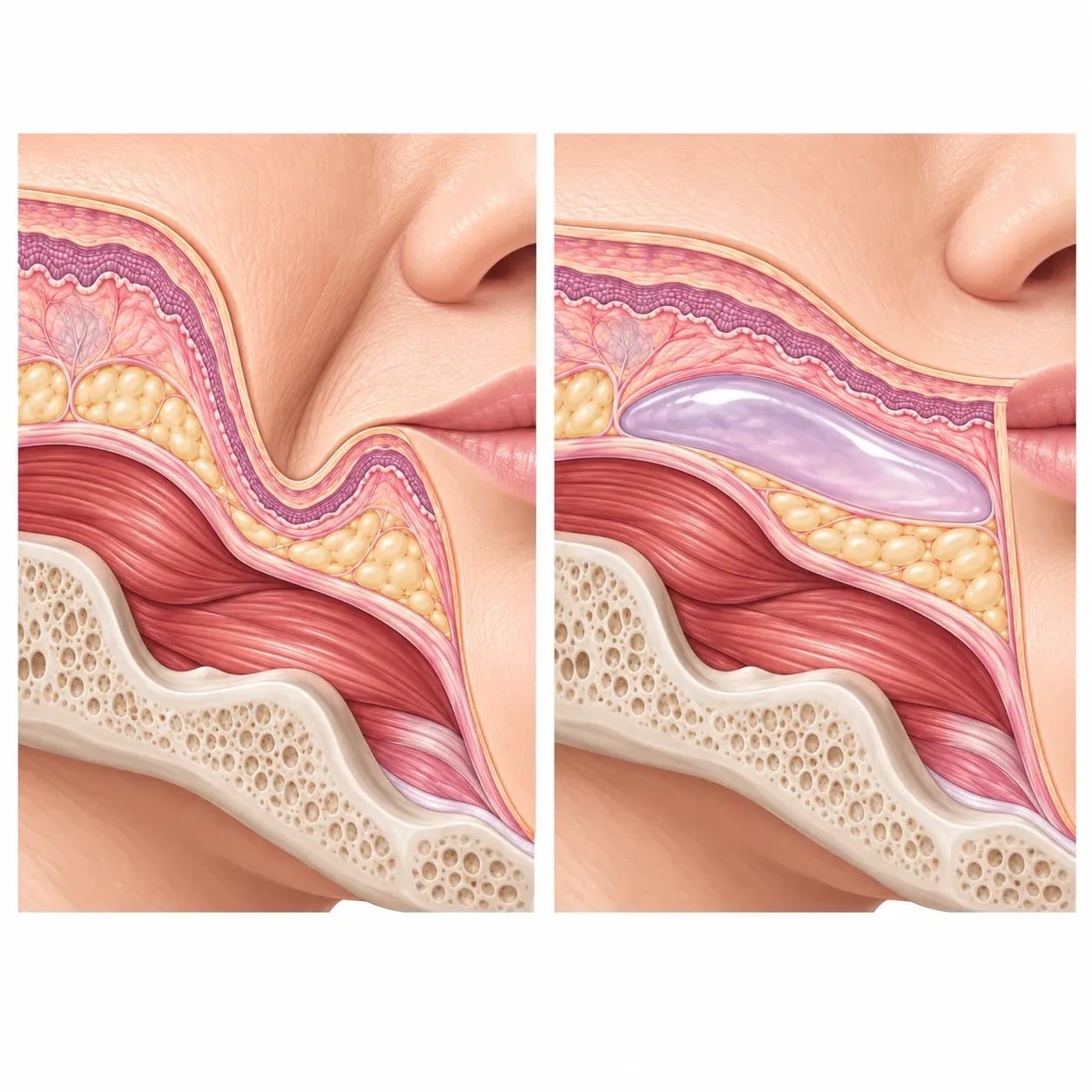
Which areas can be treated
Lips — volume, definition, or correcting asymmetry.
Cheekbones — restoring the midface volume that flattens with age, which lifts the whole face visually.
Nasolabial folds — the lines from nose to mouth corner. Often better treated by supporting the cheekbone above than by filling the fold itself.
Under-eye hollows — the most delicate area on the face. There is a section on it below, and it is worth reading before you ask for it.
Chin — projection and balance in profile. For a significant structural change, genioplasty is the surgical option.
Temples — hollowing here ages a face more than most people realise, and it is one of the most under-requested areas.
Jawline and facial contour — definition along the lower face.
Each needs a different gel, a different depth and a different technique. Which areas would actually change how you look is a conversation at the consultation, and it is often not the area you came in asking about.
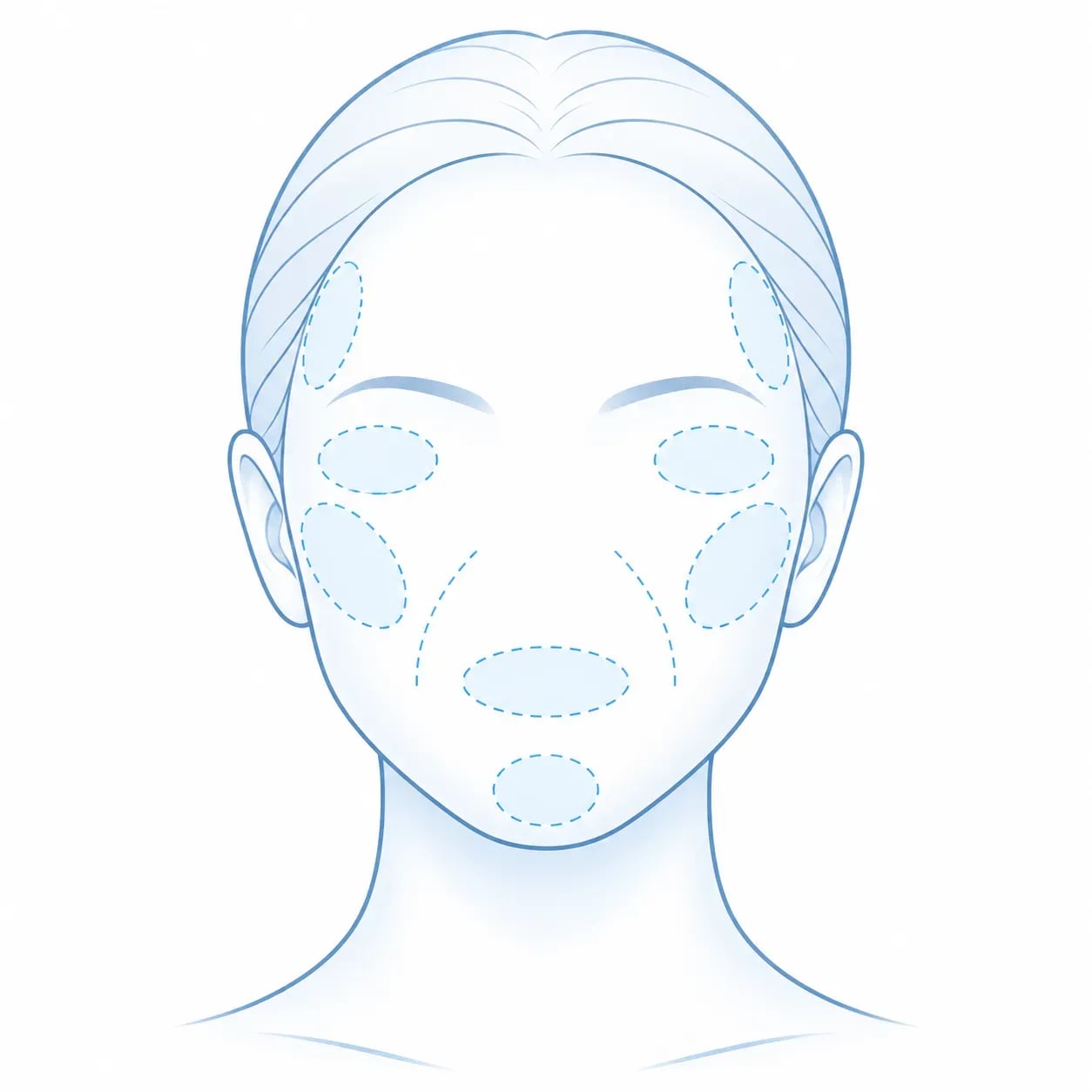
Under-eye filler: the most delicate area on the face
Three different things get called dark circles, and filler only treats one of them.
A hollow — missing volume under the eye forming a groove that casts a shadow. This is what filler treats, with a deep injection placed against the bone.
A bag — fat bulging forward. Filler does not remove it, and filling around it can make it more obvious. That is lower eyelid surgery.
Pigmentation — the skin itself is darker. Filler changes nothing about colour.
The Tyndall effect. Hyaluronic acid injected too superficially under thin under-eye skin scatters light and shows as a bluish-grey tint. It is a technique problem, not a product problem, and it is the most common reason under-eye filler looks wrong. It is correctable — hyaluronidase dissolves the product and the discolouration goes with it.
What it will not do: remove a bag, lighten pigmentation, or tighten loose skin. If any of those is your actual problem, filler is the wrong answer and a good injector will tell you so.
Under-eye filler lasts longer than elsewhere, generally 9 to 12 months, because the area moves less.
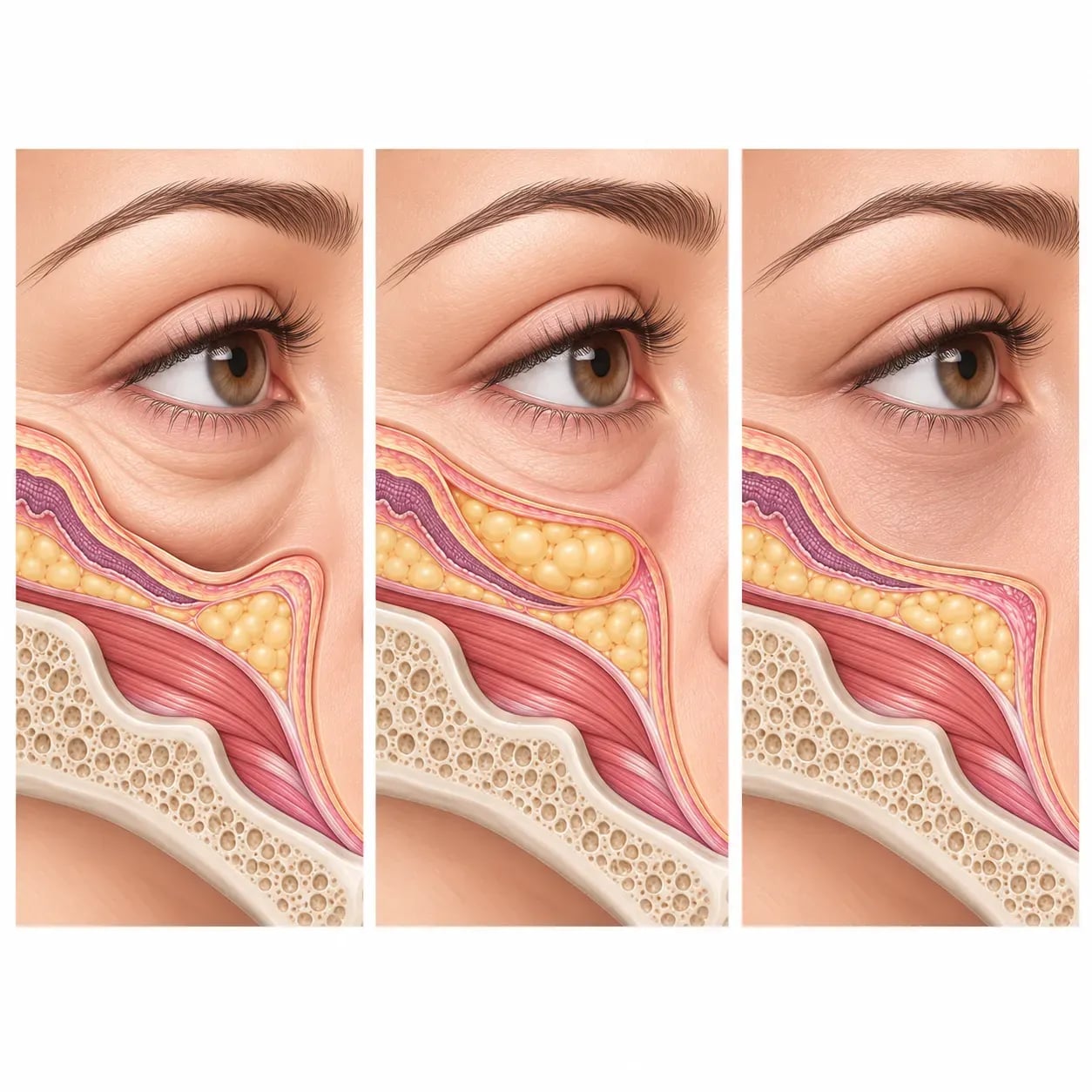
Filler or botulinum toxin?
They are routinely confused and they do opposite things.
Filler adds volume. It fills a hollow, builds a cheekbone, shapes a lip.
Botulinum toxin relaxes a muscle. It softens the lines that movement creates — forehead, frown, crow's feet — by reducing the movement itself.
A line that is there when your face is still is a volume problem. A line that appears when you move is a muscle problem. Most faces have both, which is why the two are frequently combined in the same session.
If you are not sure which you need, that is what the consultation is for, and the answer is sometimes neither.
What it costs, by area
€350 per millilitre, consultation and injection included. How many millilitres you need depends on the area and the result you want.
| Area | Typical volume | Budget |
| Lips, natural result | 1 ml | €350 |
| Lips, fuller result | 1 to 2 ml | €350 to €700 |
| Under-eye hollows, both sides | 1 ml | €350 |
| Cheekbones, both sides | 2 ml | €700 |
| Nasolabial folds | 1 to 2 ml | €350 to €700 |
| Chin | 1 to 2 ml | €350 to €700 |
| Temples, both sides | 2 ml | €700 |
| Facial contour | 2 to 4 ml | €700 to €1,400 |
These are typical volumes, not quotations. What you actually need is decided at the consultation, and a good injector frequently uses less than the patient expected.
Be wary of a price per session rather than per millilitre. Per-session pricing tells you nothing about how much product you are getting, and it is where cheap offers hide thin results. All prices are on the prices page.
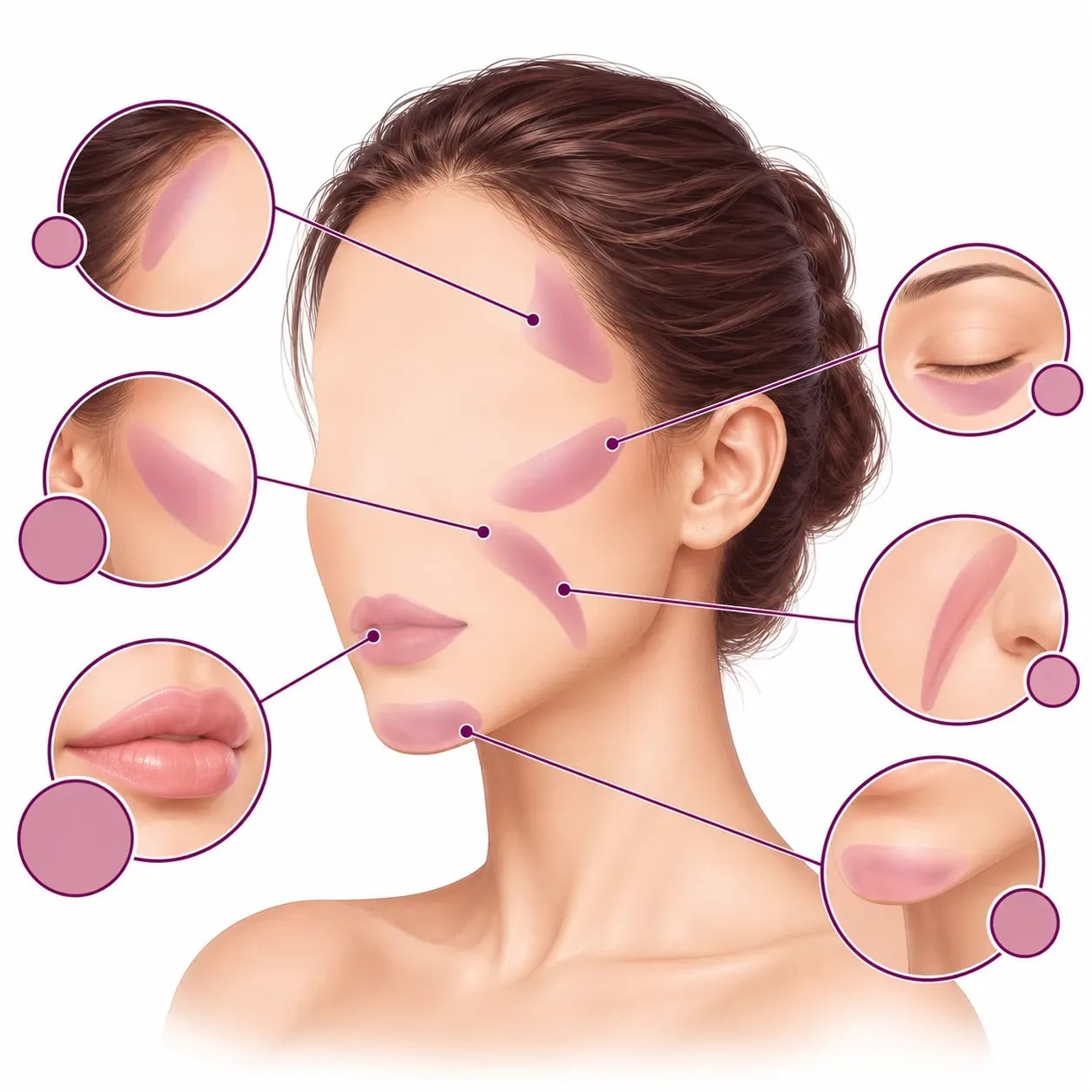
It dissolves, and that changes everything
Hyaluronic acid can be dissolved with an enzyme called hyaluronidase. Minutes to inject, effect within a day or two.
That matters in three different situations:
If you do not like the result. Too much, uneven, not what you wanted — it can be removed. You are not committed to living with it for a year.
If a complication occurs. This is the one that matters medically. Hyaluronidase is the treatment for vascular occlusion, and speed is everything.
If it has migrated. Filler that has moved out of position, most commonly in lips over repeated treatments, can be dissolved and started again.
This is the whole argument against permanent and semi-permanent fillers. They cannot be dissolved. When something goes wrong with a permanent filler — and over a lifetime, it does — the options are surgery or living with it. There is no good reason for a healthy person to accept that trade.
If you have had a non-dissolvable product injected before, tell us at the first contact. It changes what can safely be done, and it is not something to mention on the day.
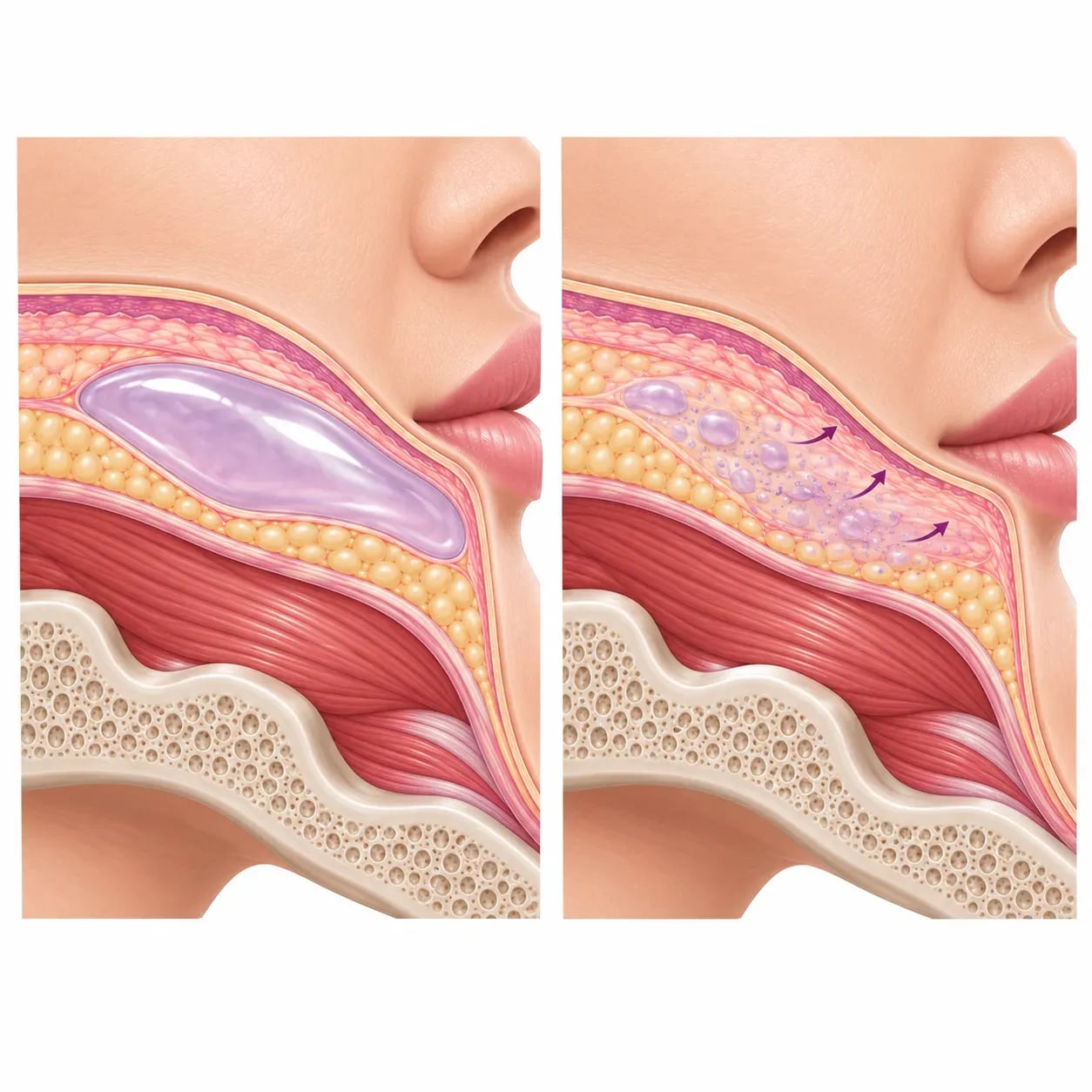
Vascular occlusion: the risk that actually matters
Most of what happens after filler is minor and temporary: swelling, bruising, tenderness, small lumps that settle. Swelling is universal and it is most pronounced in lips, where it can be dramatic for the first 48 hours.
There is one serious complication, and it is worth understanding properly.
Vascular occlusion. If filler is injected into a blood vessel, or compresses one, it interrupts the blood supply to an area of skin. Untreated, that can progress to skin necrosis. In very rare cases, injection near the eyes or the nose can affect vision.
It is rare. It is also a medical emergency, and the thing that determines the outcome is how fast hyaluronidase is given — hours, not days.
What is in place here: injectors trained in the vascular anatomy of the face, hyaluronidase kept on site, and a clinic rather than a treatment room.
What you should do, here or anywhere: ask whether hyaluronidase is on the premises before you let anyone inject you. If the answer is no, or vague, do not proceed. That question alone excludes a large proportion of places offering filler.
Signs to act on immediately: pain that is severe or increasing rather than settling, skin that turns white, mottled or dusky, or any change in vision. Not tomorrow — immediately.
Why the injector matters more than the product
Hyaluronic acid gels from reputable manufacturers are broadly comparable. What is not comparable is who is holding the needle.
The face has arteries running in predictable but variable places, close to exactly where filler is placed. Avoiding them is a matter of knowing the anatomy, choosing the right depth and plane, and recognising a problem in the first seconds rather than at the next appointment.
That is why this is done by doctors here, and why we are putting the point this bluntly: filler has become something anyone can buy a course in, and the gap between a trained injector and a weekend-trained one is invisible until something goes wrong.
The questions worth asking, of anyone, anywhere: what is your medical qualification, how much filler do you inject in a month, is hyaluronidase on site, and what would you do if you saw an occlusion. Nobody competent minds being asked.
Are you a candidate?
Filler suits an adult in good general health, with realistic expectations and an understanding that it is temporary.
Declare before anything is injected:
- Any previous filler, what it was and when — and especially any non-dissolvable product
- Any previous facial surgery or thread lift
- An active skin infection, or a cold sore outbreak, particularly around the lips
- Autoimmune conditions, or treatment affecting the immune system
- Anticoagulants or regular aspirin, which increase bruising
- Allergies, including to local anaesthetic
- Pregnancy or breastfeeding — filler is not given, as a precaution
- A planned dental procedure, which is usually spaced apart from filler
And a realistic expectation is specific: this hollow, this asymmetry, this lip shape. Filler restores and shapes volume. It does not lift sagging skin — that is a thread lift or a face and neck lift — and more filler is not a substitute for either. Chasing a lift with volume is how faces end up overfilled.
How long it lasts
6 to 18 months, and the range depends almost entirely on the area.
Lips: 6 to 9 months. They move constantly, which breaks the product down faster. This is the shortest-lasting area and the most frequently repeated.
Under-eye: 9 to 12 months. Very little movement.
Cheekbones, chin, temples: longest. Dense gels in areas that move little.
Hyaluronic acid resorbs completely, so maintaining a result means repeating it. That is a cost to plan for rather than a one-off.
If a lasting result matters more to you than reversibility, facial fat transfer uses your own fat and a proportion of it stays permanently. It is a procedure rather than a session, and it is worth discussing if you find yourself topping up every year.
Timing it before an event
The single most common regret with filler is having it too close to something that matters.
Two weeks minimum before any event.
Three weeks for lips, which swell more than anywhere else and can look substantially different for the first 48 hours.
A month if it is your first time, because you do not yet know how you react, and because you may want an adjustment at the two-week review.
A session a few days before a wedding gives you a volume nobody chose. Bruising is also possible and takes time to fade. Plan backwards from the date.
Your pathway
- Get in touch. Photographs from the front and both sides in natural light without makeup, what bothers you, and every previous injection you have had. A quote comes back within 24 to 48 hours.
- Plan it around a stay you are already making, where possible.
- Consultation on the day, with the facial assessment and the plan agreed before anything is injected.
- The session, 20 to 40 minutes. The gel contains a local anaesthetic, and numbing cream is used where needed.
- Aftercare instructions for the first 48 hours.
- No overnight stay.
- A review at two weeks, remotely or in person, once the swelling has gone and the result is real.
After the session
Swelling is universal, and worst in lips, where the first 48 hours can look alarming. It is not the result.
Bruising is possible, particularly under the eyes and in the lips.
For the first 48 hours: no intense exercise, no sauna, steam room or hot bath, no alcohol, and do not massage or press the treated area unless you have been told to.
Sleep slightly propped up for the first nights, which helps the swelling.
Small lumps in the first days are common and usually settle on their own. Mention any that are still there at two weeks.
Judge the result at two weeks, not before. Everything you see in the first days is swelling.
And contact us immediately — not at the review — if pain is severe or increasing, if the skin turns white, mottled or dusky, or if your vision changes.

Your doctors
Dr Marwen Guesmi performs injectable treatments with particular attention to the vascular anatomy of the face, which is the part of this that matters most.
Dr Walid Saidane focuses on dosing and on matching the texture of the product to the area being treated.
Both are doctors. On this treatment that is not a detail: the complication that matters is vascular, and recognising and treating it is a medical skill rather than a technique learned on a product course.
Treatments take place at Myron International Clinic, with hyaluronidase held on site.
Getting here, and before you come
There is no overnight stay for filler, which makes it straightforward to add to a trip you are already making.
From the UK and Ireland: around three hours from London. From the Gulf: daily flights from Dubai, around six and a half to seven hours, and from Doha, around six. From continental Europe: 1h30 to 3h from Paris, Brussels, Geneva, Lyon and Marseille, with no visa for EU and Swiss nationals. From West and Central Africa: regular connections from Dakar, Abidjan, Douala, Libreville and Casablanca.
Entry requirements follow your nationality, not your country of residence. A resident of Dubai or London holding an Indian, Pakistani, Nigerian or Filipino passport does not have the same conditions as a British or Emirati national, and a residence permit changes nothing. Check with the Tunisian embassy for your country of citizenship before booking.
Before you come:
- Know who would treat a complication at home. First item, for the reasons set out at the top of this page.
- A list of every injection you have ever had in your face, what it was and roughly when. Especially anything non-dissolvable.
- Documents: a valid passport, and a visa if your nationality requires one.
- Photographs from the front and both sides, natural light, no filter, no makeup.
- Your medication and allergies, flagging anticoagulants and regular aspirin.
- Avoid alcohol for 24 hours beforehand, which reduces bruising.
- Come without makeup on the day.
- Allow two weeks before anything that matters, three for lips, a month for a first treatment.
How long each treatment needs is in our guide to lengths of stay. Request a quote and you will have an answer within 24 to 48 hours.









Breast Augmentation
I had my surgery with ServiHealth, and I highly recommend their services. The team was very professional, and I'm extremely satisfied with my experience. ServiHealth offers various breast surgery procedures, including breast augmentation and breast reduction, to meet different needs.

Cam Naf
FranceFrequently asked questions about Dermal Fillers in Tunisia
€350 per millilitre, consultation and injection included. Typical budgets are €350 for lips with a natural result or for under-eye hollows on both sides, €700 for cheekbones or temples on both sides, and €700 to €1,400 for facial contouring. How many millilitres you need is decided at the consultation, and a good injector frequently uses less than the patient expected.
Usually not on its own — once you have paid for flights the saving against having it done at home is generally gone. It makes real sense added to a stay you are already making, alongside surgery or another treatment, where it costs forty minutes and no extra travel.
This is the question to settle before booking. The serious complication of filler, vascular occlusion, is treated with hyaluronidase within hours rather than days. We keep hyaluronidase on site, which covers anything that happens here, but a complication can present after you have flown home. Know who you would call: a doctor or clinic near you who has hyaluronidase and knows how to use it. If you cannot name one, that is a real argument for having filler done locally.
Yes, fully. Hyaluronic acid is dissolved with an enzyme called hyaluronidase, which takes minutes to inject and works within a day or two. That applies whether you dislike the result, the product has migrated, or there is a complication. It is also the whole argument against permanent and semi-permanent fillers, which cannot be dissolved.
Filler injected into a blood vessel, or compressing one, interrupting the blood supply to an area of skin. Untreated it can progress to skin necrosis, and in very rare cases injection near the eyes or nose can affect vision. It is rare and it is a medical emergency: what determines the outcome is how quickly hyaluronidase is given. Severe or increasing pain, skin turning white, mottled or dusky, or any change in vision means acting immediately.
Whether hyaluronidase is on the premises, what their medical qualification is, how much filler they inject in a month, and what they would do if they saw a vascular occlusion. Ask it here and ask it anywhere. If the answer on hyaluronidase is no or vague, do not proceed — that question alone excludes a large proportion of places offering filler.
Filler adds volume: it fills a hollow, builds a cheekbone, shapes a lip. Botulinum toxin relaxes a muscle, softening the lines that movement creates. A line present when your face is still is a volume problem; one that appears when you move is a muscle problem. Most faces have both, which is why they are frequently combined.
6 to 18 months depending on the area. Lips are shortest at 6 to 9 months because they move constantly. Under-eye lasts 9 to 12 months. Cheekbones, chin and temples last longest, because dense gels in areas that move little break down more slowly. Hyaluronic acid resorbs completely, so maintaining a result means repeating it.
Only if they are a hollow. A hollow under the eye casting a shadow is what filler treats, with a deep injection placed against the bone. A bag is bulging fat, which filler does not remove and can make more obvious — that is lower eyelid surgery. Pigmentation is darker skin, and filler changes nothing about colour. Most people have a combination.
A bluish-grey tint that appears when hyaluronic acid is injected too superficially under thin under-eye skin, scattering light. It is a technique problem rather than a product problem and it is the most common reason under-eye filler looks wrong. It is correctable: hyaluronidase dissolves the product and the discolouration goes with it.
It is the most delicate area on the face and the one that most depends on who is injecting. Done at the right depth, against the bone, by someone who knows the vascular anatomy, it works well and lasts 9 to 12 months. Done superficially it causes the Tyndall effect, and the area is close to vessels where occlusion matters most. This is not an area to choose on price.
Around 6 to 9 months. Lips move constantly, which breaks the product down faster than anywhere else on the face.
Some everywhere, and a lot in lips, where the first 48 hours can look alarming. It is not the result. Bruising is also possible, particularly under the eyes and in the lips. Judge the result at two weeks, not before.
Two weeks minimum, three weeks for lips, and a month if it is your first time — because you do not yet know how you react and you may want an adjustment at the two-week review. A session a few days before a wedding gives you a volume nobody chose.
No. Filler restores and shapes volume; it does not lift. Chasing a lift with more volume is how faces end up overfilled. Sagging is a thread lift or a face and neck lift, and more filler is not a substitute for either.
For 48 hours: intense exercise, sauna, steam room and hot baths, alcohol, and massaging or pressing the treated area unless told otherwise. Sleeping slightly propped up for the first nights helps the swelling. Small lumps in the first days are common and usually settle; mention any still there at two weeks.
Yes, considerably, and you must tell us at first contact rather than on the day. Non-dissolvable products change what can safely be injected and how. They also cannot be removed with hyaluronidase, which is why they are not used here.
No, as a precaution. It is an elective treatment and it can wait.
Not much. The gel contains a local anaesthetic and numbing cream is used where needed. Lips are the most sensitive area.
Yes, most commonly in lips after repeated treatments, where product gradually moves out of position. It is one of the situations hyaluronidase handles: the filler is dissolved and the area started again. Spacing treatments sensibly and not overfilling reduces the risk.
No. The session takes 20 to 40 minutes and is done in a single day, which is what makes filler easy to add to a trip you are already making.
Facial fat transfer uses your own fat, and a proportion of it stays permanently. It is a procedure rather than a session, with a recovery, but it is worth discussing if you find yourself topping up filler every year.