

Gastric Bypass in Tunisia: Price, Results and Lifelong Follow-Up
Gastric bypass in Tunisia: the essentials
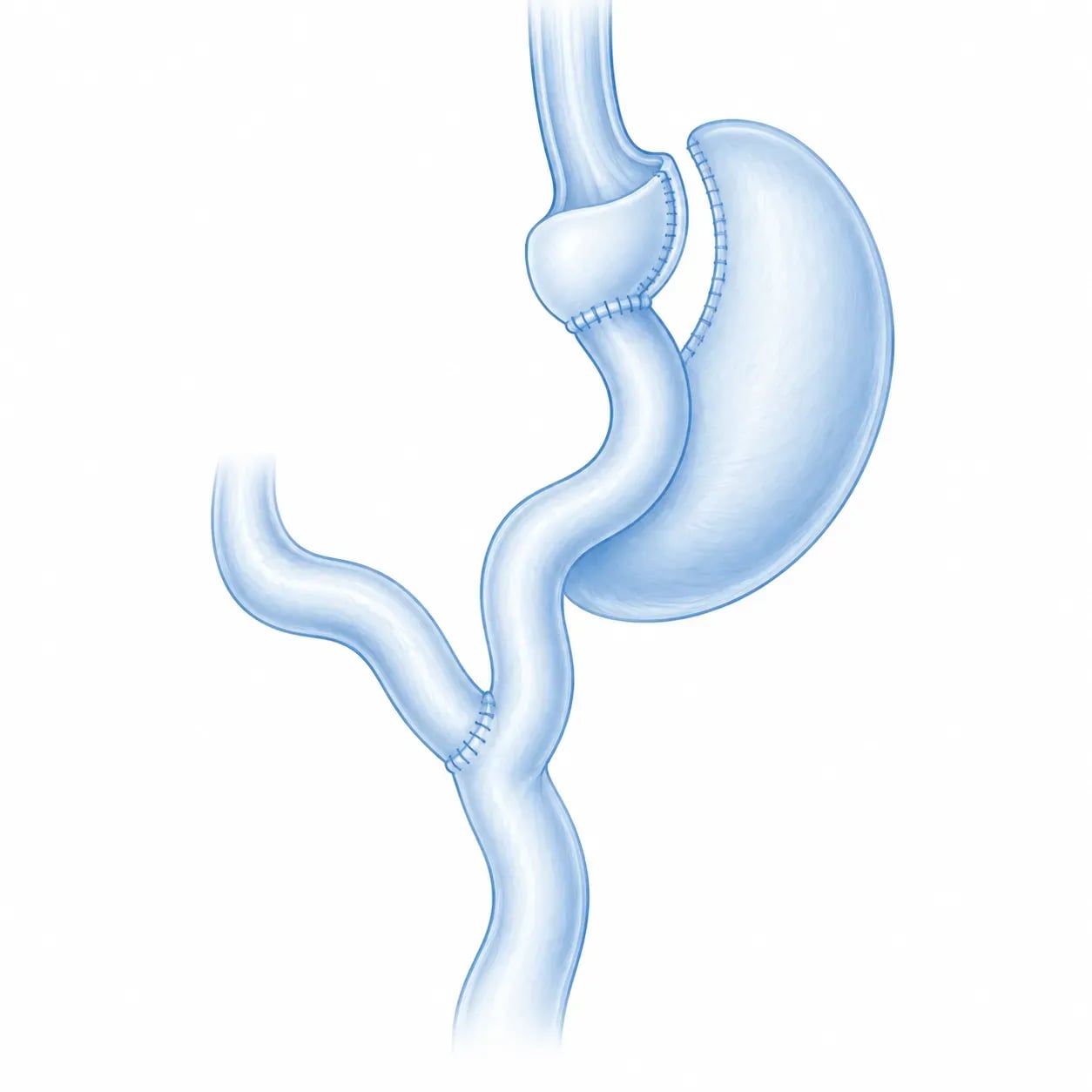
A gastric bypass creates a small pouch at the top of the stomach and reroutes the small intestine to it, so food bypasses most of the stomach and part of the intestine. You eat less, you absorb less, and your hunger signals change.
It is the most effective of the operations here, and the one with the most lasting obligations. Supplements for life, blood tests for life, and some things you cannot take again. That is the trade, and it should be clear before anything else.
Want the weight loss without the lifelong supplementation? See the gastric sleeve. Want something reversible or temporary? See the gastric band and the gastric balloon.
It is performed by Dr Sofiene Ayadi at Myron International Clinic in Tunis, with English-speaking support throughout.
| Operating time | 1h30 to 3h, by keyhole surgery |
| Anaesthetic | General |
| Stay in Tunisia | 5 days |
| Expected loss | 65 to 80% of excess weight over 2 years |
| Back to work | 3 to 4 weeks |
| Supplements | For life |
| Price | €4,150 |
Gastric bypass or weight-loss injections?
The injections have changed this conversation, and any page that ignores them is out of date.
Semaglutide and tirzepatide — Wegovy and Mounjaro — produce substantial weight loss with no operation, no anaesthetic and nothing permanent. For a great many people they are a sensible thing to try first, and if you have not discussed them with a doctor, that is where to start.
What they are not is a finished answer. They have to be taken continuously, they cost money every month for as long as you take them, side effects are common, and weight is commonly regained when they stop. Supply has also been unreliable.
What a bypass offers instead is a one-off intervention with the most durable results of anything here, and a well-documented effect on type 2 diabetes that frequently begins before significant weight is lost. What it costs you is permanence: the anatomy is changed, the supplements are for life, and some medicines are off the table afterwards.
They are not mutually exclusive. Medication before surgery, or after it if weight loss stalls, is increasingly common. This is a conversation for a doctor who knows your full history — not something to settle from a web page, ours included.
Sleeve or bypass, and how the four options compare
Bypass is generally preferred where there is marked type 2 diabetes, or severe reflux. Its effect on diabetes is well documented, and unlike a sleeve it tends to improve reflux rather than make it worse.
Otherwise a sleeve is often the first choice, because it achieves a great deal with far lighter long-term obligations.
The decision is made on your medical profile at the assessment, not on preference, and the pre-operative workup exists partly to confirm which of the two suits you.
| Bypass | Sleeve | Band | Balloon | |
| What changes | Stomach and intestine rerouted | Part of the stomach removed | A ring around the stomach | A balloon inside it |
| Reversible | In principle, but major surgery | No | Yes | Yes, it comes out |
| Absorption affected | Yes | No | No | No |
| Supplements | For life, strict | Usually lighter | No | No |
| Reflux | Tends to improve it | Can worsen it | Can worsen it | Can worsen it |
| Type 2 diabetes | Strongest documented effect | Good effect | Limited | Temporary |
| Price | €4,150 | €3,950 | €3,400 | €4,500 all in |
No technique is better in every case. If a provider recommends the same operation to everyone, that tells you something about the provider.
How a gastric bypass works
Two things happen in one operation, performed by keyhole surgery.
A small pouch is created at the top of the stomach, which is what limits how much you can eat at once.
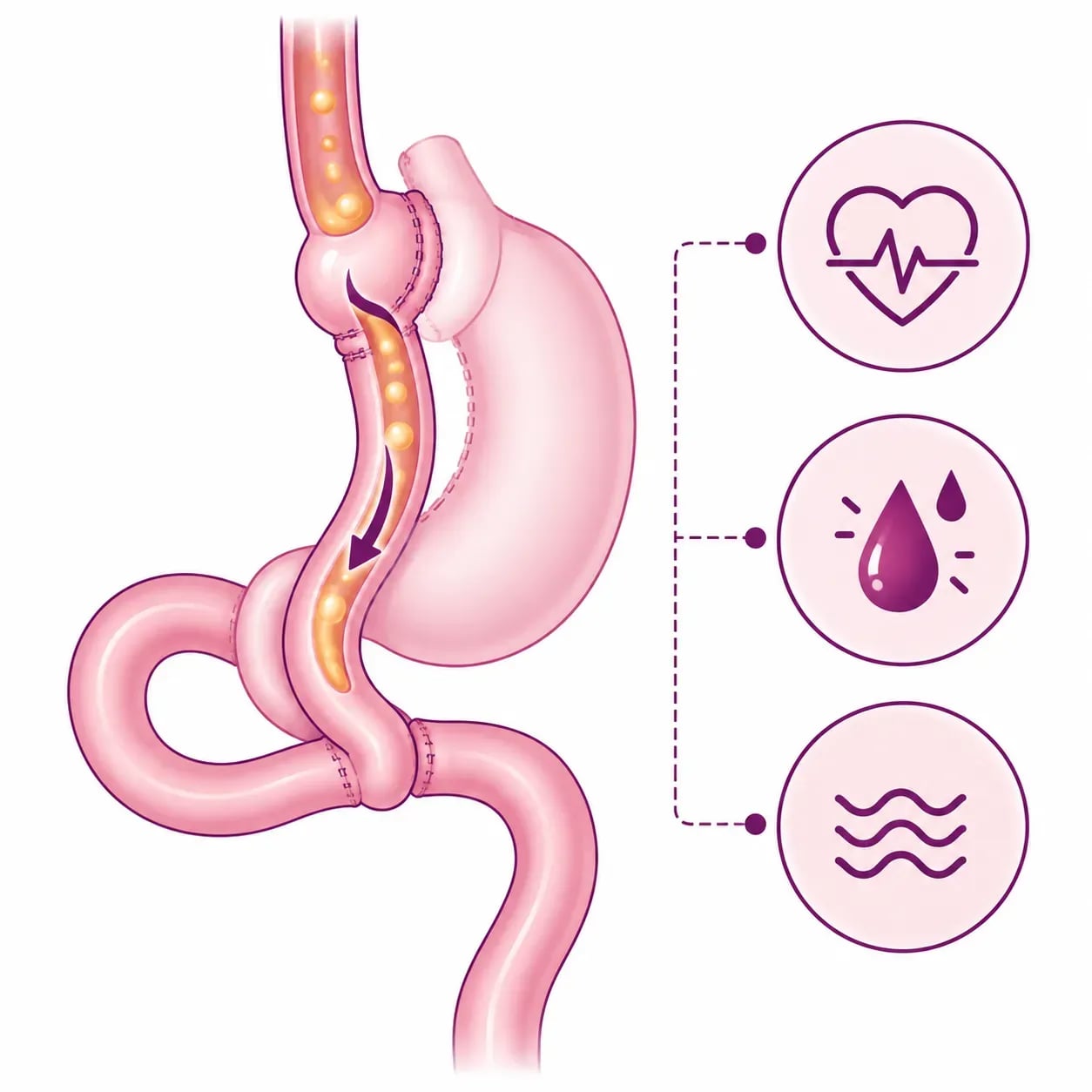
The small intestine is rerouted and joined directly to that pouch, so food bypasses the rest of the stomach and the first section of intestine.
Three effects follow: you take in less, you absorb fewer calories, and the hormonal signals governing hunger change. The third is the one people underestimate, and it is a large part of why bypass works where dieting did not.
The rest of your stomach is still there. It is not removed, it is simply no longer in the path food takes. That is the difference from a sleeve, and it is why a bypass is more reversible in principle.
Can it be undone?
In principle, yes — nothing is removed, so the anatomy can be reconnected.
In practice, a reversal is major abdominal surgery in someone who has already had major abdominal surgery. It is done when there is a reason to do it, not because someone changed their mind.
Treat a bypass as permanent when you decide. Its theoretical reversibility is a surgical fact, not a get-out. If what you want is something you can genuinely undo, that is the band or the balloon, and both are honest options with their own limits.
Who will monitor you for the rest of your life?
Settle this before you book anything. It is the question that decides whether a bypass abroad is a good idea for you, and it is the one most pages skip.
A bypass is not an operation you have and then forget. It commits you to blood tests at 3, 6 and 12 months, then annually for life, and to supplements that are adjusted according to those results. Deficiencies after a bypass develop silently: by the time you feel something, it has been developing for months.
That monitoring happens where you live, not here. Dr Ayadi and our team handle remote follow-up by phone, message and video call, and you leave with your operative report. But the blood tests have to be ordered, read and acted on by a doctor near you.
Do not assume your GP will simply take it on. Shared care after bariatric surgery performed privately or abroad is not guaranteed, practice varies, and some will decline. Ask your GP before you travel, not after. Show them what the follow-up involves and get an answer.
If you cannot arrange that monitoring, tell us. A bypass without lifelong blood tests is not a safe operation, and in that situation a sleeve, with lighter obligations, may be the better choice — or surgery abroad may not be right for you at all. We would rather say that now.
Supplements for life, and the blood test calendar
Because a bypass reduces absorption, supplementation is stricter than after a sleeve and it does not stop.
What is prescribed: iron, vitamin B12, calcium, vitamin D, and others according to your results.
The blood tests: at 3, 6 and 12 months, then once a year for life. The panel covers iron, ferritin, vitamin B12, folate, vitamin D, calcium, zinc and proteins.
You do not stop because you feel well. That is the single most important sentence on this page. Stopping vitamin B12 can cause neurological problems that come on slowly and are not always fully reversible once they appear. People stop because nothing seems to be wrong, which is precisely how the problem develops.
Who does what:
- ServiHealth and Dr Ayadi — remote follow-up, your operative report, and someone English-speaking to reach.
- Your own doctor — ordering and reviewing the blood tests, and adjusting your other treatments. Diabetes and blood pressure medication frequently need reducing quickly after a bypass, which is a reason to see them early rather than at the first annual review.
- A dietitian or nutritionist — strongly recommended, particularly in the first year.
What a gastric bypass costs
€4,150, for a 5-day stay.
Included: the surgeon's and anaesthetist's fees, the consultation, the basic pre-operative workup, the operation, the anaesthetic, the hospital stay, hotel accommodation, airport transfers and immediate post-operative follow-up.
Not included: flights, and — importantly — your lifelong supplements and blood tests, which are an ongoing cost wherever you live. Factor them in before comparing prices with anything else.
| Procedure | Price | Stay |
| Gastric bypass | €4,150 | 5 days |
| Gastric sleeve | €3,950 | 5 days |
| Sleeve revision | €4,200 | 5 days |
| Gastric band | €3,400 | 5 days |
| Gastric balloon, all in | €4,500 | Two trips |
All prices are on the prices page, and a personalised quote reaches you within 24 to 48 hours.
| Procedure | Price | Stay |
|---|---|---|
| Gastric Bypass Surgery | €4,150 | 5 days |
The assessment before surgery
This is more thorough than for anything else on this site, and it has two jobs: establishing that you can safely have the operation, and confirming that bypass rather than sleeve is the right one for you.
It includes: a nutritional assessment, a full blood panel, cardiac and respiratory examination, and often a psychological opinion.
The psychological opinion is not a formality or a judgement. Bariatric surgery changes your relationship with food permanently, and where eating is tied up with stress or emotion, that needs addressing alongside the operation rather than being left to resolve itself.
And a low-calorie diet for 1 to 3 weeks beforehand, to reduce the size of the liver. This makes the operation technically safer and it is not optional. It is also the point at which some people discover how hard the year ahead will be, which is useful information to have before rather than after.

Your pathway, step by step
- Get in touch from home. Your height, weight, medical history, and in particular any diabetes, reflux or previous abdominal surgery. An opinion and a quote come back within 24 to 48 hours.
- Talk to your own doctor about taking on the long-term monitoring. Before you book.
- Preparation. The pre-operative workup, the low-calorie diet for 1 to 3 weeks, and stopping smoking. Our preparation guide covers what applies to every procedure.
- Arrival. You are met at Tunis-Carthage and transferred.
- Pre-operative assessment with Dr Sofiene Ayadi and the anaesthetist.
- The operation, 1h30 to 3h by keyhole surgery.
- Hospital stay, with walking from the day after surgery — which matters more here than it sounds, because of clot risk.
- Discharge with your eating plan, your supplements and your operative report.
- The flight home, with compression stockings and regular movement.
Risks, early and late
This is the biggest operation offered here, and the risks deserve setting out plainly rather than summarising.
In the first days: a leak at one of the joins, bleeding, infection, and blood clots. A leak is the serious early complication, and it is the reason the hospital stay and the monitoring are what they are.
Later: marginal ulcer at the join, internal hernia, narrowing at a join, bowel obstruction, nutritional deficiencies, and protein malnutrition.
Blood clots are managed with compression stockings, walking from the day after surgery, and preventive anticoagulant treatment where indicated. Breathlessness, chest pain, or pain and swelling in one calf are emergencies at any point, including after you are home.
Go to an emergency department without waiting if you have: severe or unusual abdominal pain, a rapid heartbeat with fever, persistent vomiting, an inability to keep liquids down, chest pain or breathlessness. Tell them you have had a gastric bypass — it changes what they look for.
Internal hernia: the one that arrives years later
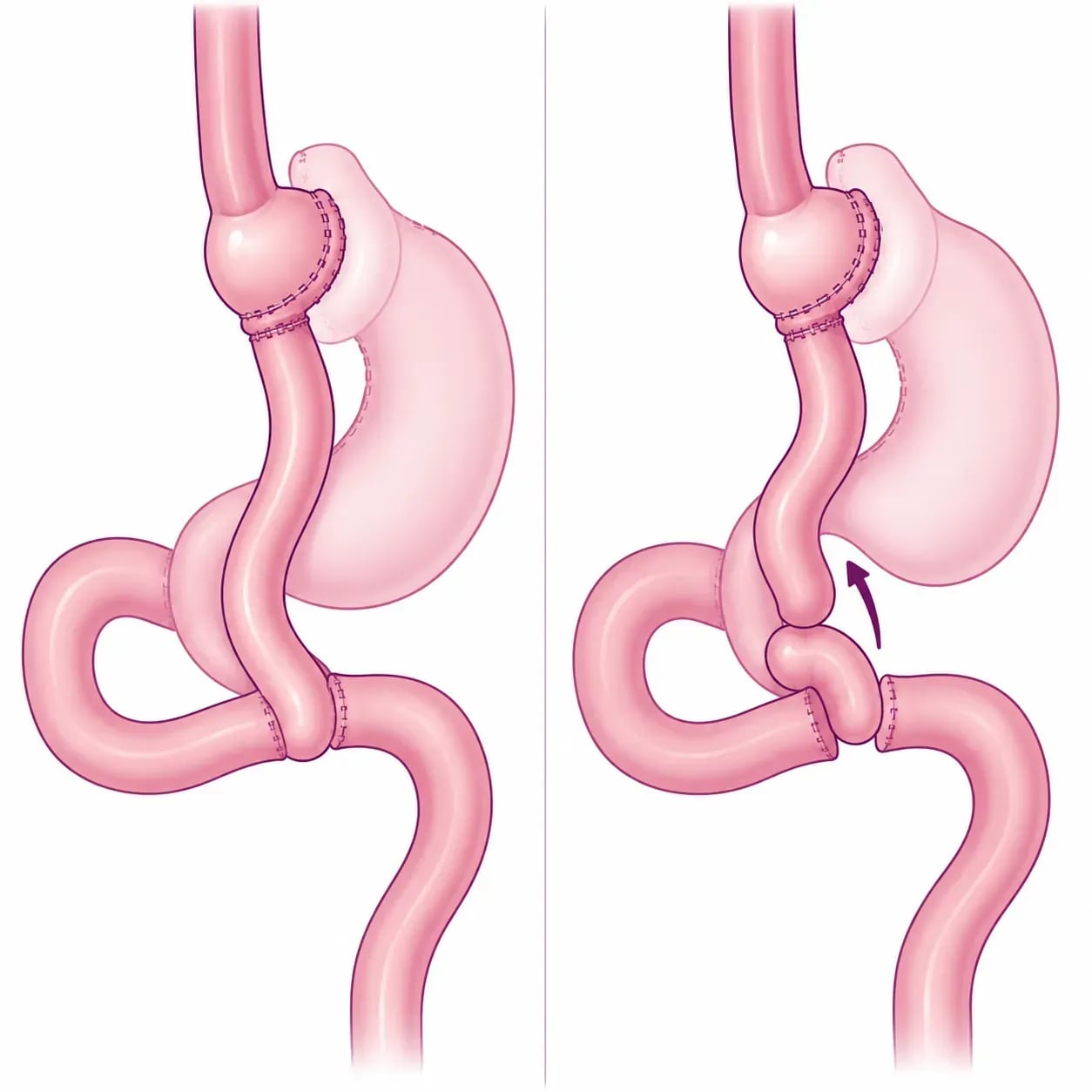
As you lose weight, the fat that filled the space between the rejoined sections of intestine disappears, and gaps can open. A loop of intestine can slip through one. That is an internal hernia.
It can happen years after the operation, long after you have stopped thinking of yourself as a surgical patient, and it can cause an obstruction.
What to do about it: treat any unusual abdominal pain as needing attention, however long after your bypass, and however well you have been. Do not wait to see if it passes.
And tell whoever examines you that you have had a gastric bypass. A doctor who does not know will not be looking for this, and it is not obvious on a routine examination. Keep your operative report somewhere you can find it, and keep a copy on your phone.
Dumping syndrome
Dumping syndrome is what happens when sugary or fatty food arrives in the intestine too quickly after a bypass: palpitations, sweating, nausea, feeling faint, sometimes diarrhoea, within half an hour of eating.
It is unpleasant and it is not dangerous. Most people get dumping at some point, usually after misjudging something, and it is the complication people ask about most.
It also does a job. It makes eating sugar genuinely unappealing rather than theoretically inadvisable, and that is part of how habits change after a bypass.
Late hypoglycaemia is a related effect: blood sugar dropping one to three hours after a sugary meal, leaving you shaky and weak. Eating protein and complex carbohydrates rather than sugar alone prevents most of it. If it keeps happening, report it — it can be managed.
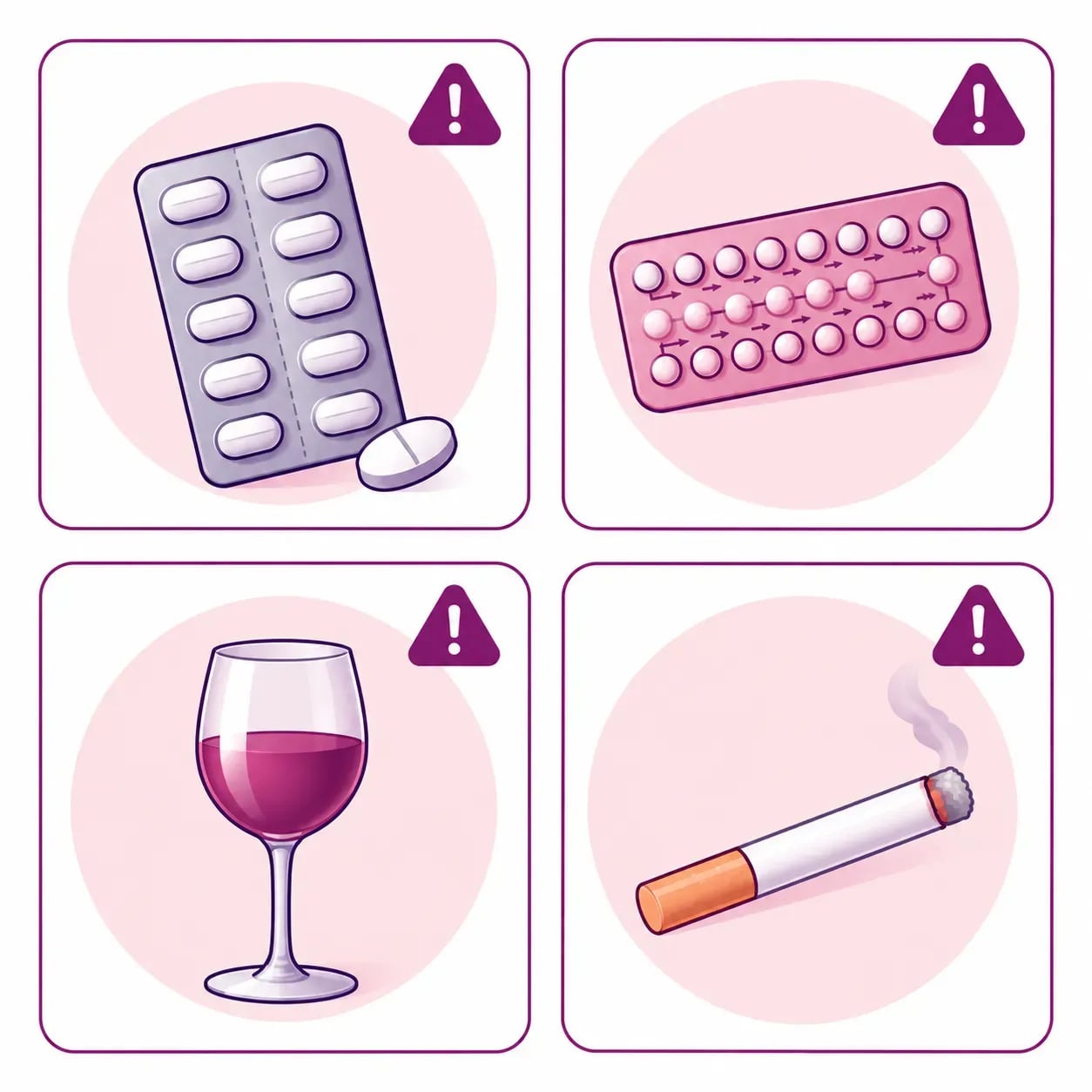
Medication, alcohol and tobacco after a bypass
These are permanent changes, not post-operative instructions, and they are the part people are least warned about.
Anti-inflammatories. Ibuprofen and other NSAIDs raise the risk of an ulcer at the join and are to be avoided long-term. This matters more than it sounds: they are in a great many over-the-counter remedies, and they are what most people reach for by default. Tell every doctor, dentist and pharmacist that you have had a gastric bypass.
How you absorb medicines changes. Extended-release formulations may not work as intended and may need switching. Have your regular prescriptions reviewed after the operation rather than assuming they still do what they did.
Oral contraception may become less reliable because it depends on digestive absorption. Discuss a method that does not with your own doctor, before you travel. This is not a minor footnote, and pregnancy in the first year after a bypass is specifically what you are trying to avoid.
Alcohol. After a bypass, alcohol reaches the bloodstream faster and at higher concentrations than before. You will be affected by less, and sooner. An increased risk of alcohol dependence after bariatric surgery is also documented, which is a difficult thing to put on a clinic page and a necessary one. If alcohol is already something you think about, say so at the consultation. It is a medical conversation, not a moral one.
Tobacco. Smoking raises the risk of ulcers at the joins. Stopping is part of the treatment, permanently, not just before the operation.
Can the weight come back? Being straight about it
Bypass gives the most durable results of the operations here. Partial weight regain over the years is still possible, particularly where eating habits have not genuinely changed.
The operation makes it much harder to eat too much. It does not make it impossible, and the pouch adapts over time.
What protects the result is the part that has nothing to do with surgery: how you eat, whether you kept the dietitian appointments, whether you are still moving. The operation buys you an advantage that is far better than anything else available. It does not buy you an exemption.
Pregnancy after a bypass
Wait 12 to 18 months. Weight is falling rapidly during that period and nutritional status is at its least stable — not the conditions for a pregnancy.
Fertility often improves after significant weight loss, sometimes quickly and sometimes in women who had not expected it. That is exactly why contraception needs sorting out before the operation, not after.
Contraception: the pill may be less reliable after a bypass. Choose a method that does not depend on digestive absorption, and discuss it with your own doctor before you travel.
During pregnancy: usually normal, with closer monitoring. Iron, B12, folate, vitamin D and protein are tracked more carefully than they would otherwise be. Tell your midwife and obstetrician that you have had a bypass.
And report any abdominal pain during pregnancy without waiting. The risk of internal hernia is higher in pregnancy, and abdominal pain is easy to attribute to the pregnancy itself.
If you are planning a pregnancy in the near future, say so at the first contact. It may change when the operation should happen.
And the loose skin afterwards?
After losing 65 to 80% of excess weight, loose skin is usual rather than exceptional, and for many people it becomes the next thing they want to address.
Wait until your weight has been stable, generally around 12 to 18 months after the bypass. Operating on a body still changing shape means operating twice.
A tummy tuck is the most common, often with a muscle repair. Arm lift and thigh lift follow where the skin there is affected too, in one stage or several depending on how much is involved.
The surgeon assesses the whole picture and tells you what can be treated, in what order, and over how long.
Your surgeon
Dr Sofiene Ayadi is the bariatric surgeon at Myron International Clinic and handles the whole pathway: the sleeve-or-bypass assessment, the operation, and the long-term follow-up.
That he performs both means he has no reason to steer you toward one, and he will tell you if a sleeve suits your situation better.
Ask him why bypass rather than sleeve in your case, and expect a specific answer about your diabetes, your reflux or your history — not a general one about bypass being more effective.
Getting to Tunisia, and before you travel
From the UK and Ireland: around three hours from London, with connections from other UK and Irish airports. From the Gulf: daily flights from Dubai, around six and a half to seven hours, and from Doha, around six. From continental Europe: 1h30 to 3h from Paris, Brussels, Geneva, Lyon and Marseille, with no visa for EU and Swiss nationals. From West and Central Africa: regular connections from Dakar, Abidjan, Douala, Libreville and Casablanca.
Entry requirements follow your nationality, not your country of residence. A resident of Dubai or London holding an Indian, Pakistani, Nigerian or Filipino passport does not have the same conditions as a British or Emirati national, and a residence permit changes nothing. Check with the Tunisian embassy for your country of citizenship before booking.
Your checklist:
- Your doctor's agreement to monitor you long-term. The most important item here.
- Documents: a passport valid well beyond your return date, and a visa if your nationality requires one.
- Your diabetes and reflux records, including recent HbA1c and any endoscopy report.
- Tell your GP you are going, before rather than after.
- A written list of your medication, flagging extended-release formulations and anything anti-inflammatory.
- Contraception reviewed with your own doctor.
- The pre-operative low-calorie diet, for 1 to 3 weeks. Not optional.
- Stop smoking, and cut alcohol right back.
- Compression stockings for the flights.
- Food at home for your return: the first weeks are liquid, then puree, then soft. Buy it before you go.
- Book 3 to 4 weeks off work, and arrange help at home for the first of them.
How long each procedure needs is in our guide to lengths of stay. Request a quote and you will have an answer within 24 to 48 hours.










Frequently asked questions about Gastric Bypass in Tunisia
€4,150 with ServiHealth for a 5-day stay, covering the surgeon's and anaesthetist's fees, the consultation, the basic pre-operative workup, the operation, the anaesthetic, the hospital stay, hotel accommodation, transfers and immediate post-operative follow-up. Flights are not included, and neither are your lifelong supplements and blood tests, which are an ongoing cost wherever you live.
The injections produce substantial weight loss with no operation and nothing permanent, but they have to be taken continuously, cost money every month and are commonly followed by weight regain when stopped. A bypass is a one-off intervention with the most durable results available and a well-documented effect on type 2 diabetes, at the cost of permanence: changed anatomy, lifelong supplements, and some medicines off the table. They are not mutually exclusive, and if you have not yet discussed medication with a doctor, that is where to start.
A doctor where you live, and you should settle this before booking. A bypass commits you to blood tests at 3, 6 and 12 months then annually for life, with supplements adjusted according to the results. Shared care after bariatric surgery performed privately or abroad is not guaranteed and practice varies, so ask your GP before you travel. If you cannot arrange it, tell us — a bypass without lifelong monitoring is not a safe operation.
A sleeve permanently removes part of the stomach and does not affect absorption. A bypass creates a small pouch and reroutes the intestine, so it limits both intake and absorption. Bypass is generally preferred where there is marked type 2 diabetes or severe reflux, since it tends to improve reflux rather than worsen it. Otherwise a sleeve is often chosen first, because the long-term obligations are far lighter.
Yes, and more strictly than after a sleeve. Iron, vitamin B12, calcium, vitamin D and others according to your results, with blood tests at 3, 6 and 12 months then annually for life. You do not stop because you feel well: deficiencies after a bypass develop silently, and stopping vitamin B12 can cause neurological problems that come on slowly and are not always fully reversible.
In principle, because nothing is removed and the anatomy can be reconnected. In practice a reversal is major abdominal surgery in someone who has already had major abdominal surgery, and it is done when there is a reason, not because someone changed their mind. Treat a bypass as permanent when you decide. If you want something genuinely reversible, that is the band or the balloon.
On average 65 to 80% of excess weight over two years, with individual results varying. It is the most effective of the operations offered here.
Yes for both. Its effect on type 2 diabetes is the best documented of any of these operations and frequently begins before significant weight is lost. On reflux it tends to improve the situation, unlike a sleeve, which can make reflux worse. These are the two main reasons bypass is chosen over sleeve.
Dumping syndrome is a reaction that occurs when sugary or fatty food arrives in the intestine too quickly after a bypass: palpitations, sweating, nausea, feeling faint, sometimes diarrhoea, within half an hour of eating. It is unpleasant and not dangerous, most people get it at some point, and it does a job — it makes eating sugar genuinely unappealing rather than theoretically inadvisable.
As you lose weight, the fat that filled the space between the rejoined sections of intestine disappears and gaps can open, through which a loop of intestine can slip. It can happen years after the operation and can cause an obstruction. Treat any unusual abdominal pain as needing attention however long afterwards, and tell whoever examines you that you have had a bypass — a doctor who does not know will not be looking for it.
No. NSAIDs such as ibuprofen raise the risk of an ulcer at the join and are to be avoided long-term. They are in a great many over-the-counter remedies, so tell every doctor, dentist and pharmacist that you have had a bypass.
Not necessarily. Absorption changes after a bypass and extended-release formulations in particular may not work as intended and may need switching. Have your regular prescriptions reviewed after the operation rather than assuming. Diabetes and blood pressure medication frequently need reducing quickly, which is a reason to see your own doctor early.
It may be less reliable, because it depends on digestive absorption. Discuss a method that does not with your own doctor before you travel. This matters particularly because pregnancy in the first year after a bypass is specifically what you want to avoid.
Be very careful. Alcohol reaches the bloodstream faster and at higher concentrations than before, so you are affected by less and sooner. An increased risk of alcohol dependence after bariatric surgery is also documented. If alcohol is already something you think about, raise it at the consultation — it is a medical conversation, not a moral one.
Five days. That covers the pre-operative assessment with the surgeon and the anaesthetist, the operation, the hospital stay with walking from the day after surgery, and discharge with your eating plan and supplements.
Moderate, and controlled with painkillers. The usual complaints are abdominal tightness and shoulder pain, the latter from the gas used during keyhole surgery, which surprises people because it seems unrelated. Both settle within days.
Yes, a low-calorie diet for 1 to 3 weeks, to reduce the size of the liver and make the operation technically safer. It is not optional. It is also where some people discover how demanding the year ahead will be, which is useful to know beforehand.
Often, between months 3 and 6, and it is usually temporary. Adequate protein intake and taking your supplements properly limit it. It is distressing and it does pass.
Partially, over the years, particularly where eating habits have not genuinely changed. Bypass gives the most durable results of these operations, but the operation makes eating too much much harder rather than impossible, and the pouch adapts over time.
After 12 to 18 months, once weight has stabilised. Fertility often improves after significant weight loss, sometimes unexpectedly, which is why contraception needs sorting before the operation rather than after. During pregnancy, monitoring is closer, and any abdominal pain should be reported without waiting because internal hernia risk is higher.
Yes. It is one of the two main revision options, and it is often the one chosen when reflux appears after a sleeve or when weight regain is significant. Sleeve revision is priced at €4,200.
It is usual after losing 65 to 80% of excess weight. Wait until your weight has been stable, generally around 12 to 18 months after the bypass, then a tummy tuck, arm lift or thigh lift can be considered in one stage or several. Operating on a body still changing shape means operating twice.