

Eyelid Surgery in Tunisia: Upper, Lower, Eye Bags and Price

Eyelid surgery in Tunisia: the essentials
Eyelid surgery — blepharoplasty — removes excess skin from the upper lids and, where it is the right answer, treats the bags under the lower ones. People come to it because they look tired in photographs when they are not tired.
Before anything else, read section 3. A good proportion of what people call hooded eyelids is actually a dropped brow, and that needs a different operation.
It is performed by Dr Taher Djemal and Dr Abir Ben Ouaghrem at Myron International Clinic in Tunis, with English-speaking support throughout.
| Operating time | 1 to 2 hours |
| Anaesthetic | Confirmed at the anaesthetic consultation |
| Stay in Tunisia | 5 days |
| Back to work | Around a week, with bruising still visible |
| Final result | Several months |
| Price | €1,700 for 2 eyelids, €1,850 for 4 |
Two eyelids or four?
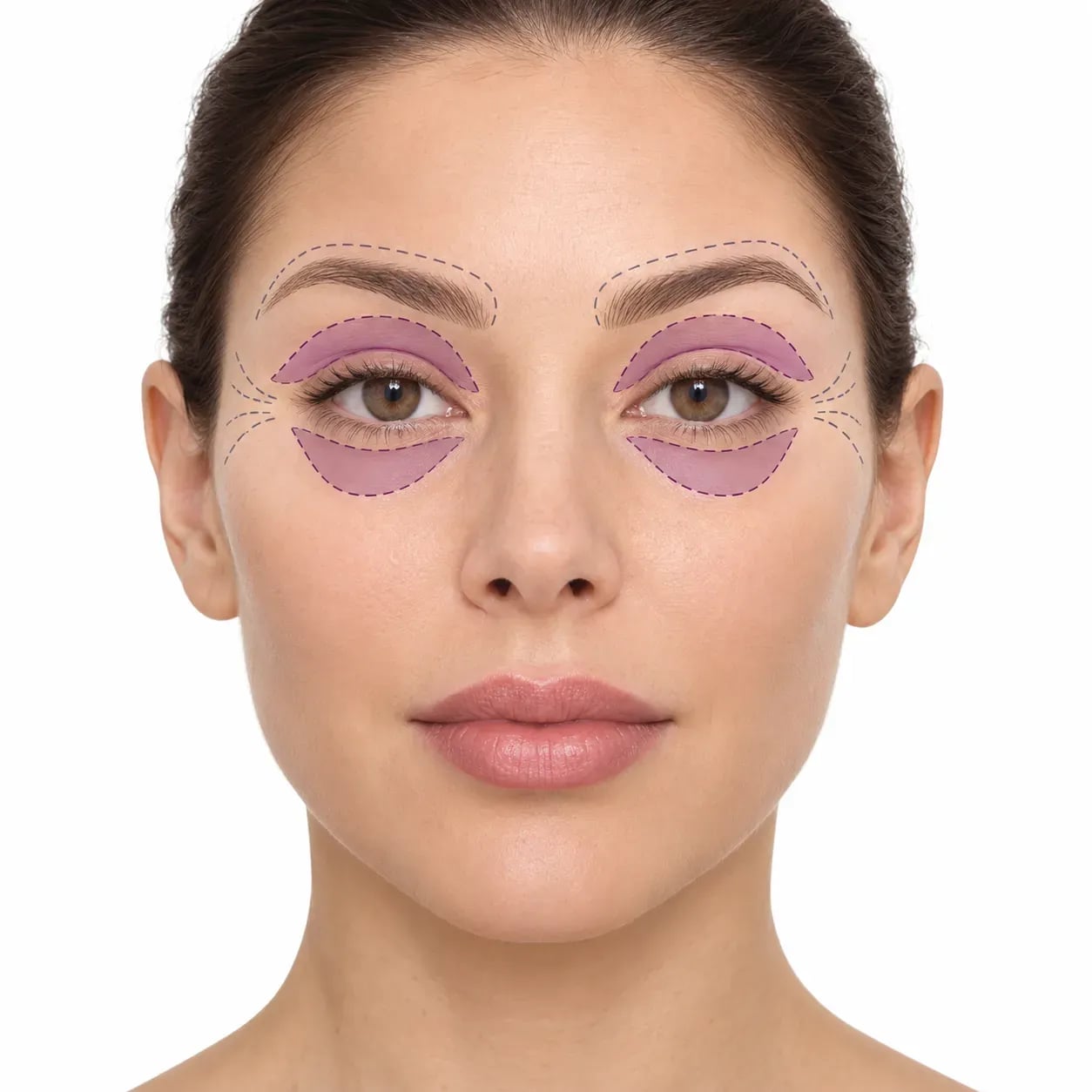
Two eyelids means the upper lids. This is the more common operation, and it is the one that addresses heavy, hooded upper lids.
Four eyelids adds the lower lids, usually for bags.
The difference in price is €150. The difference in whether you need it is not a matter of budget. Upper and lower lids age differently and for different reasons, and plenty of people need one and not the other.
Which applies to you is decided on examination. If you are told two rather than four, that is the assessment, not a cheaper option being withheld.
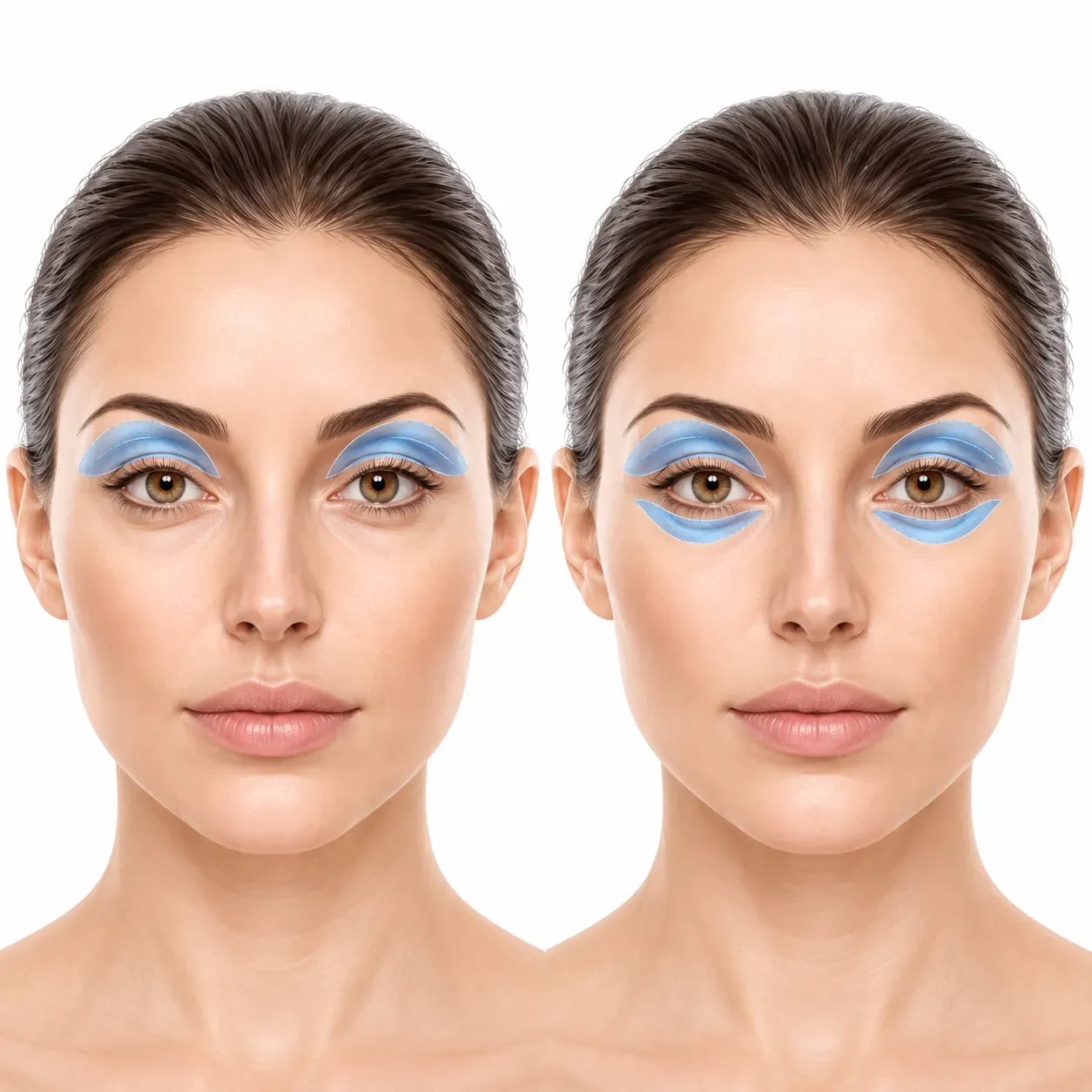
Is it your eyelid, or is it your brow?
This is the distinction that determines whether you are happy with the result, and it is invisible to anyone looking at their own eyes in a mirror.
As the brow descends with age, it pushes the upper lid skin down in front of it. The eye then looks hooded — but the problem is the position of the brow, not the amount of skin on the lid.
Removing lid skin when the real issue is the brow does not give the result you want, and it can pull the brow down further. The eye looks tighter and, oddly, not more open.
The two also coexist, frequently, in different proportions. The surgeon assesses brow position, lid skin, fat and the overall balance of the eye area, which is why this cannot be judged from a photograph.
If the brow turns out to be the main problem, you will be told so, and eyelid surgery alone will not be recommended. Being told that before you book is worth more than a smooth booking process.
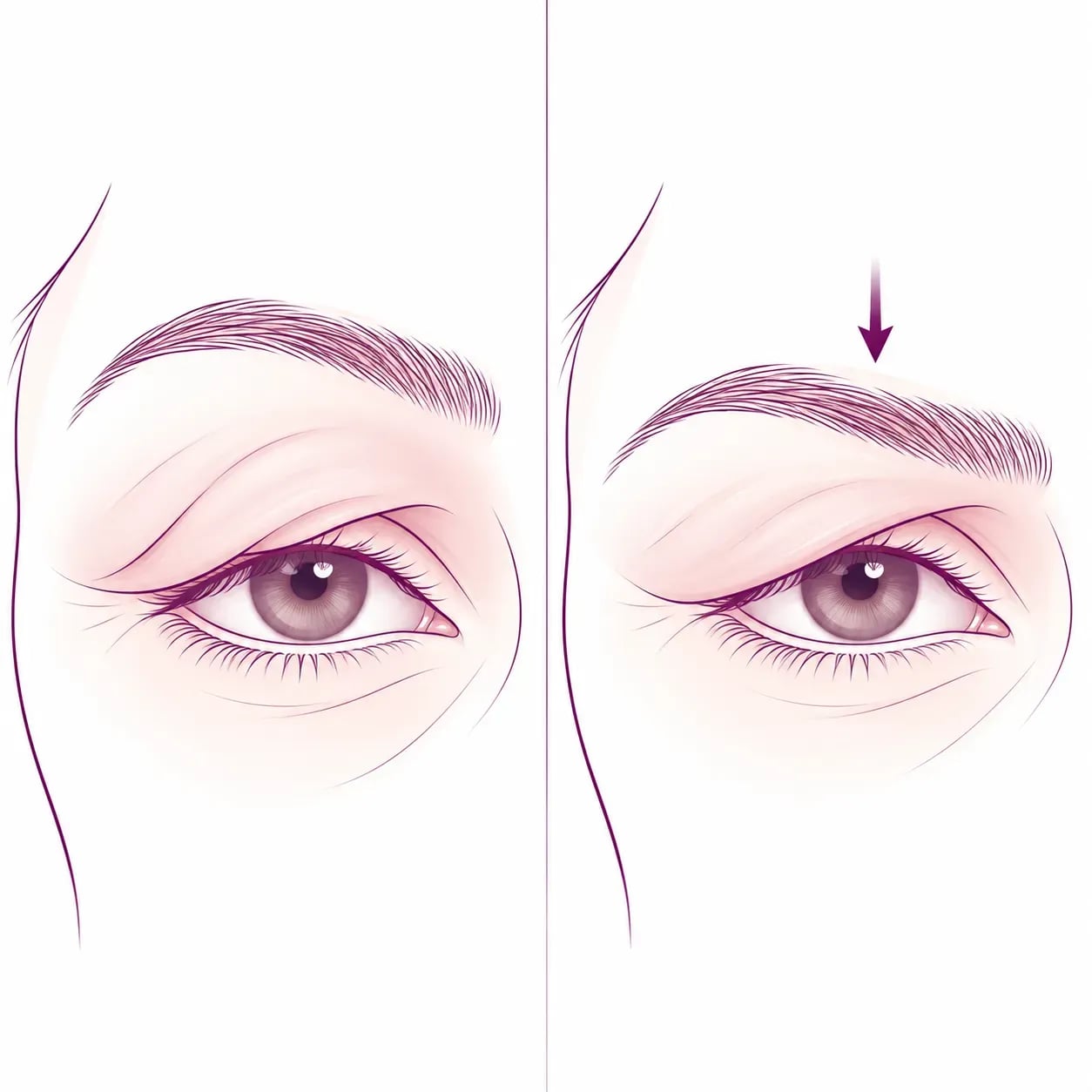
A drooping lid: excess skin, or ptosis?
Another pair that looks identical from outside and is completely different underneath.
Excess skin — dermatochalasis. The lid itself sits normally, but loose skin hangs over it. This is what blepharoplasty treats.
Ptosis. The lid itself sits too low, because the muscle that lifts it is weak. Removing skin does not fix this. It needs a different operation, on the lifting mechanism rather than on the skin.
They can occur together, and often do. If only the skin is addressed when there is also a ptosis, the eye stays half-closed and the result disappoints — which is the single most common reason people are unhappy after upper lid surgery.
If one eye has looked lower than the other for a long time, say so at the consultation. It changes the assessment.
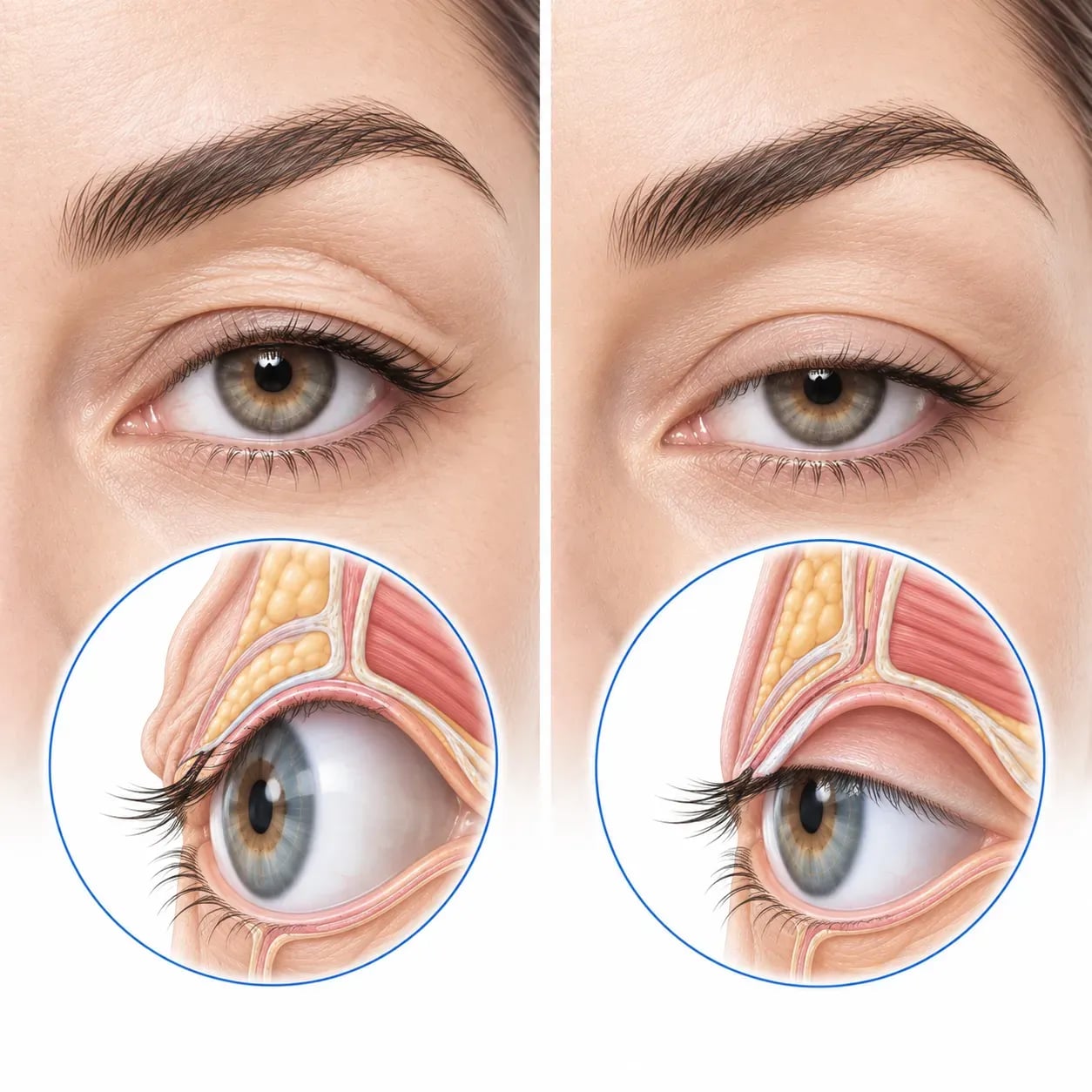
Bags, hollows or pigment: three different problems
People arrive asking to fix their dark circles. That word covers at least three unrelated things, and surgery only helps with one of them.
Bags — fat bulging forward under the lid, casting a shadow. This is what lower lid surgery addresses.
Hollow dark circles — loss of volume at the tear trough, so the area is sunken rather than full. Surgery makes this worse. The answer is adding volume: hyaluronic acid filler or facial fat transfer.
Pigmented dark circles — the skin itself is darker. No operation changes pigment.
And the critical point about fat: fat is not removed as a matter of course. Where the area is already hollowing, removing fat deepens the hollow and makes the eye look older. Depending on your anatomy the fat may be preserved, repositioned to fill the tear trough, or partly removed. Repositioning rather than removing is frequently the better answer, and it takes more skill than taking it out.
Most people have a combination of all three in different proportions. That is why the plan is made at an examination.
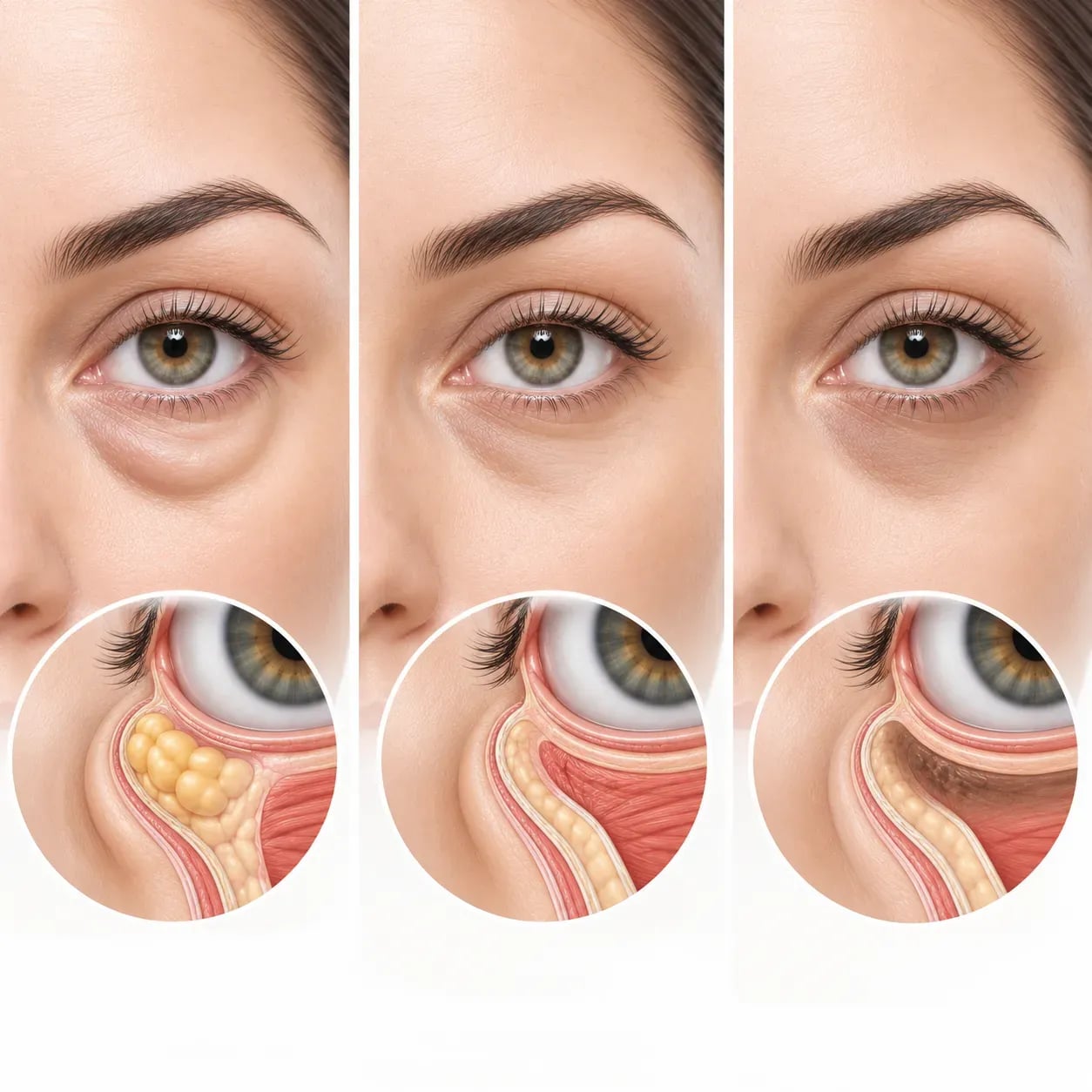
Upper eyelid surgery
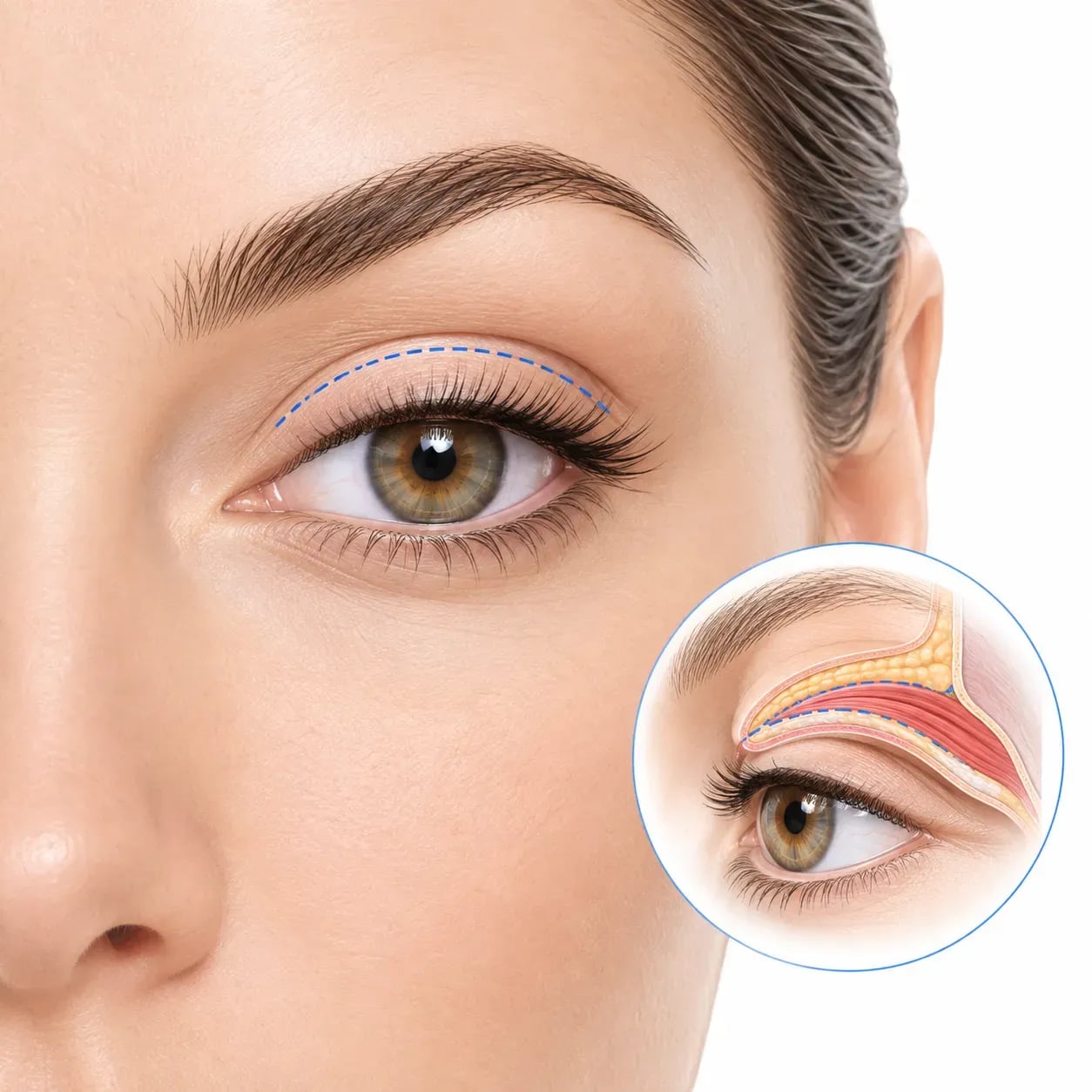
Excess skin is removed from the upper lid, and the incision is placed in the natural crease of the lid, where it sits hidden when your eyes are open.
Where there is also fat bulging at the inner corner, that can be addressed in the same operation when it is indicated.
This is the operation with the highest satisfaction of the two, and the most durable: upper lid results frequently last more than ten years. The skin carries on ageing, but the correction holds.
Lower eyelid surgery: two different routes
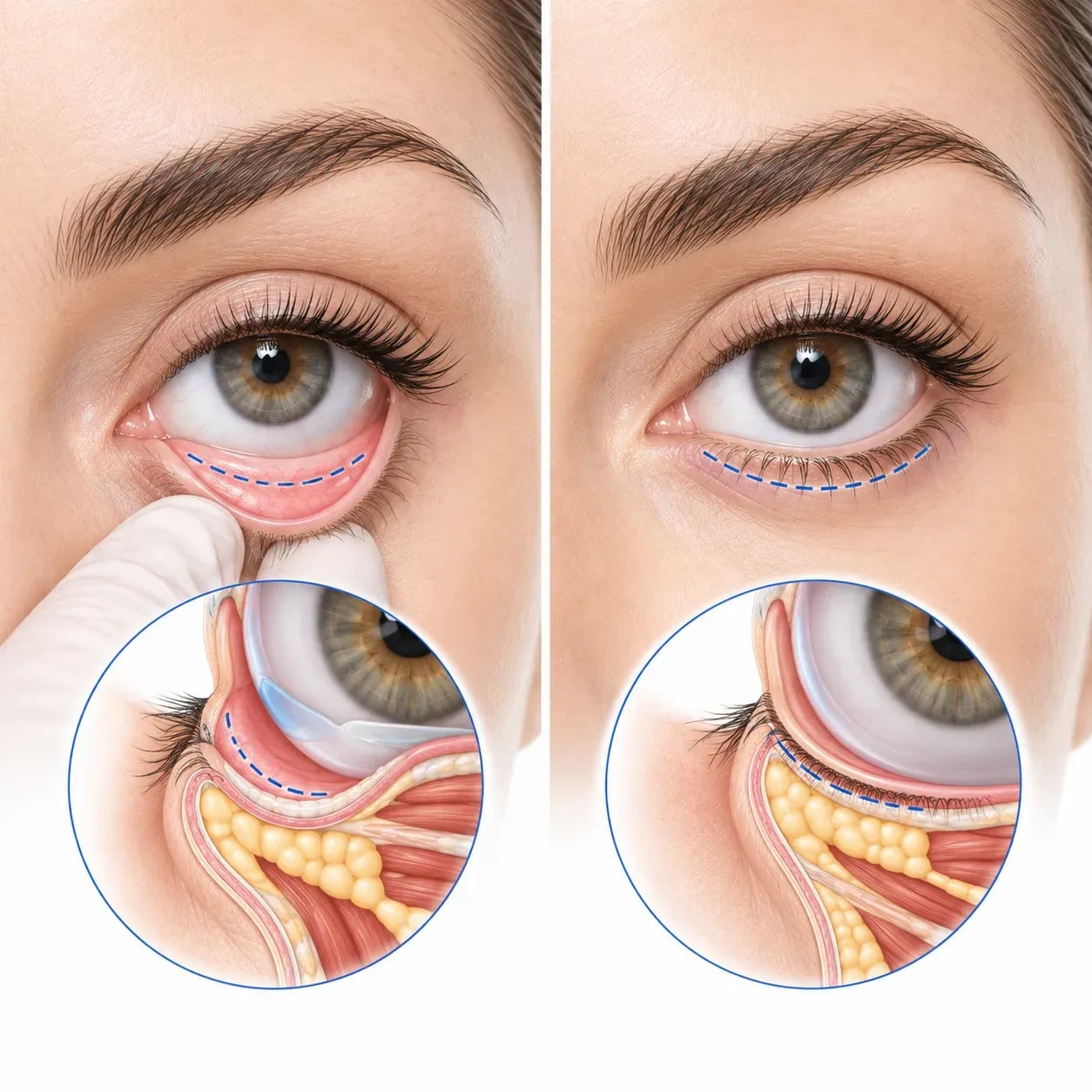
There are two ways in, and which is used is a technical decision rather than a preference.
Transconjunctival — through the inside of the lower lid. No external scar at all. It suits bags where there is little or no excess skin to remove, which is often the case in younger patients.
Subciliary — just below the lash line. It gives access to the deeper structures and allows excess skin to be removed as well. The scar sits in the lash line and fades, but it exists.
The lower lid is the more demanding of the two operations and the one with more to go wrong, which is why the approach is chosen on anatomy rather than on which sounds better.
Can it improve your vision? And will the NHS pay?
Yes, sometimes. Where excess upper lid skin hangs far enough to intrude on the upper or peripheral visual field, removing it genuinely improves what you can see. In those cases the operation has a functional purpose as well as a cosmetic one.
Tell us if you have any visual difficulty — if you find yourself lifting your eyebrows to read, or tilting your head back. That changes the assessment, and it also means the cause needs establishing properly rather than being assumed.
On NHS funding. In the UK, upper eyelid surgery is funded only in restricted circumstances, essentially where the excess skin is documented to obstruct the visual field, usually confirmed by a visual field test. Criteria differ between areas and the thresholds are strict. Cosmetic eyelid surgery is not funded, and no procedure performed abroad is.
If you think you might qualify, see your GP first. Being treated on the NHS is better than paying for it, here or anywhere. We would rather you checked and found out than paid us unnecessarily.
Are you a candidate?
This is decided by examining your eyes, not by your age. A 70-year-old with firm lids may not need it; a 40-year-old with heavy hooding may.
You may be directed elsewhere if:
- The problem is a dropped brow, not lid skin
- It is a ptosis, which needs a different operation
- Your dark circles are hollowing — filler or fat transfer, the opposite of removal
- They are pigmented — no surgery changes pigment
- It is crow's feet that bother you — Botox
- The whole midface has descended — a face and neck lift may be the better conversation
Conditions that may delay or prevent surgery:
- Significant dry eye. Blepharoplasty can make it worse, sometimes lastingly. This must be declared, and an ophthalmologist's opinion may be requested before anything is agreed.
- Glaucoma
- Thyroid eye disease
- Recent laser or refractive eye surgery
- Current smoking
- A bleeding disorder, or anything contraindicating anaesthesia
Men have this operation too, and the technique is adjusted: a male upper lid needs less skin removed and a lower crease, because over-correcting feminises the eye.
What eyelid surgery costs
€1,700 for two eyelids and €1,850 for four, over a 5-day stay.
Included: the surgeon's and anaesthetist's fees, the operation, the anaesthetic, the hospital stay, hotel accommodation, airport pickup and transfers, and assistance throughout.
Not included: flights and the pre-operative tests you have done at home.
| Procedure | Price |
| Blepharoplasty, 2 eyelids (upper) | €1,700 |
| Blepharoplasty, 4 eyelids (upper and lower) | €1,850 |
| Facial fat transfer | €2,100 |
| Face and neck lift | €2,400 |
It is frequently combined with another facial procedure in the same trip, which is where the economics of travelling make most sense. All prices are on the prices page, and a personalised quote reaches you within 24 to 48 hours.
| Procedure | Price | Stay |
|---|---|---|
| Upper or Lower Eyelid Surgery (2 Eyelids) | €1,700 | 5 days |
| Upper and Lower Eyelid Surgery (4 Eyelids) | €1,850 | 5 days |
Where the scars go
Upper lid: in the natural crease, hidden when the eye is open.
Lower lid, transconjunctival: inside the lid. No external scar.
Lower lid, subciliary: immediately below the lash line.
Eyelid skin is the thinnest on the body and it heals exceptionally well — better than almost anywhere else. The scars become progressively less visible as they mature over months, and this is one of the few operations where the scarring genuinely stops being a consideration.
Sun protection matters during that period, and the area is easy to forget about.
Your pathway, step by step
- Get in touch from home. Photographs looking straight ahead, eyes open and closed, without makeup. Your medical history, your medication, and anything to do with your eyes — dryness, glaucoma, thyroid disease, previous laser surgery. An opinion and a quote come back within 24 to 48 hours.
- Preparation. Pre-operative tests around fifteen days before, any ophthalmology reports you have, and stop smoking. Our preparation guide covers what applies to every procedure.
- Arrival. You are met at Tunis-Carthage and transferred.
- Surgical consultation in person, assessing brow, lid, fat and balance, then the anaesthetic consultation and pre-operative workup.
- The operation, 1 to 2 hours.
- The first days, with swelling and bruising peaking around day 2 or 3 — expected, and the reason the stay is five days.
- Checks in Tunisia before you fly.
- Home, with remote follow-up.
Risks
Expected and temporary: swelling, bruising, dryness, watering, and sensitivity to light. Bruising around the eyes is more visible than almost anywhere else on the body, and it peaks on day 2 or 3 rather than immediately.
Less common: asymmetry, imperfect healing, temporary difficulty closing the eyes fully, infection, bleeding.
Specific to the lower lid: malposition, where the lid sits lower than it should, and ectropion, where it turns outward. These are the complications that matter on this operation, and the risk is assessed before surgery rather than discovered after. Where the lower lid is lax, a canthopexy — a supporting stitch at the outer corner — may be added to hold it in position.
And dry eye again, because it is the one people dismiss. If your eyes are already dry, surgery can worsen it, sometimes lastingly. Declare it.
Contact us without waiting if you have increasing pain, visual change, bleeding, spreading redness, or cannot close an eye.
Recovery
Swelling and bruising peak around day 2 or 3, not on the day of surgery. People who expect to look their worst immediately are caught out by day three.
Cold compresses and keeping your head elevated are advised, including sleeping propped up.
Back to desk work around a week, with bruising still visible. Concealer goes on the surrounding area, not the operated one. Be realistic about anything you are expected to attend.
Screens tire the eyes in the early days. Expect to use them less than usual for a while.
Glasses rather than contact lenses for the first several days, on your surgeon's instructions. Bring your glasses even if you never wear them.
No makeup on the operated area for several weeks. The rest of the face is fine sooner.
Sunglasses outdoors, for light sensitivity and for scar protection.
No intense exercise for several weeks. Walking from the first days.
On the flight home: cabin air is very dry and your eyes will already be drier than usual. Take the lubricating drops you are prescribed and use them more often than feels necessary.

Getting to Tunisia
From the UK and Ireland: around three hours from London, with connections from other UK and Irish airports. British and Irish passport holders do not currently need a visa for a short tourist stay — but see the note below.
From the Gulf: daily flights from Dubai with Emirates, around six and a half to seven hours, and from Doha with Qatar Airways, around six.
From continental Europe: direct flights of 1h30 to 3h from Paris, Brussels, Geneva, Lyon and Marseille, with no visa for EU and Swiss nationals.
From West and Central Africa: regular connections from Dakar, Abidjan, Douala, Libreville and Casablanca, with help on visa formalities where needed.
Entry requirements follow your nationality, not your country of residence. A resident of Dubai or London holding an Indian, Pakistani, Nigerian or Filipino passport does not have the same conditions as a British or Emirati national, and a residence permit changes nothing. Check with the Tunisian embassy for your country of citizenship before booking.
How long each procedure needs is in our guide to lengths of stay.
Before you travel: a checklist
- Documents: a passport valid well beyond your return date, and a visa if your nationality requires one.
- Photographs looking straight ahead with the eyes open, and again closed, in natural light without makeup.
- Any ophthalmology report you have — a visual field test, a glaucoma follow-up, a dry eye diagnosis. Bring the originals.
- Declare every eye drop you use, including over-the-counter lubricants. People list their tablets and forget their drops.
- Declare dry eye, glaucoma, thyroid eye disease and any laser or refractive surgery, however long ago.
- A written list of your medication, supplements and allergies. Aspirin and anti-inflammatories are usually stopped beforehand unless you are told otherwise.
- Stop smoking.
- Your glasses, even if you normally wear contact lenses. You will not be wearing lenses for several days.
- Sunglasses — a large pair.
- Clothing that buttons at the front. Nothing goes over your head for the first days.
- Keep about a week free of anything you need to look your best for. Bruising around the eyes is conspicuous.
Request a quote and you will have an answer within 24 to 48 hours.










Frequently asked questions about Eyelid Surgery in Tunisia
€1,700 for two eyelids, meaning the upper lids, and €1,850 for four, adding the lower ones, over a 5-day stay. That covers the surgeon's and anaesthetist's fees, the operation, the anaesthetic, the hospital stay, hotel accommodation, transfers and assistance. Flights and the pre-operative tests you have at home are not included.
Two eyelids means the upper lids, which is the more common operation and the one that addresses heavy, hooded lids. Four adds the lower lids, usually for bags. Upper and lower lids age differently and plenty of people need one and not the other, so which you have is decided on examination rather than by budget.
Not necessarily, and this is the most important thing to establish. As the brow descends with age it pushes the upper lid skin down in front of it, so the eye looks hooded when the real problem is brow position. Removing lid skin in that case does not give the result you want and can pull the brow down further. The two also coexist. Only an examination can tell you which you have.
With excess skin, dermatochalasis, the lid sits normally but loose skin hangs over it — that is what blepharoplasty treats. With ptosis the lid itself sits too low because the muscle that lifts it is weak, and removing skin does not fix it; that needs a different operation. They often occur together, and treating only the skin when there is also a ptosis is the most common reason people are disappointed after upper lid surgery.
It depends entirely on what is causing them. Bags, where fat bulges forward and casts a shadow, are what lower lid surgery treats. Hollow dark circles are a loss of volume, and surgery makes those worse — the answer there is filler or fat transfer. Pigmented dark circles are darker skin, and no operation changes pigment. Most people have a combination.
No, and it should not be. Where the area is already hollowing, removing fat deepens the hollow and makes the eye look older. Depending on your anatomy the fat may be preserved, repositioned to fill the tear trough, or partly removed. Repositioning rather than removing is frequently the better answer.
Transconjunctival, through the inside of the lid, which leaves no external scar and suits bags with little or no excess skin. Or subciliary, just below the lash line, which gives access to the deeper structures and allows excess skin to be removed as well. The choice is made on anatomy, not preference.
The upper lid incision sits in the natural crease and is hidden when the eye is open. The lower lid is either inside the lid, with no external scar, or just below the lash line. Eyelid skin heals better than almost anywhere else on the body, and the scars become progressively less visible as they mature over months.
Sometimes. Where excess upper lid skin hangs far enough to intrude on the upper or peripheral visual field, removing it genuinely improves what you can see. Tell us if you find yourself lifting your eyebrows to read or tilting your head back — it changes the assessment and the cause needs establishing properly.
Only in restricted circumstances, essentially where excess upper lid skin is documented to obstruct the visual field, usually confirmed by a visual field test. Criteria differ between areas and the thresholds are strict. Cosmetic eyelid surgery is not funded, and nothing performed abroad is. If you think you might qualify, see your GP before paying for it privately anywhere.
It depends on the severity. Blepharoplasty can make dry eye worse, sometimes lastingly, so it must be declared and an ophthalmologist's opinion may be requested before anything is agreed. This is the condition people most often dismiss as minor, and it is the one that matters most here.
The lower lid turning outward, away from the eye. It is a possible complication of lower lid surgery, and the risk is assessed before surgery rather than discovered after. Where the lower lid is lax, a canthopexy — a supporting stitch at the outer corner — may be added to hold it in position.
Not very. Tightness, dryness and sensitivity to light are more typical than pain, and prescribed pain relief is usually enough. The bruising looks far worse than it feels.
Swelling and bruising peak around day 2 or 3 — not on the day of surgery — then fade over the following weeks. Light desk work is often possible around a week, with bruising still visible. Intense exercise waits several weeks.
Five days. That covers the surgical and anaesthetic consultations, the operation, the first days when swelling peaks, and a check before you fly.
Several days after surgery, on your surgeon's instructions. Wear glasses in the meantime, and bring them even if you normally never do.
Not on the operated area for several weeks. The rest of the face is fine sooner. Your surgeon gives the exact timing.
Upper lid results are durable and frequently last more than ten years. Lower lids continue to change with normal ageing, though a true relapse is uncommon. The skin keeps ageing either way: the operation sets the clock back rather than stopping it.
The change shows as swelling subsides over the first weeks, but the final result takes months. Do not judge it in the first week, and do not be alarmed by some asymmetry during healing — the two sides rarely settle at exactly the same rate.
No. It is decided by examining your eyes, not by your age. A seventy-year-old with firm lids may not need it and a forty-year-old with heavy hooding may.
Yes, and the technique is adjusted. A male upper lid needs less skin removed and a lower crease, because over-correcting feminises the eye. Say at the consultation if that is a concern for you.
No. Creating a crease where there is none is a distinct operation with its own technique and planning, different from removing excess skin from a lid that already has a crease. If that is what you are looking for, say so explicitly at first contact rather than booking a standard blepharoplasty.