

Breast Augmentation in Tunisia: Implants, Price and Incisions

Breast augmentation in Tunisia: the essentials
Breast augmentation with implants is an effective way to increase breast volume, improve fullness and create a more balanced silhouette. Whether you are looking for a subtle enhancement or a more noticeable change in size, the procedure can be tailored to your anatomy, proportions and aesthetic goals.
Choosing breast implants is not simply about increasing cup size. The shape, projection, implant volume and placement all influence the final result. Your surgeon will assess your existing breast tissue, skin elasticity and chest measurements to recommend an approach that suits your body while explaining the benefits, limitations and potential risks.
Not sure which breast procedure is right for you? If you prefer a modest increase in volume without implants, discover breast fat transfer in Tunisia, which uses your own fat to enhance the breasts. If your main concern is sagging or a loss of firmness, a breast lift may be more appropriate. In some cases, a breast lift and implants can be combined to improve both shape and volume.
At ServiHealth Tunisia, breast augmentation is performed by Dr Taher Djemal and Dr Abir Ben Ouaghrem at Myron International Clinic in Tunis. Our team coordinates your medical stay and provides English-speaking assistance before your arrival, throughout your stay and during your post-operative follow-up. All medical decisions remain the responsibility of your treating surgeon.
Breast Augmentation in Tunisia: Key Information
| Procedure Details | Information |
|---|---|
| Procedure | Breast augmentation with implants |
| Operating time | Approximately 1 to 2 hours |
| Anaesthetic | General anaesthesia |
| Stay in Tunisia | 5 days, including approximately one night in hospital |
| Implant options | Volume, shape, projection and placement selected according to your anatomy and surgical assessment |
| Results | Increased volume is visible immediately; swelling reduces and the implants gradually settle over the following months |
| Return to desk work | Usually around 1 week, depending on recovery and medical advice |
| Physical exercise | Gradual return, generally after 6 to 8 weeks for strenuous activities, subject to your surgeon's approval |
| Price | €2,500 |
These durations are indicative and may vary according to the surgical technique, your health and your individual recovery. Breast implants are not lifetime devices and may require monitoring or further surgery in the future. Your surgeon will explain the risks, implant characteristics and follow-up requirements during your consultation.
What breast augmentation costs
€2,500, for a 5-day stay.
Included: the surgeon's and anaesthetist's fees, the operation, the anaesthetic, the hospital stay, the CE-marked implants themselves, your support bra, airport pickup and transfers, and assistance throughout.
Not included: flights, hotel accommodation, and the pre-operative tests you have done at home.
| Procedure | Price |
| Breast augmentation with implants | €2,500 |
| Breast lift without implants | €2,400 |
| Breast lift with implants | €2,750 |
| Breast fat transfer | €2,700 |
| Breast reduction | €2,700 |
| Implant replacement | €2,600 |
How this compares. In the UK, the independent comparison service PrivateHealth.co.uk puts private breast enlargement at a typical £5,667, within a range of roughly £3,899 to £8,655. As with any quote, what matters is what it covers: check specifically whether the anaesthetist, the implants themselves and your follow-up appointments are inside the figure or added to it.
Every procedure is listed on the prices page, and a detailed quote reaches you within 24 to 48 hours.
Choosing your size, and the mistake most people make
Size is decided in the consultation, not from a photograph and not from a number you arrive with.
Three things set the limit: the width of your chest, how much tissue you have to cover the implant, and how elastic your skin is. An implant wider than your chest looks wrong from the front; an implant too large for thin tissue shows its edges.
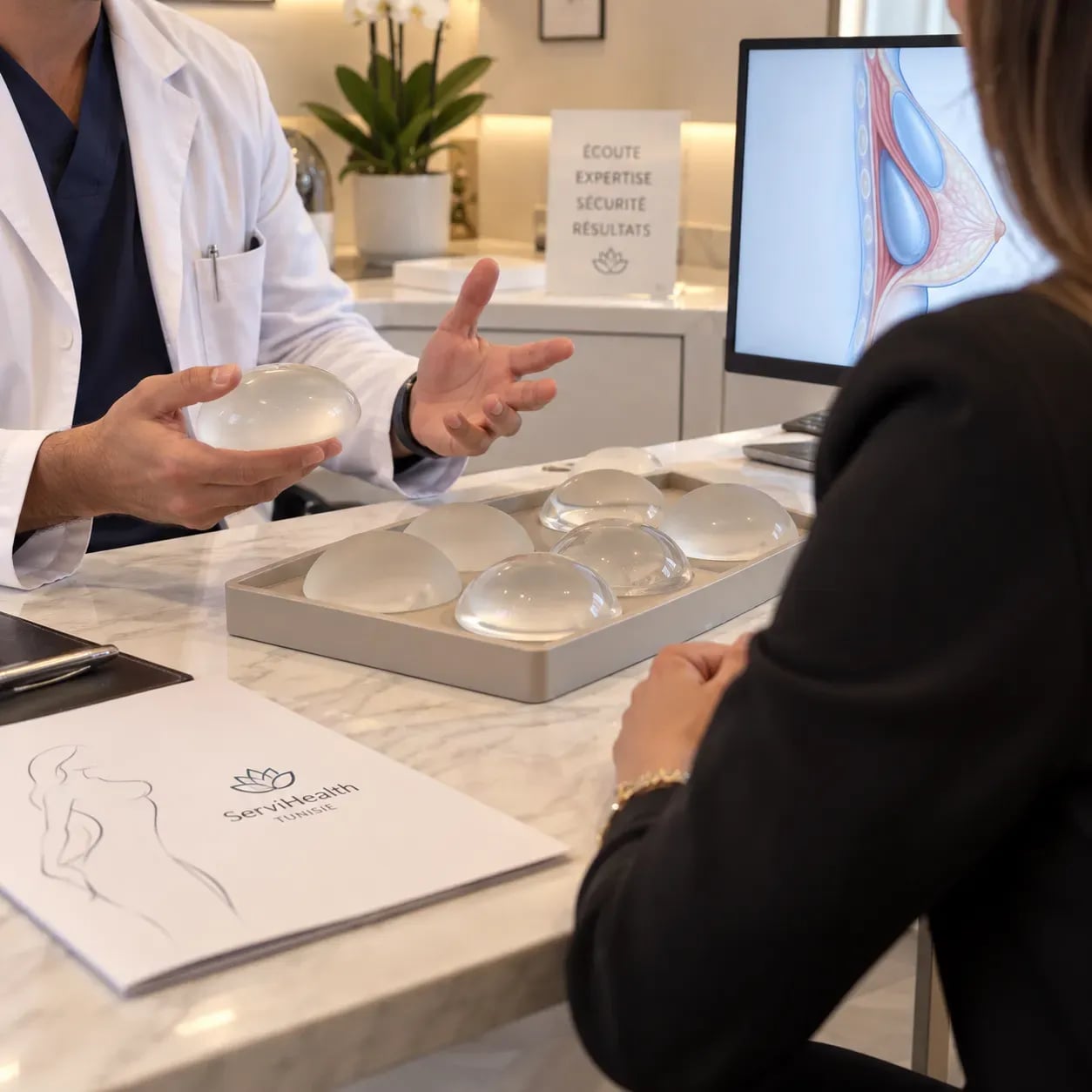
You try sizers on. Test implants are placed in a bra so you can see the result on your own body, in your own clothes, rather than imagining it from a volume in cc.
The most common mistake is going too big for your frame. It is also the hardest to undo: oversized implants stretch tissue over time, and the correction is a bigger operation than the original. A surgeon who suggests something smaller than you had in mind is doing their job.
There is no fixed conversion between cc and cup size. Bra sizing varies between manufacturers and between countries, and the same implant gives different results on different bodies. The sizing session replaces the arithmetic. Our guide to choosing volume, shape and technique goes into this in more detail.
Which implant: type, shape and position
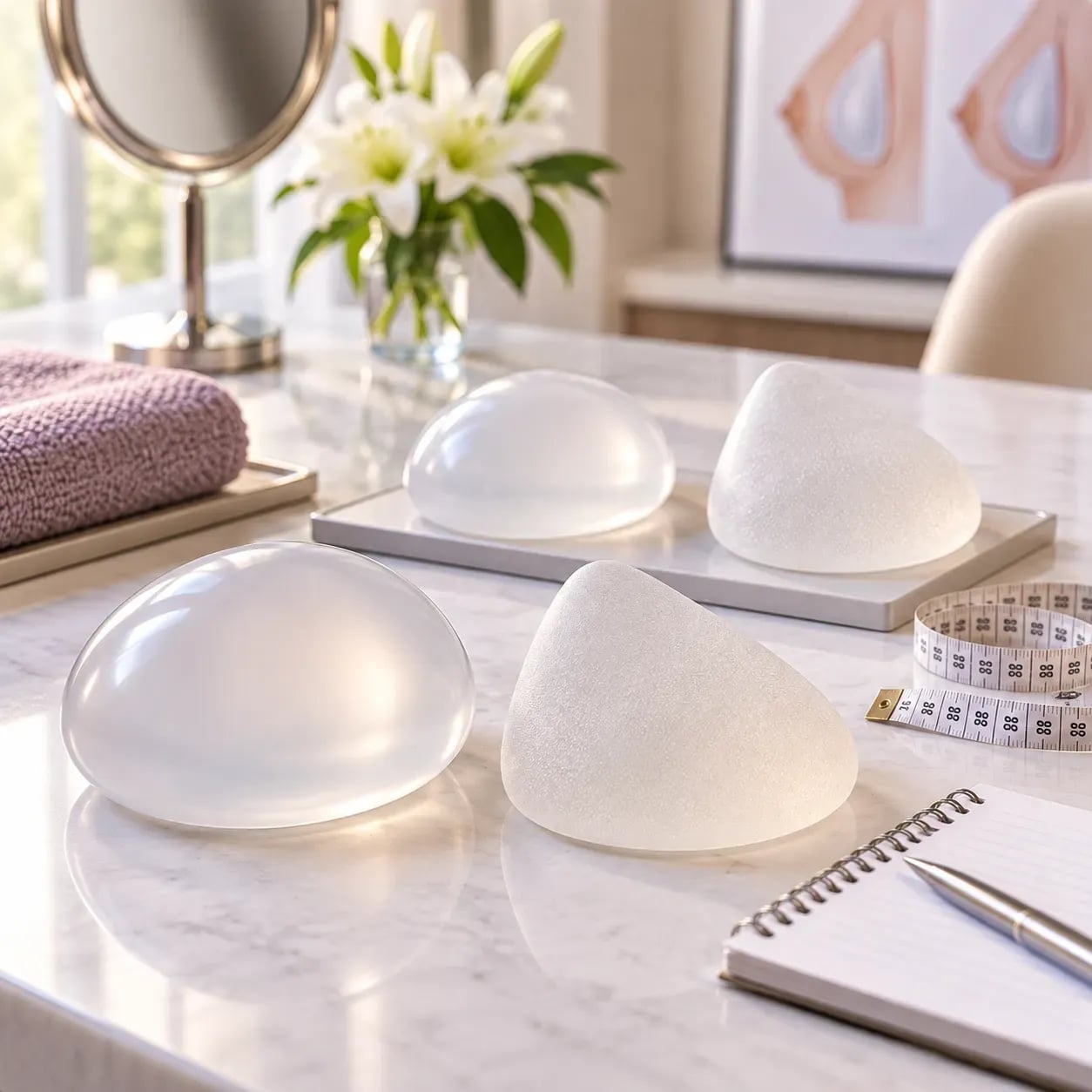
Type. Cohesive silicone gel is used in the overwhelming majority of cases, because it behaves more like breast tissue. Saline implants exist and are used rarely. All implants used are CE-marked.
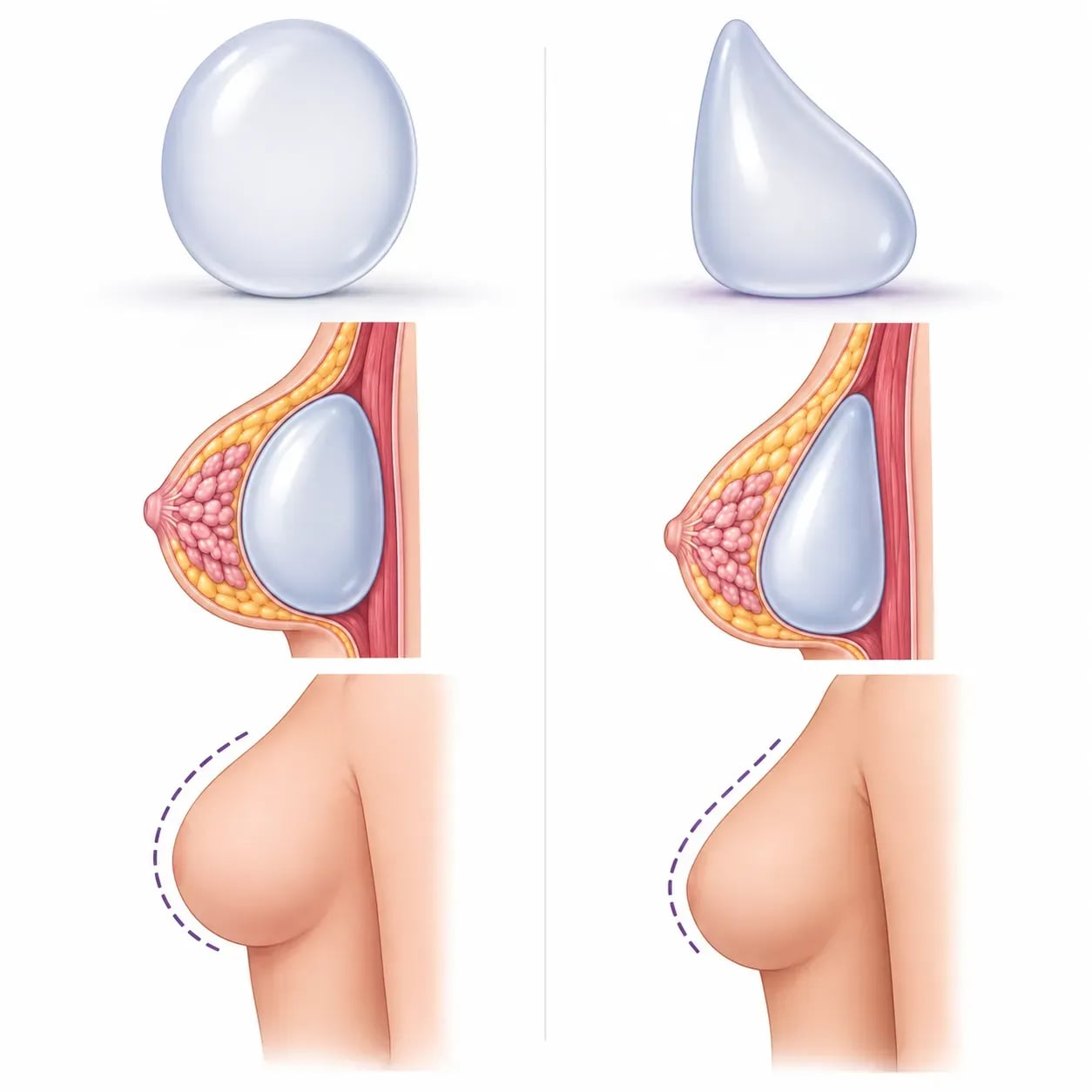
Shape. Round implants give more fullness in the upper pole. Anatomical, or teardrop, implants are fuller at the bottom and give a more sloped profile. Neither is better — they produce different shapes, and which suits you depends on your starting anatomy and what you want.
Position. In front of the muscle, behind it, or partly behind it in what is called a dual plane. Placing the implant behind the muscle gives more tissue cover, which matters if you are slim, but the first days are more uncomfortable and the muscle is more involved in recovery.
These three choices interact, and they are made together with the surgeon after examining you. Be wary of anyone who settles them before meeting you.
Implants from abroad: traceability, and what you should insist on
If you are in the UK or Ireland, you may remember the PIP scandal, and you are right to ask what guarantees you have when surgery happens in another country. Here is the honest position.
CE marking. The implants used are CE-marked medical devices, the same regulatory standard applied across Europe. Ask any provider, anywhere, to confirm this in writing, and be concerned if they will not.
Your implant card. You leave with a card identifying the manufacturer, the model, the reference and the serial numbers of both implants. This is the single most important document you take home. It is what any radiologist, breast clinic or surgeon will ask for, sometimes years later. Photograph it, store the photograph somewhere you will find it, and keep the card itself.
Ask which implants, by name, before you book. You are entitled to know the manufacturer and model being proposed for you, and to look them up yourself. Any provider who answers that question vaguely is telling you something.
Implants placed abroad are not entered on the UK implant registry. That is a real difference, and it is why your own records carry more weight, not less. Give a copy of your operative report and implant card to your GP when you get back.
Find your local follow-up before you travel. Routine imaging, any future concern and eventual replacement will happen where you live. Know who will handle it.
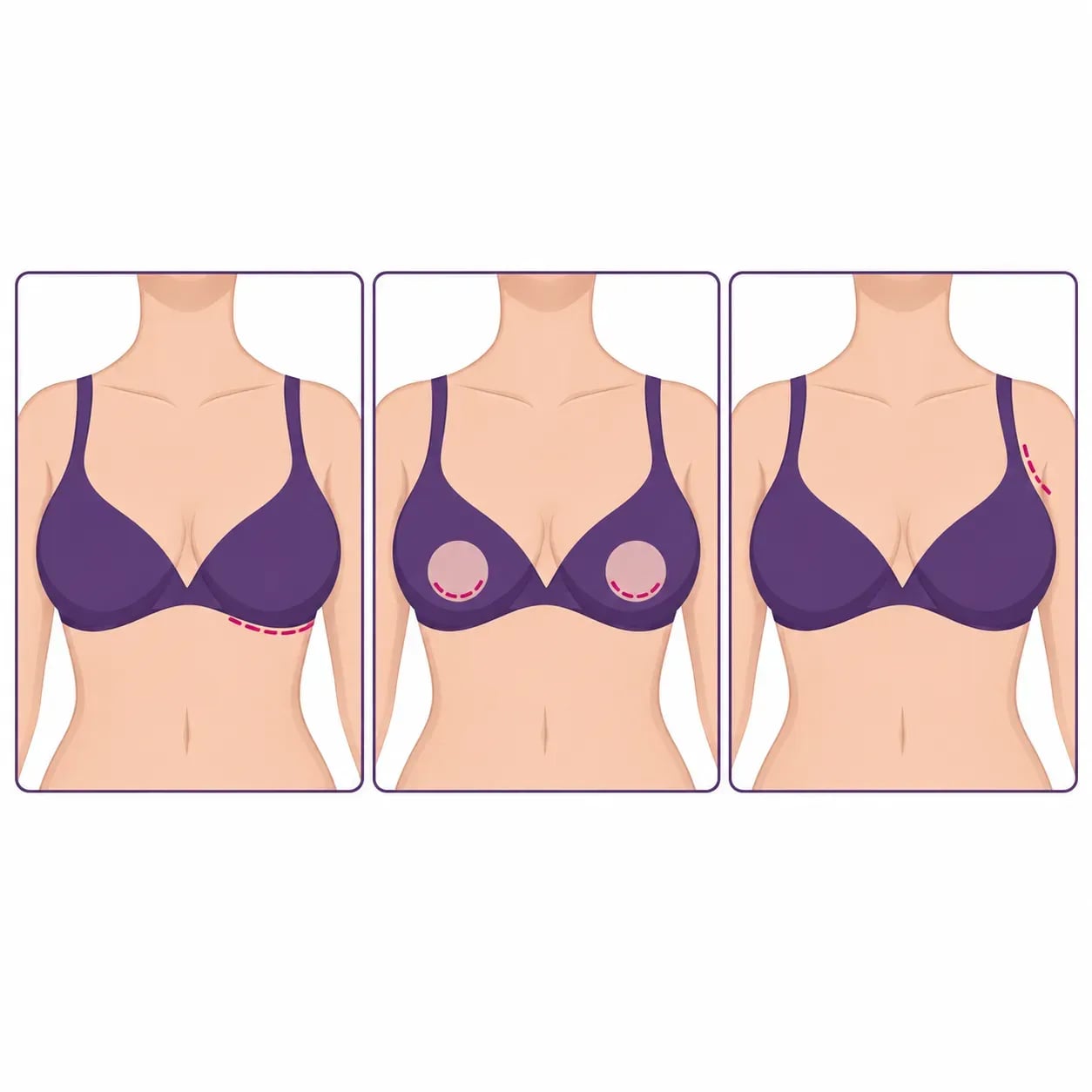
Where the scar goes: the three incisions
There are three ways in, and the choice has consequences beyond where the mark sits.
Inframammary — in the fold under the breast. The most used approach. It gives the surgeon the most direct access and control, and the scar is hidden in the fold, though it can be visible lying down.
Periareolar — around the edge of the areola, where the scar blends into the colour change. It passes closer to the milk ducts, which is relevant if breastfeeding in future is a priority for you.
Transaxillary — through the armpit, leaving no scar on the breast itself. Access is more limited, which constrains what can be done in the same operation.
The surgeon will recommend one based on your anatomy, the implant chosen and its position. The final decision is yours, after that discussion. Say at the consultation if scarring or future breastfeeding matters more to you than anything else — it changes the recommendation.
Are you a candidate?
This operation suits an adult whose breast development is complete, whose weight is stable, whose general health allows a general anaesthetic, and who understands that an implant is a device requiring monitoring rather than a one-off purchase.
Reasons to postpone, or to discuss further:
- Pregnancy or breastfeeding, now or planned in the near future
- Weight still changing significantly
- Breast development not yet complete
- Smoking, if you have not stopped
- Any breast abnormality that has not yet been investigated — this is assessed before anything else
- A personal or family history of breast disease, which may change the imaging required beforehand
- A clotting disorder, or anything contraindicating a general anaesthetic
One thing to be clear about from the start: implants are not lifetime devices. Replacement is generally expected after 10 to 15 years, and may be needed sooner. Factor that into the decision and into the cost over time.
Augmentation on its own, or with a lift?
This is the question that most often changes at the consultation, and it is worth understanding before you arrive.
An implant adds volume. It does not lift. If the breast has dropped — after pregnancy, breastfeeding or weight loss — adding volume alone makes a fuller breast in the same low position, and sometimes makes the droop more obvious rather than less.
Where there is significant ptosis, the surgeon will recommend a breast lift combined with the implant: €2,750 rather than €2,500. That combination involves more scarring than an augmentation alone, which is the trade-off and should be explained to you clearly.
Sometimes a lift alone is enough, with no implant at all. Our guide to breast lift scars and results covers what that involves.
If you are considering breast surgery alongside a tummy tuck after children, the two can sometimes be combined in one trip, depending on your health and the total anaesthetic time the surgeon considers reasonable.
Your pathway, step by step
- Get in touch from home. Send photographs, your height and weight, your medical history and what you are hoping for. An opinion and a quote come back within 24 to 48 hours.
- Preparation. Pre-operative tests around fifteen days before, including breast imaging, and stop smoking several weeks beforehand. Our preparation guide covers what applies to every procedure.
- Arrival. You are met at Tunis-Carthage and transferred.
- Consultation with the surgeon and the anaesthetist, the sizing session, and the marking.
- The operation, 1 to 2 hours under general anaesthetic.
- One night in hospital, then your accommodation.
- Convalescence in Tunisia, with check-ups and the support bra fitted.
- Home, with your implant card, operative report and remote follow-up.
Risks, and what is done to reduce them
No surgeon can promise you a complication-free recovery, and you should treat anyone who does with suspicion. What can be set out is what the risks are and what is done about them.
Common to any surgery: haematoma, infection, healing problems, and the risks of general anaesthesia.
Specific to implants: malposition, asymmetry, rippling where the implant edge shows through thin tissue, changes in nipple sensation that are usually temporary but occasionally permanent, and rupture.
What reduces them: a full pre-operative assessment including breast imaging, CE-marked implants, an implant sized to your anatomy rather than to a wish, meticulous technique, and following the post-operative instructions on the bra and on activity.
The facility. Myron International Clinic is a private multidisciplinary hospital with 7 operating theatres and a 20-bed intensive care unit.
Contact us without waiting if you have a fever, increasing pain, one breast suddenly larger or firmer than the other, spreading redness, or any discharge from the wound.
The long view: what implants mean over time
The things that matter with implants mostly happen years later, and they are the part most pages skip.
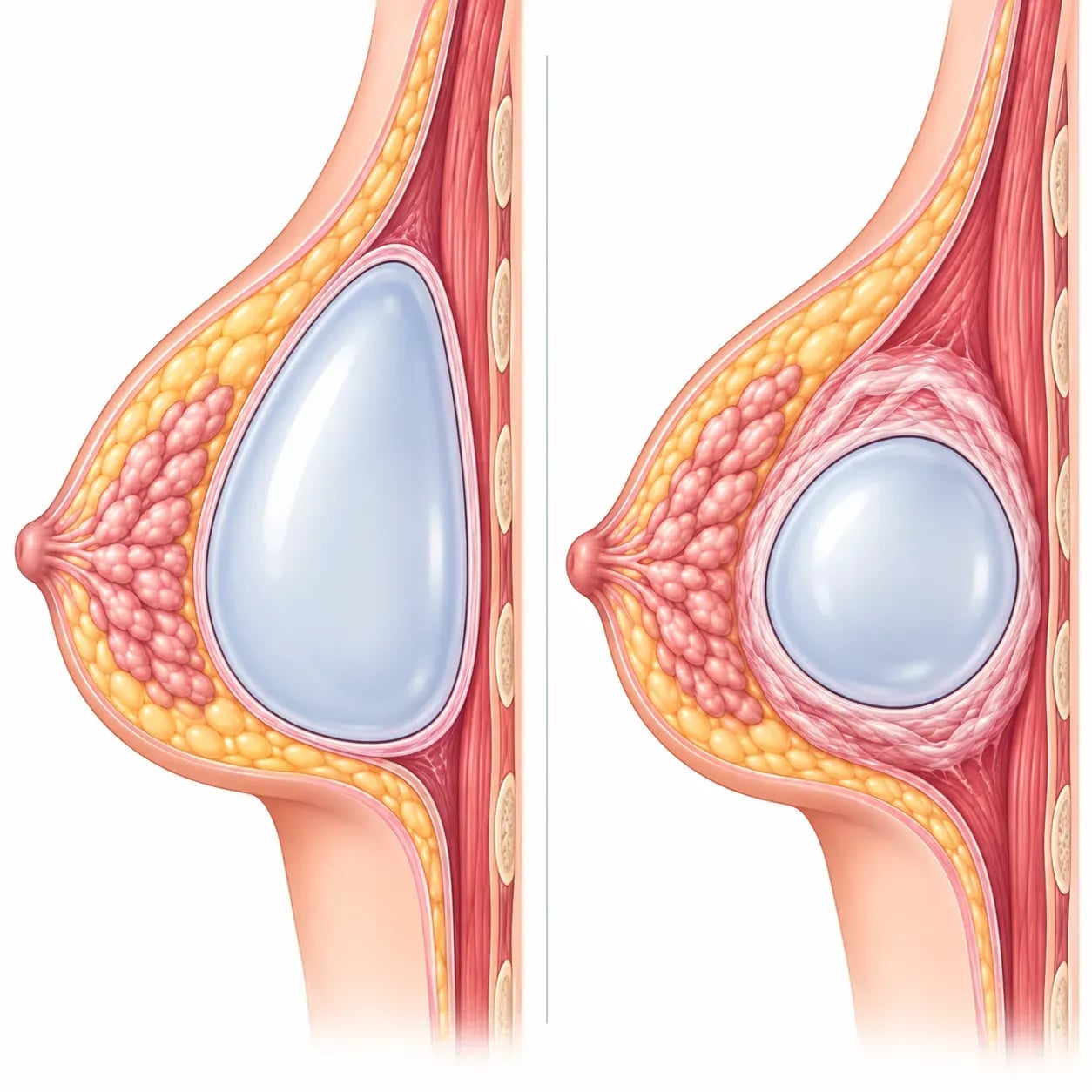
Capsular contracture. Your body forms a thin capsule of scar tissue around any implant — that is normal. In some women that capsule tightens, which makes the breast feel firm, change shape or become uncomfortable. It is the most frequent long-term complication, it can occur years afterwards, and treating it means further surgery.
BIA-ALCL. Breast implant-associated anaplastic large cell lymphoma is a rare cancer of the immune system, not a breast cancer. It has been associated overwhelmingly with textured implant surfaces rather than smooth ones. It is rare, it usually presents as a late swelling of one breast, and when identified early it is generally treated successfully by removing the implant and the capsule. Any new swelling in one breast, years after surgery, should be examined rather than ignored.
Breast implant illness. This is the term many women use for a range of systemic symptoms — fatigue, joint pain, brain fog — reported after implants. It is not a recognised diagnosis and no mechanism has been established, but the reports are taken seriously, research continues, and some women report improvement after removal. If you develop symptoms you cannot account for, raise them with a doctor rather than dismissing them.
Replacement. Implants are not for life. Replacement is generally expected after 10 to 15 years, and sometimes sooner. Budget for it.
Mammograms. Implants can obscure part of the breast on a standard mammogram. Tell the radiographer you have implants, every time: specific views, known as the Eklund technique, are used to see around them. This does not prevent screening, it changes how it is done.
Recovery
The first days bring tightness and a sense of heaviness rather than sharp pain. It is more pronounced when the implant sits behind the muscle. Prescribed painkillers cover it, and it eases noticeably within the first week.
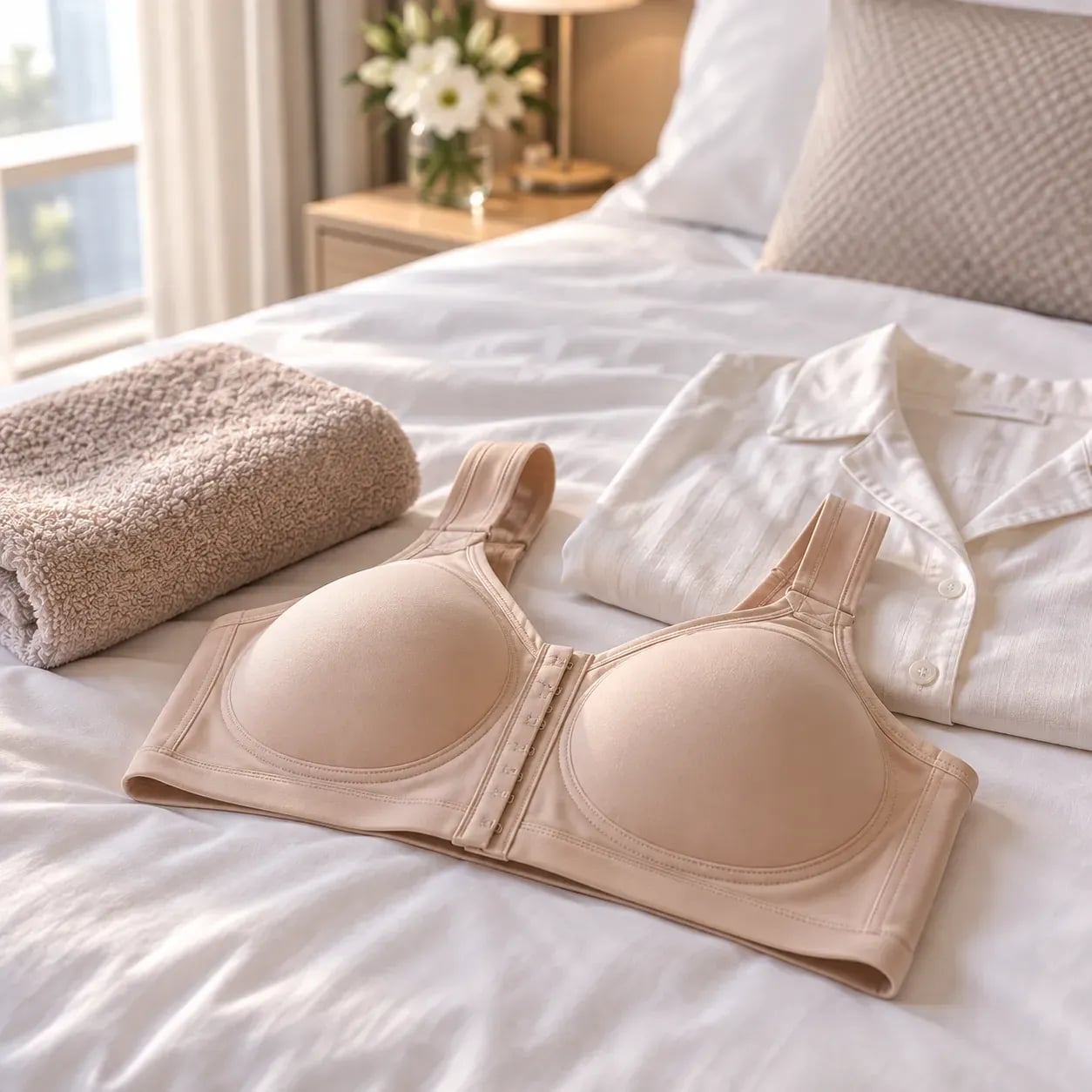
The support bra is worn continuously for several weeks, day and night. It is not optional and it does real work: it holds the implants in position while the tissues settle around them.
Swelling in the first days is expected.
Back to desk work after about a week.
No intense exercise for 4 to 6 weeks, on your surgeon's advice. Walking is fine from the first days. Upper-body and chest work comes back last, particularly if the implant is behind the muscle.
The shape keeps changing. The volume is there immediately, but the implants sit high at first and settle over the following months. Judging the result at three weeks tells you nothing. If you are planning around a holiday or an event, our note on timing breast surgery around summer is worth reading before you book dates.
Pregnancy and breastfeeding
Implants do not affect your fertility, and pregnancy after augmentation is entirely possible.
Breastfeeding is possible in most cases. The incision matters: the periareolar approach passes closer to the milk ducts, so if breastfeeding in future is a priority, say so at the consultation and the surgeon will take it into account when recommending an approach.
Pregnancy changes the breast, implant or no implant. Volume increases and then reduces, and the skin may not return to where it was. If you are planning a pregnancy in the near future, it is usually worth waiting — not because it is dangerous, but because you may want a different result afterwards.
Tell your midwife and any clinician treating you that you have implants, and keep your implant card accessible.
Your surgeons
Dr Taher Djemal has practised as a plastic surgeon in Tunisia since the early 1990s. He trained in Tunis, Paris and Nancy, with further experience at Foch Hospital in Paris and in Baltimore.
Dr Abir Ben Ouaghrem pays particular attention to the choice of incision, including where a patient wants to keep the option of breastfeeding open.
You are directed to whichever of them suits your case after a consultation, by video call or in person in Tunis. Ask them which implants they propose, why, and what they would do differently if you wanted a smaller result. The answers tell you a great deal.
Getting to Tunisia
From the UK and Ireland: around three hours from London, with connections from other UK and Irish airports. British and Irish passport holders do not currently need a visa for a short tourist stay — but see the note below.
From the Gulf: daily flights from Dubai with Emirates, around six and a half to seven hours, and from Doha with Qatar Airways, around six. Tunisia is two to three hours behind the Gulf, so follow-up calls fall inside the working day at both ends.
From continental Europe: direct flights of 1h30 to 3h from Paris, Brussels, Geneva, Lyon and Marseille, with no visa for EU and Swiss nationals.
From West and Central Africa: regular connections from Dakar, Abidjan, Douala, Libreville and Casablanca, with help on visa formalities where needed.
Entry requirements follow your nationality, not your country of residence. This catches expatriates out constantly: a resident of Dubai or London holding an Indian, Pakistani, Nigerian or Filipino passport does not have the same conditions as a British or Emirati national, and a residence permit changes nothing. Check with the Tunisian embassy for your country of citizenship before booking.
How long each procedure needs is in our guide to lengths of stay.
Before you travel: a checklist
- Documents: a passport valid well beyond your return date, and a visa if your nationality requires one.
- Breast imaging as advised, plus any previous breast imaging you already have. Bring the originals.
- Your history: any breast lump, previous breast surgery, or family history of breast disease. All of it, even if it seems resolved.
- Pre-operative tests done at home around fifteen days before.
- A written list of your medication, supplements and allergies. Supplements and herbal products are the ones people forget, and some affect bleeding.
- Stop smoking several weeks beforehand.
- Reference photographs of results you like and results you do not. The second set is more useful than the first.
- A second non-underwired bra, so you have one while the other is washed.
- Tops that fasten at the front. You will not be lifting anything over your head for several days.
- Arrange for someone else to do any lifting for the first weeks, children included.
- On the flight home: get up and walk regularly, drink water, and do not carry your own luggage.
- Keep your implant card and operative report, and give a copy to your GP.
Request a quote and you will have an answer within 24 to 48 hours.









Frequently asked questions about Breast Augmentation in Tunisia
Breast augmentation with implants is €2,500 with ServiHealth for a 5-day stay. That covers the surgeon's and anaesthetist's fees, the operation, the anaesthetic, the hospital stay, the CE-marked implants, your support bra, transfers and assistance. Flights, hotel accommodation and the pre-operative tests you have at home are not included. Combined with a breast lift the price is €2,750.
The independent comparison service PrivateHealth.co.uk puts private breast enlargement in the UK at a typical £5,667, within a range of roughly £3,899 to £8,655. What matters as much as the figure is what it covers: check whether the anaesthetist, the implants themselves and your follow-up appointments are inside the quote or charged separately.
In the consultation, by trying sizers in a bra so you see the result on your own body. Three things set the limit: the width of your chest, how much tissue you have to cover the implant, and how elastic your skin is. There is no fixed conversion between cc and cup size, because bra sizing varies between manufacturers and countries and the same implant looks different on different bodies.
There is no reliable answer, and anyone who gives you one is guessing. Cup sizing is not standardised between manufacturers or countries, and the same volume produces a different result depending on your chest width and tissue. The sizing session with test implants replaces the calculation.
It is the most common regret, and the hardest to undo. Implants too large for your frame look wrong from the front, show their edges through thin tissue and stretch the tissue over time, and the correction is a bigger operation than the original. A surgeon who recommends going smaller than you had in mind is doing their job properly.
All implants used are CE-marked medical devices, and cohesive silicone gel is used in the great majority of cases. You are entitled to know the manufacturer and model proposed for you before you book, and to look them up yourself. Ask, and be concerned by a vague answer from any provider in any country.
Neither. Round implants give more fullness in the upper part of the breast; anatomical, or teardrop, implants are fuller at the bottom and give a more sloped profile. They produce different shapes rather than better and worse ones, and which suits you depends on your anatomy and on the result you want.
Behind the muscle gives more tissue cover over the implant, which matters particularly if you are slim, but the first days are more uncomfortable and the muscle is more involved in recovery. In front of the muscle is less uncomfortable initially. A dual plane places it partly behind. The surgeon recommends one after examining you.
One of three places: in the fold under the breast, around the edge of the areola, or in the armpit. The fold is the most used and gives the surgeon the most control. The areolar approach passes closer to the milk ducts. The armpit leaves no scar on the breast but gives more limited access. The surgeon recommends one; the final decision is yours.
In most cases, yes. The incision matters: the periareolar approach, around the areola, passes closer to the milk ducts than the others. If breastfeeding in future is a priority for you, say so at the consultation and it will be taken into account when choosing the approach.
No. Replacement is generally expected after 10 to 15 years, and may be needed sooner if there is a problem. An implant is a device that needs monitoring, not a one-off purchase, and the eventual replacement should be part of your budgeting from the start.
Your body forms a thin capsule of scar tissue around any implant, which is normal. In some women that capsule tightens, making the breast feel firm, change shape or become uncomfortable. It is the most frequent long-term complication, it can appear years later, and treating it requires further surgery.
Implants do not cause breast cancer. There is a rare cancer of the immune system called BIA-ALCL, breast implant-associated anaplastic large cell lymphoma, which has been associated overwhelmingly with textured implant surfaces rather than smooth ones. It usually presents as a late swelling of one breast and, identified early, is generally treated successfully by removing the implant and capsule. Any new one-sided swelling years after surgery should be examined.
It is the term many women use for a range of systemic symptoms — fatigue, joint pain, brain fog — reported after having implants. It is not a recognised medical diagnosis and no mechanism has been established, but the reports are taken seriously and research continues. Some women report improvement after their implants are removed. If you develop symptoms you cannot account for, raise them with a doctor.
Yes. Implants can obscure part of the breast on a standard mammogram, so tell the radiographer you have them every time: specific views, known as the Eklund technique, are used to see around the implant. Screening continues as normal, it is simply carried out differently.
The implants used are CE-marked, the same standard applied across Europe, and you leave with an implant card identifying the manufacturer, model, reference and serial numbers of both implants. That card is the most important document you take home, and any radiologist or surgeon will ask for it later. Implants placed abroad are not entered on the UK implant registry, so keep your own records and give a copy to your GP.
An implant adds volume; a lift repositions a breast that has dropped. If the breast has sagged after pregnancy, breastfeeding or weight loss, adding volume alone gives a fuller breast in the same low position and can make the droop more obvious. Where there is significant sagging the two are combined, priced at €2,750.
The first days bring tightness and heaviness rather than sharp pain, and it is more pronounced when the implant sits behind the muscle. Prescribed painkillers cover it, and it eases noticeably within the first week.
Five days, including one night in hospital. That covers the consultation with the surgeon and the anaesthetist, the sizing session, the operation, the hospital stay and a check before you fly. Your surgeon confirms the return date according to how you are healing.
Walking from the first days. Intense exercise is avoided for 4 to 6 weeks, on your surgeon's advice, and upper-body and chest work comes back last, particularly when the implant sits behind the muscle.
The volume is there immediately, but the implants sit high at first and settle into position over the following months. The shape at three weeks is not the shape you will have. Allow several months before judging it.
Yes. Removal on its own is possible, and depending on how much skin and tissue remain, the surgeon may suggest combining it with a lift or with fat transfer to improve the shape afterwards. It is assessed individually.