

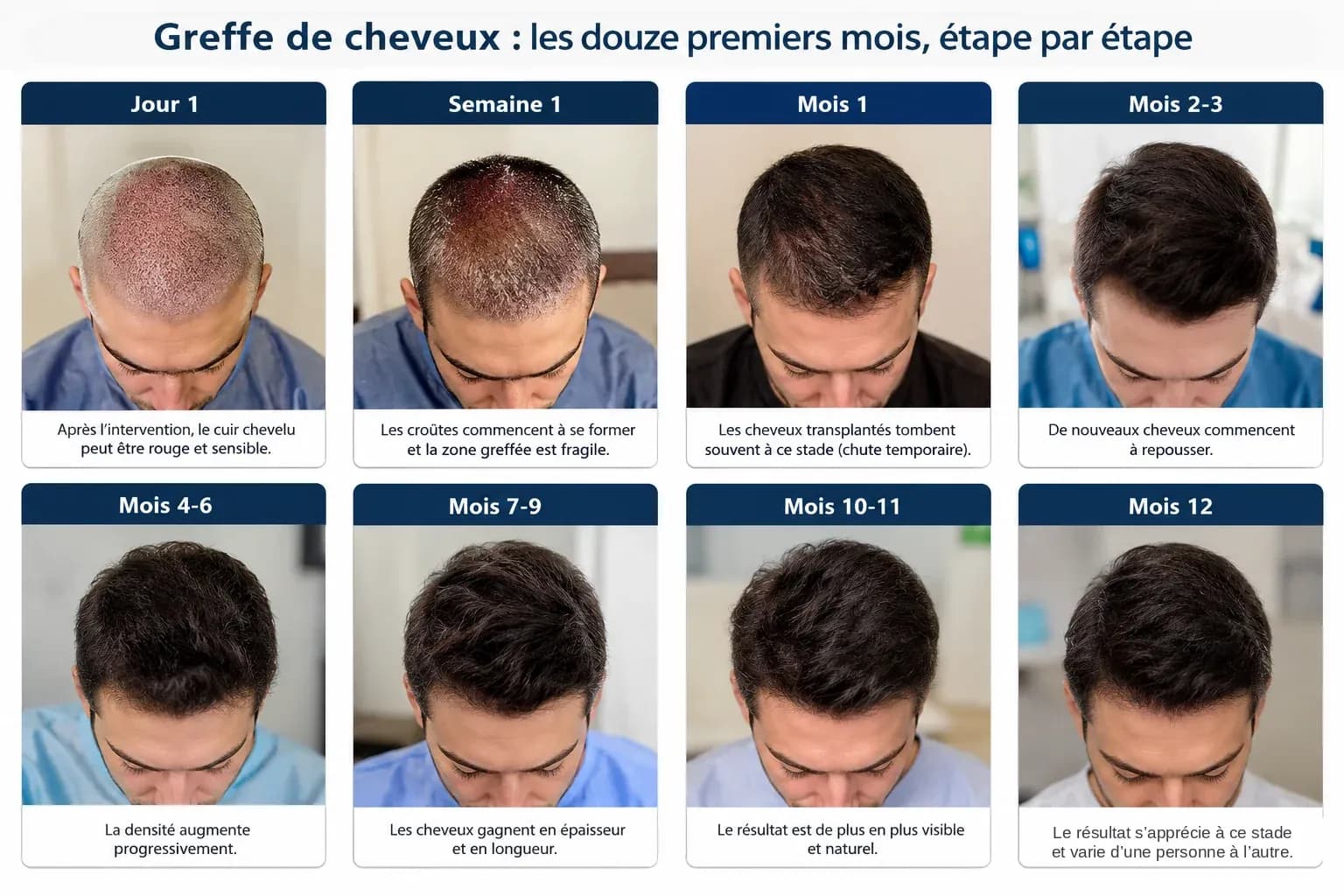
Hair transplant: the first twelve months, step by step
One question comes up in nearly every message we receive after a hair transplant: "my transplanted hair is falling out, has the procedure failed?" In the vast majority of cases, no. But nobody had warned them, and that is the real problem. Here is what the medical literature documents about the first year — and, just as importantly, what it does not.
When does the result show?
Grafted hair usually takes 6 to 12 months to grow, varying from one person to another. That is the range given by the reference review on FUE, and it has a direct consequence: what you see in the mirror at six weeks says almost nothing about the outcome.
That is also why the very precise timelines circulating online — a given percentage of regrowth at a given month — should be read with caution. We found no solid medical source behind them, and we would rather describe phases and their signs than invent a scale.
The first few days: crusts, swelling, itching
All three are expected consequences, not complications. The review lists oedema — swelling of the forehead and around the eyes — as often appearing on the third or fourth day, alongside itching and scabbing.
Itching is the delicate moment. Scratching or lifting a crust means handling a graft that is not yet anchored in the scalp, and infection is among the recognised post-operative complications. The washing and sleeping instructions the team gives you on discharge are not paperwork: this is the period when a small gesture has the largest consequences.
On daily life, the ISHRS indicates that returning to work is often possible after about one week for FUE, depending on the job and how much was shaved. Our article on going back to work after a hair transplant covers this in detail.
The first month: the shedding that frightens people
It is expected, and it has a name. Immediately after a transplant, the grafted hair and the surrounding hair may enter what the review calls post-operative effluvium, or shock loss: patients then notice a sudden increase in hair fall.
What falls is the hair shaft, not the implanted follicle. The follicle itself goes through a resting phase before producing a new shaft — which is exactly why regrowth takes months. A grafted hair that falls at three weeks is therefore not a lost graft, and that is precisely what most patients have not been told before travelling.
What if it is the donor area that thins?
This happens too, it is rare, and it warrants a medical opinion rather than an internet search. A published case describes localised acute telogen effluvium of the donor area after FUE: itchy bald patches in the occipital region, appearing about six weeks after the procedure, even though the donor area had healed normally within a week.
Two qualifications matter. The authors describe a self-resolving course, which is reassuring. But this is a single case: the real incidence is unknown and there is no standardised treatment, for lack of data. So it is not a diagnosis to make yourself — it is a reason to have the area examined by a doctor.
Months 3 to 6: regrowth begins
This is when the first permanent hairs appear, fine at first, sometimes uneven from one area to the next. Uneven regrowth at four months does not mean the same thing as at twelve: follicles do not all resume their cycle at the same time, and the 6-to-12-month range describes an average, not a synchronisation.
It is also the hardest period psychologically, because the result is underway without being visible. One useful habit: compare photographs taken in the same light and from the same angle, rather than the daily impression in the bathroom mirror.
Months 6 to 12: density builds
The hairs that have grown thicken, and it is density — more than the number of hairs — that changes how it looks. Assessing the result therefore belongs at the end of this period, and the surgeon is best placed to say, based on your case, when that assessment makes sense and whether a second session would add anything.
On that point the literature is clear about one principle of caution: for an extensive area, two sessions are considered the preferable option, which leaves time to reassess the donor area in between. A second procedure is not, in itself, a sign that the first one failed.
What does not depend on the transplant
Three things carry on while regrowth happens, and ignoring them leads people to blame the procedure for what it did not cause.
- Native hair keeps thinning. The ISHRS says it plainly: hair loss is progressive, and there is no guarantee it will stop completely. Density that seems to recede at eighteen months may reflect natural progression around the grafted zone, not the grafts.
- Donor supply is finite. The reserve of donor hair is not renewable, which is why a cautious surgeon does not harvest everything at once.
- A single procedure in a young person can age badly. The ISHRS notes that an early result can deteriorate as loss progresses around the transplant, making a revision necessary. That is a consultation topic, not a quote topic.
Medical treatments intended to slow hair loss do exist, but their indication, prescription and monitoring are a doctor's responsibility. ServiHealth organises the stay, the coordination and the follow-up; no medical decision is ours.
When to call the team instead of waiting
Waiting is often the right instinct during the first twelve months. There are exceptions. Beyond the first month, the review lists among delayed complications folliculitis, cysts, donor-area scarring, and delayed or absent growth. An area that is painful, hot or oozing, persistent spots, or a complete absence of regrowth beyond the range your surgeon gave you are not matters for patience: they call for an opinion.
Reporting something early costs a message. Waiting so as not to be a nuisance sometimes costs a simple treatment started too late.
Frequently asked questions
Does all grafted hair grow back?
No serious source promises 100%. Graft survival depends partly on time spent out of the scalp: viability falls by roughly 1% per hour, and up to two hours the review cites survival in the region of 95 to 98% when grafts are properly stored. Delayed or absent growth is, moreover, among the recognised delayed complications.
Can regrowth be sped up?
The follicle's cycle does not respond to willpower, and we know of no method with demonstrated efficacy for shortening it. What is documented runs the other way: the gestures that compromise grafts in the first weeks. Supplements and treatments offered online are a discussion for the doctor who knows your case.
When can hair be cut or coloured?
That depends on healing and on the technique used, and the team that operated gives the interval. We prefer not to put forward a general figure, because the instruction comes from the surgeon, not from an article.
Preparing for what comes next
If you are still deciding, the hair transplant in Tunisia page describes how the stay works, and the profiles of our partner surgeons tell you who operates. A quote request with photographs allows the surgeon to give a first opinion on your case — a remote opinion, to be confirmed at the consultation.
Read next
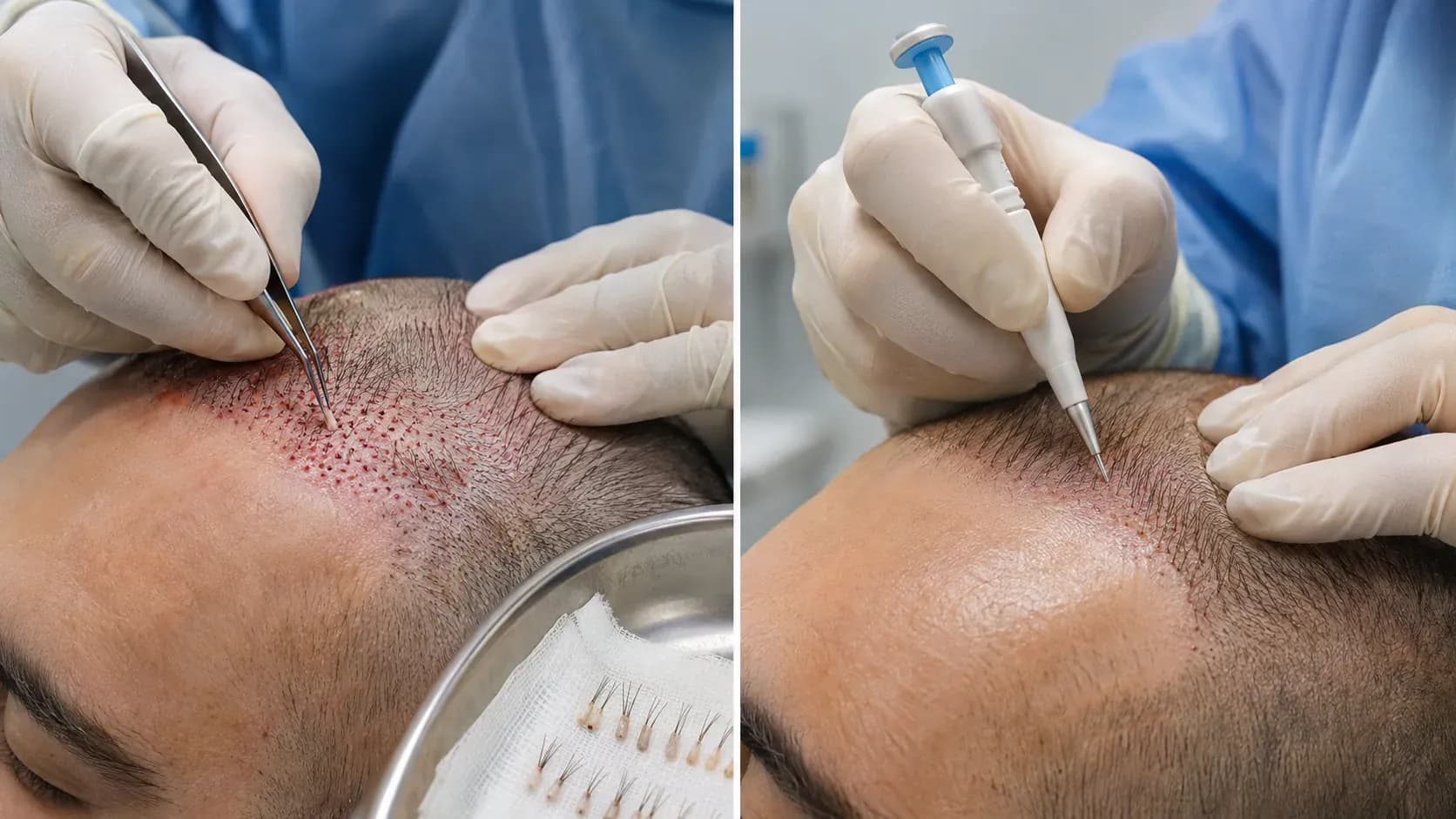
FUE vs DHI: what actually changes, and what does not
Both methods harvest the same follicular units. What separates them is the placement step, and three other factors matter more.
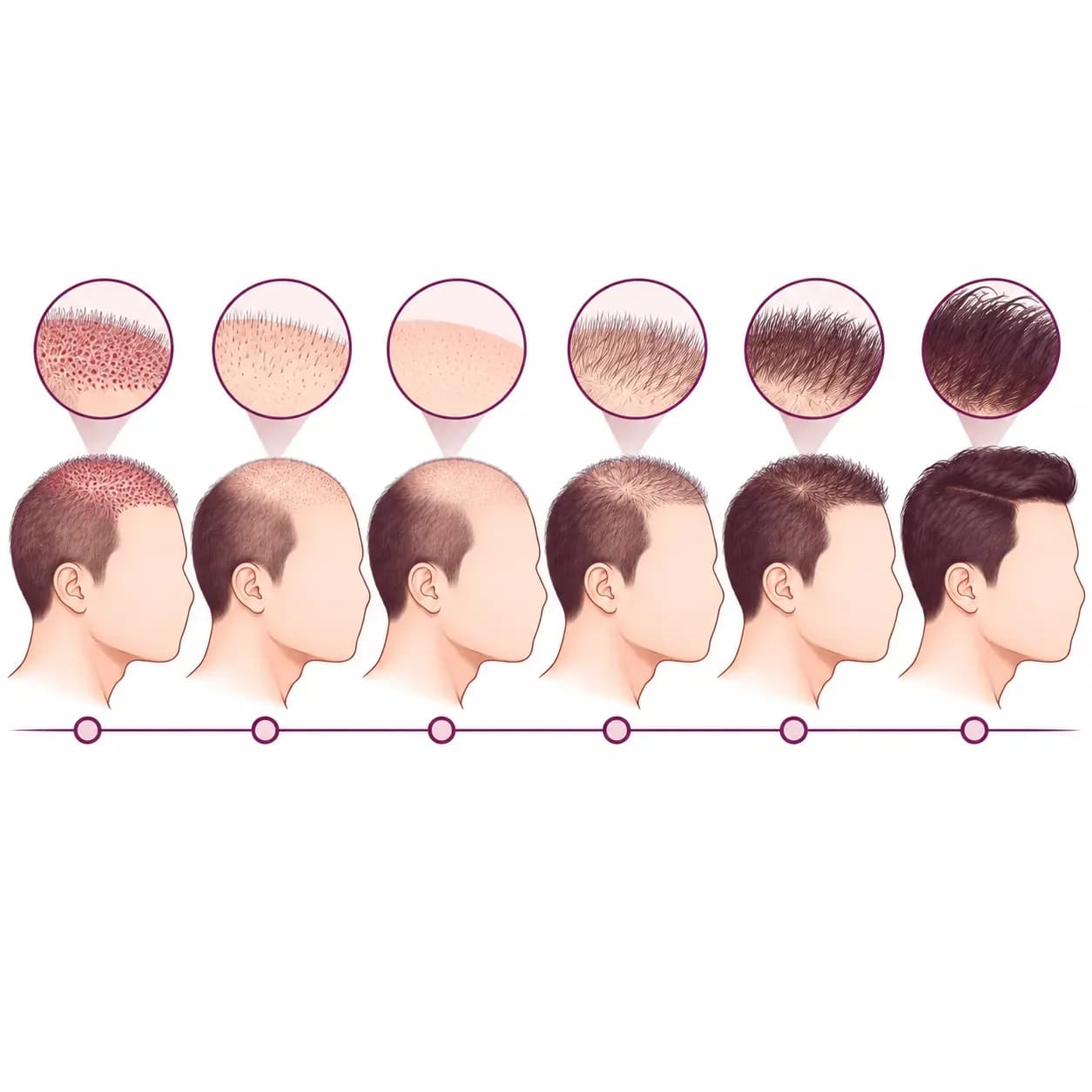
Hair transplant in Tunisia: when can you go back to work?
Crusts, swelling, a shaved donor area: what shows after a hair transplant and for how long, with return-to-work timelines by type of job.

BBL recovery: what the days and weeks after actually look like
Sitting, sleeping, the compression garment, drainage, why the volume drops in the first weeks and when the result is final. BBL recovery answered question by question.