

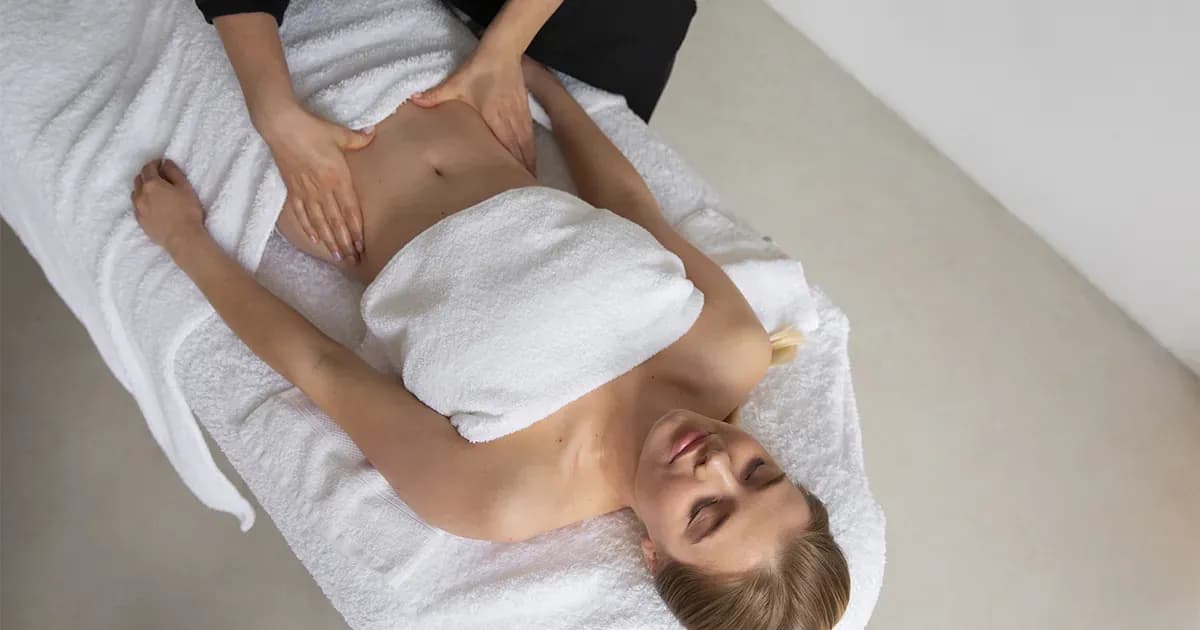
Lymphatic drainage after cosmetic surgery: what it actually does
Swelling after a liposuction, an abdominoplasty or a BBL is normal, and it takes several weeks to resolve. Lymphatic drainage is a specific form of manual massage used to help that process along.
It is neither a miracle treatment nor an obligation. It helps with some things and does nothing for others, and the difference is worth understanding before you book a course of sessions you may not need.
One thing first. This is general information. Your surgeon decides whether drainage is appropriate in your case, when it starts and which areas are worked on. If anything here differs from what you have been told, follow your surgeon.
The key points
- It helps swelling resolve and makes the first weeks more comfortable.
- It should be done by a physiotherapist or a practitioner trained in post-surgical drainage — never at an ordinary beauty salon.
- Between three sessions for a localised liposuction and around ten for extensive surgery.
- It starts a few days after the operation, once your surgeon agrees.
- There are real contraindications, listed further down.
What lymphatic drainage is
The lymphatic system drains the fluid that circulates between your tissues. Surgery crosses those pathways, and fluid collects where it would normally flow away. That is what swelling is.
Drainage uses slow, gentle, rhythmic movements that follow the direction of lymphatic circulation, with light pressure and no kneading. If it feels like a deep tissue massage, it is not lymphatic drainage.
What it actually does
It helps swelling resolve. This is the main benefit and the best established one. The swelling reduces sooner, which means you see your result sooner.
It is more comfortable. Less fluid means less tightness and less of the heavy feeling in the first weeks.
Bruising often fades faster.
It supports healing as part of the wider aftercare, not on its own.
What it does not do matters just as much. It does not replace the compression garment. It does not cause weight loss. It does not sculpt anything, and it cannot correct a surgical result.
When should sessions start?
A few days after the procedure, once your surgeon has confirmed it. Starting too early does more harm than good, which is why the date is not yours or the therapist's to decide.
The first sessions can take place during your stay in Tunisia, with the rest continuing once you are home.
How many sessions?
| Procedure | Indicative number of sessions |
|---|---|
| Liposuction, one or two areas | 3 to 5 |
| 360° or multi-area liposuction | 5 to 10 |
| BBL | 5 to 10, with an adapted technique |
| Abdominoplasty | 5 to 10 |
| Vaser or J-Plasma liposuction | 5 to 10 |
| Arm lift or thigh lift | 3 to 6 |
Sessions are spaced two to three days apart at first, then further apart. Some patients need fewer, and there is no benefit in completing a course for its own sake.
The special case of BBL
No pressure is applied to the buttocks. None.
The work is done on the donor areas — the abdomen, flanks and back — and along the lymphatic pathways, leaving the grafted area alone. Pressure there compromises the blood supply the transferred fat depends on, which is the one thing that determines whether a BBL holds.
Tell your practitioner you have had a BBL before every session, not just the first. We explain why this matters in our piece on BBL safety and what makes a practice safe.
Who should perform it
A physiotherapist, or a practitioner trained specifically in post-surgical drainage. Three things to check before booking:
- What training they have had in lymphatic drainage.
- Whether they have experience with post-operative patients.
- Whether they know your procedure.
Tell them what you had done, when, which areas were operated on, which areas must be avoided, and whether you still have drains or any area that has not fully healed. If you are not sure what to tell them, ask us and we will put it in writing.
Contraindications and precautions
Lymphatic drainage is not appropriate in several situations:
- Infection or fever.
- A history of phlebitis or thrombosis.
- Heart failure or kidney failure.
- Cancer under treatment, or another active condition.
- Pregnancy.
- A wound that has not healed, redness, or any discharge.
Your surgeon's agreement is the rule in every case, not a formality. And if a session becomes painful, it stops — pain is a signal, not something to work through.
Drainage during your stay in Tunisia
Sessions can take place during your stay if your surgeon recommends them, and you continue at home afterwards with written instructions to give your practitioner.
Whether drainage is included is stated in your quote. If you want to know before requesting one, ask us and we will tell you.
What matters as much as the drainage
Patients tend to focus on the sessions and overlook the things that weigh at least as heavily on recovery:
- Wearing the compression garment for as long as you have been told. This is what limits fluid accumulation most effectively.
- Walking from the first days.
- Drinking enough.
- Respecting the timescales before returning to exercise.
- Attending your follow-up checks, including the remote ones.
A patient who does all five and has three drainage sessions generally recovers more comfortably than one who skips them and books ten. There is more on this in our guide to recovery after abdominal liposuction.
Frequently asked questions
Is lymphatic drainage painful?
It should not be. You may feel some discomfort over sensitive areas, but clear pain is not expected and should be reported — to the practitioner during the session, and to your surgeon afterwards.
How long does a session last?
Between 45 minutes and an hour.
Can I do it myself?
No. The movements follow precise pathways and some areas must be avoided entirely, which is difficult to judge on your own body and impossible to see.
Can drainage be done after facial surgery?
After a facelift or a blepharoplasty, the swelling usually resolves on its own. Facial drainage is only considered with the explicit agreement of your surgeon and with a practitioner trained for it.
What if I cannot find a practitioner near me?
Contact us and we will help you work out what is available. In the meantime, the compression garment, walking and hydration remain the measures that matter most, and none of them requires an appointment.
Does drainage help you lose weight?
No. It acts on fluid, not on fat.
Planning your recovery with ServiHealth
ServiHealth organises and coordinates medical stays in Tunisia. We arrange the stay and the follow-up, and put you in contact with our partner surgeons, who decide what your recovery involves — including whether drainage is appropriate for you.
You can see our prices or request a quote, and have an answer within 24 to 48 hours.