

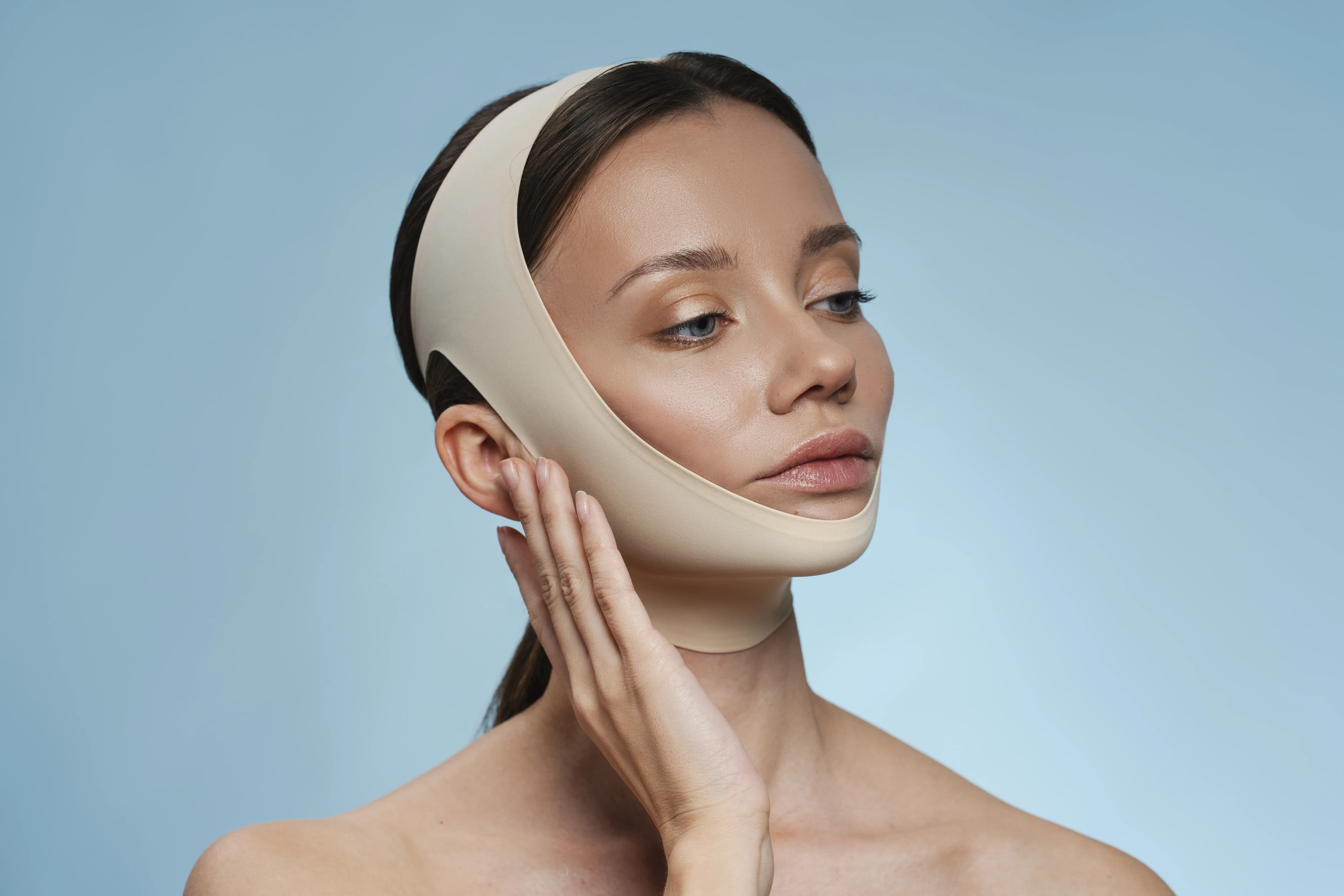
Scars after facial surgery: how they evolve, how to care for them, and what to avoid
The face is the one place a scar cannot be hidden under clothing. After a rhinoplasty, a facelift, a blepharoplasty or reconstructive work, how the scar settles matters as much to most patients as the result of the surgery itself.
The good news is that a facial scar changes considerably over the first year, usually for the better, and that a large part of how it ends up is within your control. Here is how it evolves, what to do at each stage, and the mistakes that cost people a good result.
One thing before you read on. What follows is general information. Your surgeon's instructions take precedence over everything on this page: after some procedures massage is delayed or avoided altogether, and the timings below may not be the ones you were given. If the two disagree, follow your surgeon.
How a facial surgical scar evolves
Skin maturation takes twelve to eighteen months. The scar you see at three weeks tells you very little about the scar you will have at a year.
1. Inflammation: days 1 to 7
Redness, slight swelling and warmth to the touch. This is the normal response of the body: repair cells arrive at the site and collagen production begins. It looks worse than it is, and it is the shortest phase.
2. Proliferation and granulation: weeks 2 to 6
Sutures are removed during this period if they are not dissolvable. The scar may look pink or purplish, sit slightly raised above the surrounding skin, and itch. All three are expected, and none of them is the final appearance.
3. Remodelling and maturation: from two months to a year and beyond
The scar gradually lightens, softens and flattens. The final result is generally assessed at around one year, which is why no judgement about a revision is made before then.
The care that makes the difference
1. Gentle cleansing
Wash with a mild pH-neutral soap, or with the antiseptic solution your surgeon has prescribed. Dry by patting with a sterile compress rather than rubbing. Nothing abrasive goes near the scar at this stage.
2. Repair creams and silicone
Once the wound has closed and any scabs have fallen away on their own, a repair cream can be applied twice a day. Formulations based on zinc, copper or hyaluronic acid are commonly used.
Silicone gels and silicone sheets are the standard first-line treatment for hypertrophic and keloid scars, and they are widely used preventively on scars at risk. Ask your surgeon when to start: silicone goes on closed skin, never on a wound that is still healing.
3. Scar massage, once your surgeon agrees
From the second or third week, and only with your surgeon's agreement, small circular movements and a gentle pinch-and-roll technique for two to three minutes, twice a day. Doing it with the repair cream makes it easier on the skin.
This is one of the most useful things you can do yourself, and it is also the step most often abandoned after a fortnight. Consistency matters more than pressure.
4. Sun protection, without exceptions
Sun is the single biggest threat to a new facial scar. SPF 50 or higher, reapplied every two hours, including on cloudy days. A wide-brimmed hat and sunglasses where they help. Keep this up for at least twelve months.
Unprotected exposure during this period can cause post-inflammatory hyperpigmentation: the scar darkens, and that discolouration can take a very long time to fade. It is far easier to prevent than to treat.
This matters more, not less, if you have a darker skin tone. Post-inflammatory hyperpigmentation is both more frequent and more persistent in skin that tans easily or is naturally deeply pigmented, so if that describes you, treat the twelve months of sun protection as the most important thing on this page.
Six mistakes to avoid while a facial scar heals
- Picking or pulling off scabs. They fall away on their own. Removing one early reopens the skin underneath and widens the eventual scar.
- Going out in the sun unprotected. Even briefly, even in winter, even on an overcast day.
- Smoking. Nicotine constricts blood vessels and reduces the blood supply the healing tissue depends on, which slows healing and, in the worst cases, risks skin necrosis.
- Using scrubs, peels, acids or heavy make-up too early. AHAs, BHAs and retinol all belong to a later stage. Ask your surgeon when, rather than guessing.
- Sleeping on your front or your side during the first weeks, which puts tension on the suture line.
- Returning to intense exercise too soon. Raised blood pressure puts tension on the healing tissue and increases the risk of bruising and bleeding under the skin.
Timeline of facial scar care
| Period | What to do | What to avoid |
|---|---|---|
| Days 1 to 7 | Sutures still in place. Gentle antiseptic care as prescribed. | Standing water, rubbing, make-up, sleeping on your face. |
| Weeks 2 to 4 | Sutures removed. Repair cream, and massage once your surgeon agrees. | Sun, picking at scabs, intense exercise. |
| Months 2 to 12 | Silicone gel or sheets, and SPF 50+ every day. | Sun without protection, smoking, scrubs and peels. |
When to contact your surgeon
Most of what happens during healing is normal and needs patience rather than intervention. Four things do not:
- Redness that spreads, with warmth or a fever.
- Discharge of pus, or an unpleasant smell.
- A scar that becomes thick, hard, red and painful rather than settling.
- The edges of the wound separating.
Any of these warrants contact straight away. If you are already home and cannot reach your surgical team quickly, see a doctor near you and tell them what procedure you have had.
In conclusion
A discreet facial scar is the product of two things: a precise surgical technique, which is the surgeon's responsibility, and consistent aftercare over twelve months, which is yours. Neither one compensates for the absence of the other.
ServiHealth organises and coordinates medical stays in Tunisia. We arrange the stay, put you in contact with our partner surgeons and stay reachable once you are home. Medical decisions and the aftercare instructions that apply to your case belong to your surgeon, not to us. You can read more about how we work, see our pages on rhinoplasty, blepharoplasty and facelift surgery, or request a quote and have an answer within 24 to 48 hours.